
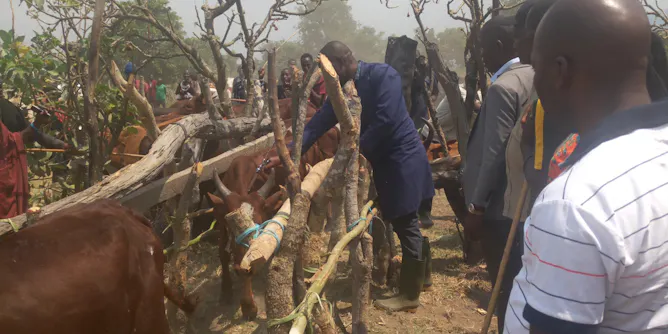
Lack of veterinary services has contributed to mistrust and misuse of drugs, which can harm animals and people.
Articles on Tanzania
Displaying 1 - 20 of 356 articles
Silence is a way through which Burundians navigate political uncertainty.

African countries need to remove the obstacles to trade within the continent and hold stocks of fuel and fertiliser.

We should not assume that young people see betting simply as entertainment.

Building the tax base in low-capacity settings is about making the state more visible and more credible.
Trade within the Southern African Development Community is an issue holding back agriculture.
Rivalry has not disappeared from east Africa. It has simply been repackaged as competing ‘regional’ projects.
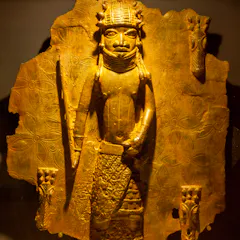
Archaeology can repair past harm, create work for people in the present and preserve cultural heritage for the future.
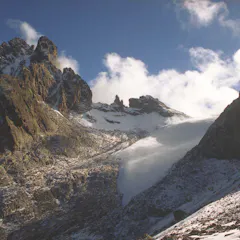
This decrease of snowfall is driven by changing sea surface temperature patterns in the Indian Ocean, which is a signal of global warming.
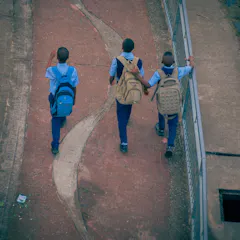
An eight-country study assessed whether parenting programmes that were developed through research also work when offered at a wider scale in real-life conditions.

Rallies hold great significance in Tanzania and are central to everyday political communication.

Africa needs to navigate the tension between interdependence, economic security, and economic diversification.
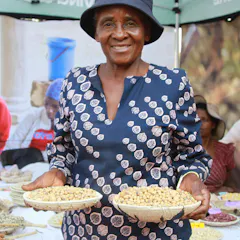
As climate crises deepen, Africa must turn its hard-won experience and local knowledge into global leadership on climate, health, food systems and clean energy.
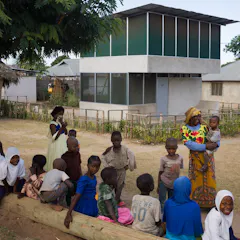
A three year study of Tanzanian children found that changing the way homes are designed can prevent diarrhoea, pneumonia and malaria, and help children grow taller.
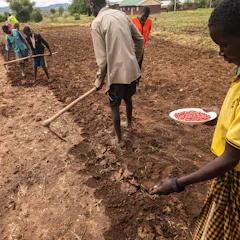
Figuring out how climate change will cause plant disease and pests to spread across Africa’s Great Lakes farms is critical for future food supplies.

The East African Community signalled that the bloc was ready to sideline countries that compromise funding.

Evidence of hominins butchering huge animals suggests that our human ancestors lived in big social groups.
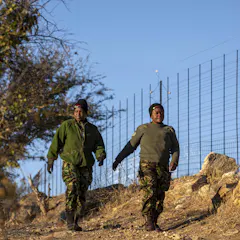
Nature reserve fences can protect wildlife and people, but they also break up natural landscapes, restrict animal movement, and affect nearby communities.
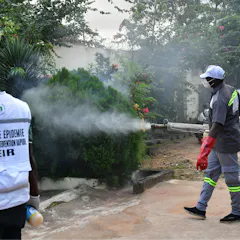
In recent decades, cases have risen sharply in Africa as urbanisation, travel and climate change have expanded mosquito habitats.
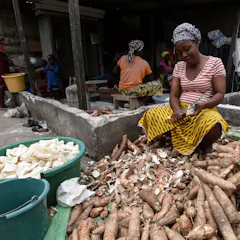
Cassava could thrive across more of Africa as the climate warms, but a deadly disease carried by whiteflies may spread faster, threatening the nutritious crop.
Top contributors
-

Researcher, United States International University
-
Lecturer, Tumaini University Makumira
-
Assistant professor, University of Sussex
-
Post-Doctoral Research Fellow, SARChI in Higher Education and Human Development Research Group, University of the Free State
-
PhD Candidate, Department of Political Science and Public Administration, University of Nairobi
-
Senior Lecturer in Politics and International Relations, University of East London
-
Professor of Democracy, University of Birmingham
-
Research Associate Plant Systematics, Bayreuth University
-
Associate Professor of International Studies, University of Nottingham
-
Lecturer in Wildlife Conservation
-
Professor of French and Critical Disability Studies, Lancaster University
-
Asso. Professor in Anthropology, University College London, UCL
-
Professor of Disease Ecology and Public Health, University of Glasgow
-
Senior Lecturer in Social Work, Australian Catholic University
-
Researcher, SAMRC/Centre for Health Economics and Decision Science- PRICELESS SA, University of the Witwatersrand