
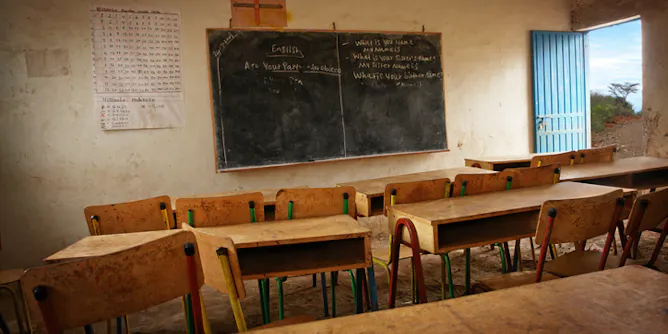
School closures have immediate and long-term effects on students, both emotionally and economically. They will also have a ripple effect on a country and on income inequality.
Articles on Uganda
Displaying 201 - 220 of 476 articles
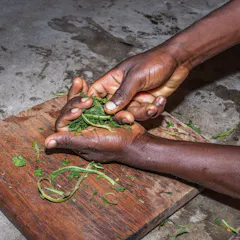
It is important that herbal medicine be checked for its safety, its potential to treat particular ailments, and to ascertain its chemical components.

This tool can identify cause of death by fatal lightning strike in skeletonised remains.

African livestock keepers need help: without proactive interventions, increasing temperatures will reduce meat and milk production.
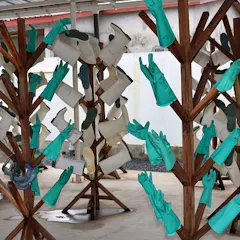
Many African countries are experienced in managing outbreaks of viral haemorrhagic fevers and many of the lessons learnt from the Ebola can be applied to the Marburg outbreak.
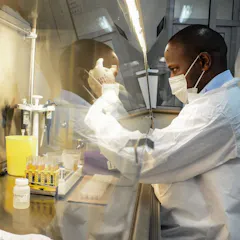
Countries must be encouraged to distribute essential healthcare provision - like diagnosis - to where people most need them and where they can be accessed more easily.
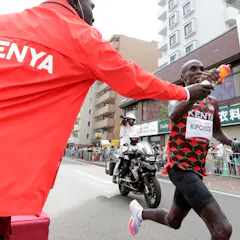
Kenya’s dominance in distance running has been repeatedly tested, most recently by the emergence of Ethiopia as a powerhouse.
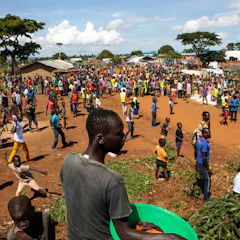
Uganda is making an effort in a neighbourhood where few other countries have the same enthusiasm.
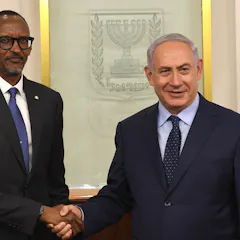
Most countries in Africa have chosen to separate the issue of the Palestinians from economic cooperation with Israel.

We’ve made advances towards delivering new devices to empower even people with basic medical knowledge to administer malaria tests in the field.
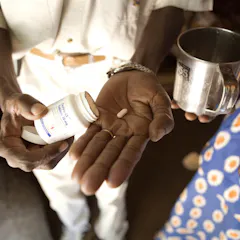
There are currently 1.2 million Ugandans enrolled on antiretroviral therapy (ART). They are especially affected by the lockdown.
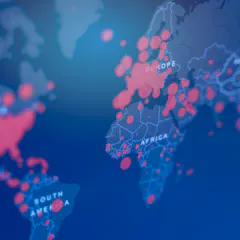
Policymakers need to make sense of the data so as to predict and manage what’s happening. To address this need, we developed a visualisation tool to track and predict country-level COVID-19 cases.
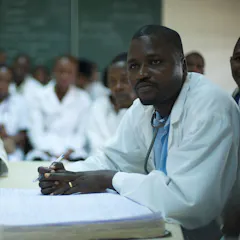
India, Nigeria, Pakistan and South Africa lose thousands of trained doctors each year, lured away to work in richer countries – at great cost to their nation’s healthcare systems.

Finding a way to increase the participation of men and fathers in unpaid care work would have an important influence on a more equal distribution between women and men.
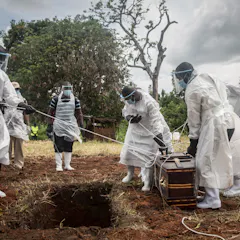
Uganda needs to activate the community engagement pillar and resource the new strategy that’s in place.

Lockdowns to curb the spread of COVID-19 had various effects on food as it went from farms to plates.
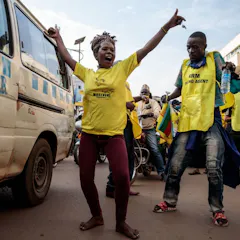
These appointments provoked debate in Uganda, reflecting both the constraints and the possibilities of women’s rights reform in an authoritarian country.
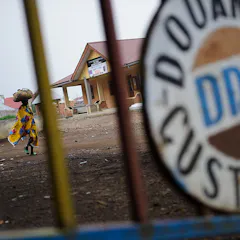
Within already economically perilous border areas, informal cross border trade is even more vulnerable during a pandemic.

Digital media shutdowns in Africa will lead to higher economic costs and greater public outrage.

Without reliable, local and timely data, countries will miss the potential of sugar-sweetened beverage taxation as a public health intervention.
Top contributors
-

Professor in International Development, University of Antwerp
-
Research associate at African Centre for Cities, University of Cape Town
-
Lecturer in Law, University of East London
-
Research Fellow at the Centre for Planetary Health and Resilient Conservation Group, Griffith University
-
Professor and Chair, Southwestern Environmental Science and Policy, Northern Arizona University
-
Health Systems Researcher, Makerere University
-
Professor/Senior Research Fellow, Centre for Advancement and Senior Non-Resident Fellow, Global Development Policy Center, Boston University of Scholarship, University of Pretoria
-
Lecturer, Department of African Languages, Makerere University
-
Professor of International Relations, Norwegian University of Life Sciences
-
Professor of Anthropology and International Development, The University of Western Australia
-
Senior Researcher at the Feinstein International Center, Tufts University, and Research Associate at the Refugee Studies Centre, University of Oxford
-
Professor of World Politics, SOAS, University of London
-
Postdoctoral Research Associate, King's College London
-
Lecturer and Senior Research Fellow at the South African Research Chair in International Law (SARCIL), University of Johannesburg
-
Professor of Democracy, University of Birmingham