
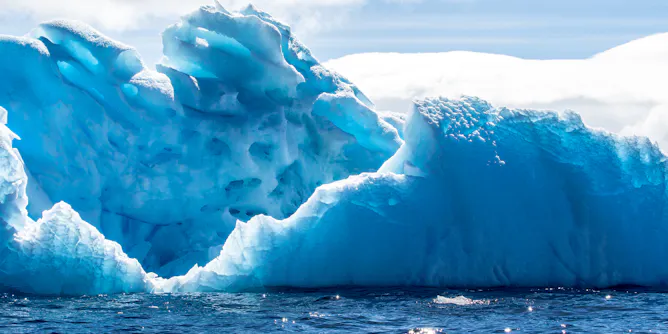
In a plot reminiscent of the 2004 movie The Day After Tomorrow?, Australian scientists are warning that the Southern Ocean’s deep “overturning” circulation is slowing and headed for collapse.
Articles on Oceans
Displaying 321 - 340 of 935 articles
A study shows that exposure to polyester microfibres inhibits growth in mussels.

Images of the 2011 tsunami did not look as I had expected, and pointed to the sublime, when experience exceeds our frameworks of understanding. My exhibit ‘Salients’ treats this theme.
A handful of wealthy states have so far monopolised the benefits of exploring the remote ocean.
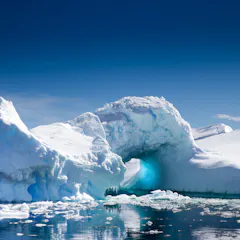
The melting of the Antarctic ice sheet will contribute for a long time to sea level rise, which will test humanity’s capacity to adapt.
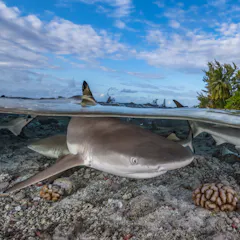
Over 100 shark and ray species were recently added to an international treaty, known as the CITES list, to protect them from the threat of unsustainable and illegal trade.
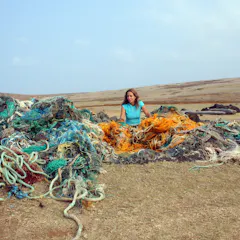
Pam Longobardi collects and documents ocean plastic waste and transforms it into public art and photography. Her work makes statements about consumption, globalism and conservation.
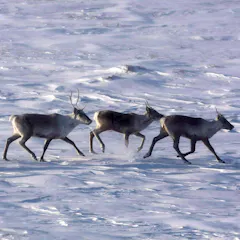
To guard against extinction, we must advocate for common species.
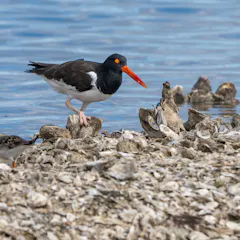
Climate change is making oceans more acidic globally. Now, scientists are finding that large storms can send pulses of acidic water into bays and estuaries, further stressing fish and shellfish.
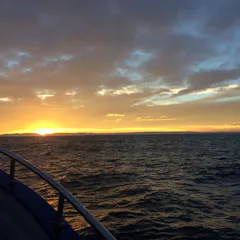
In the deep, dark ocean, sunlight-deprived bacteria turn to different sources of energy: dissolved hydrogen and carbon monoxide.

Atmospheric rivers can melt fragile new sea ice. When these storms arrive in waves, the sea ice doesn’t have a chance to recover.
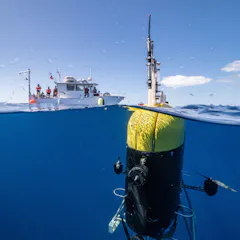
The ocean twilight zone could store vast amounts of carbon captured from the atmosphere, but first we need a 4D monitoring system to ensure ramping up carbon storage does no harm.
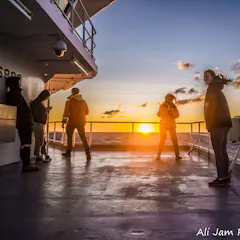
From a shipwreck to ancient dunes, these researchers created 3D visualisations of seafloor features around Australia – from as shallow as 22 metres to depths of over 4.8 kilometres.
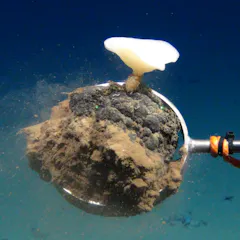
Mining nodules from the deep ocean seabed could provide the metals crucial for today’s EV batteries and renewable energy technology, but little is known about the harm it could cause.

The idea we know more about the Moon than the deep sea is seductive – but it’s 70 years out of date.
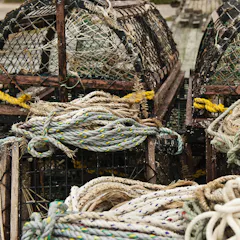
To fish the oceans sustainably, nations must reduce bycatch, or accidental catches. But fishermen often resist changing gear or techniques that kill nontargeted species.
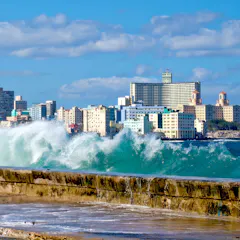
Sea-level rise isn’t the only climate-related problem for our coasts – extreme waves that cause flooding and erosion are also changing, but exactly how is hard to predict.

Swimming and surfing in the ocean is fun and invigorating. But sharing the water with animals comes with risks to us and them.
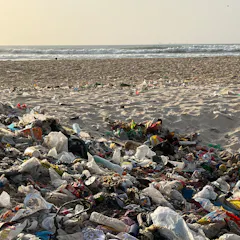
West Africa’s marine litter problem cannot be ignored. It can hinder the region’s economic and tourism growth, while putting people’s health at risk.
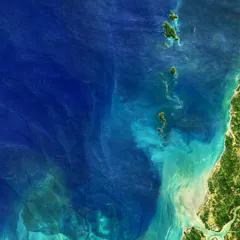
Humans are expert pattern-finders. But artificial intelligence tools are better at trawling through vast data sets to find anything from waste dumps to heat-tolerant corals.
Top contributors
-

Professor, School of the Environment, The University of Queensland
-
Harold T. Stearns Professor of Earth Science, Wesleyan University
-
Director of the ARC Centre of Excellence for Our Future Oceans and Scientia Professor in Oceanography, UNSW
-
Research Scientist, Stanford University
-
Distinguished Professor of Marine Science, King Abdullah University of Science and Technology
-
Distinguished Scholar, National Center for Atmospheric Research; Affiliate Faculty, University of Auckland, Waipapa Taumata Rau
-
Senior Principal Research Scientist, Environment, CSIRO
-
Faculty Research Associate in Marine Biology, Arizona State University
-
Chief Research Scientist - Environment, CSIRO
-
Professor of Marine Botany, The University of Western Australia
-
Professor of Biology, Department of Biology, University of Victoria
-
Reader of Applied Mathematics, Cardiff University
-
Associate Professor in Marine Biology, Swansea University
-
Adjunct Research Associate, Faculty of Fisheries and Marine Sciences, IPB University
-
Professor in Conservation Science, School of the Environment, The University of Queensland