

Parents and caregivers are central to promoting child safety. Improving their ability to prevent injury to children is key.
Articles on Food insecurity
Displaying 161 - 180 of 273 articles
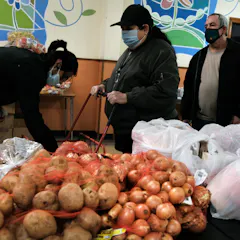
Early estimates US poverty rate estimates indicate that policies intended to soften the blow of economic upheaval made a big difference.
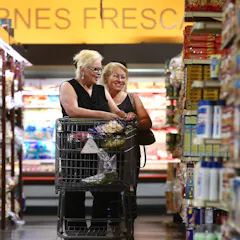
An economist explains what it would cost to give SNAP benefits to all Americans in households earning up to about $100,000 per year – and why it would be worth it.

Detecting food insecurity requires more than assessing what’s in your refrigerator or measuring the distance between your home and the closest supermarket.

Hunger is not the cause of the current social upheaval. But, taken along with other deep-rooted structural inequalities, it provides additional fuel for socio-political conflagration.

Experts explain the significance of this new ‘allowance.’

For many of the children who don’t get enough to eat, the consequences could last a lifetime.

Child care insecurity has received much less attention than food insecurity, but it is similarly complex. And affordability is only one part of the problem.
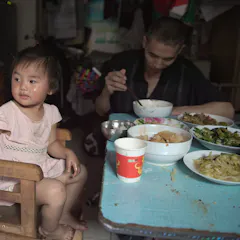
New data shows how high prices and low incomes prevent 4 in 10 people worldwide from buying enough nutritious foods for a healthy diet.

Food is not the only answer to food insecurity. Families struggling with severe disadvantage need adequate and ongoing financial protection to ensure their children have enough to eat.

A survey finds that hardship disparities across racial and ethnic groups have persisted throughout the pandemic.

The most vulnerable in society have been hit hard by the pandemic when it comes to getting enough to eat. So what can be done?
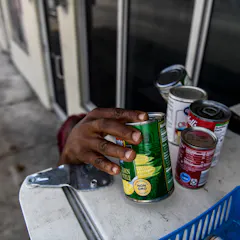
Formerly incarcerated Americans face food insecurity rates double that of the general population. A 1996 law that prohibits drug felons from getting crucial benefits may be partially to blame.

Indigenous people in the US have high rates of food insecurity and dietary-related health problems. Any attempts to address the problem must start with land justice, argues a scholar of Native health and food.
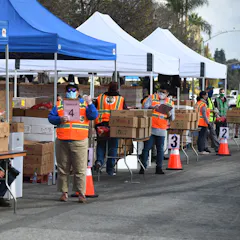
These efforts are growing due to the coronavirus pandemic. They involve partnerships with school districts, food banks and other institutions.
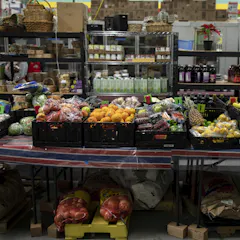
Behavioral economics, long employed in grocery stores to guide customers to certain products, could be employed by food banks and pantries to encourage healthier choices.
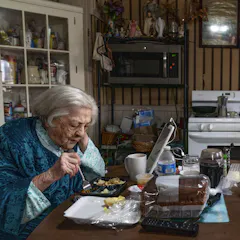
Personal interactions between volunteers and the older adults they assist, which paused due to pandemic concerns, are resuming.
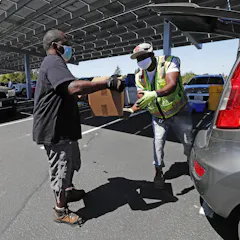
This is a transcript of episode 16 of The Conversation Weekly podcast The racial hunger gap in American cities and what do about it. In this episode, we look at some of the reasons behind racial disparities…
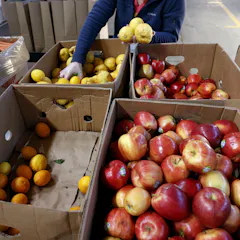
Plus, the discovery of the first known burial in Africa. Listen to episode 16 of The Conversation Weekly.
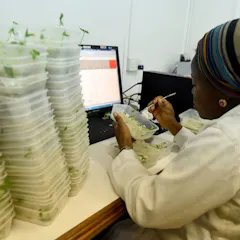
What’s needed is a prioritisation of the health and medicinal values of the food that’s consumed in African countries.
Top contributors
-

Associate Professor of Political Science, University of Richmond
-
Professor of Economics, Baylor University
-
Professor of Social Development Studies, University of Johannesburg
-
Professor of Human Development and Family Sciences, University of Connecticut
-
Senior Lecturer in Nutrition and Dietetics, University of Wollongong
-
Professor of Health Studies, Queen's University, Ontario
-
Senior Researcher, Associate Professor: Economic Management Sciences, University of Pretoria
-
Assistant Professor of Nutrition, Texas State University
-
Associate Professor of Allied Health Sciences, University of Connecticut
-
Assistant Professor of Public Health, Indiana University
-
Assistant Professor of Dietetics and Nutrition, University of Dayton
-
Professor of Nutritional Sciences, University of Toronto
-
DSTI/NRF Research Chair in Welfare and Social Development, University of Johannesburg
-
Research Program Coordinator, Food Insecurity, University of Toronto
-
Associate Professor of Nutrition Science, Purdue University