
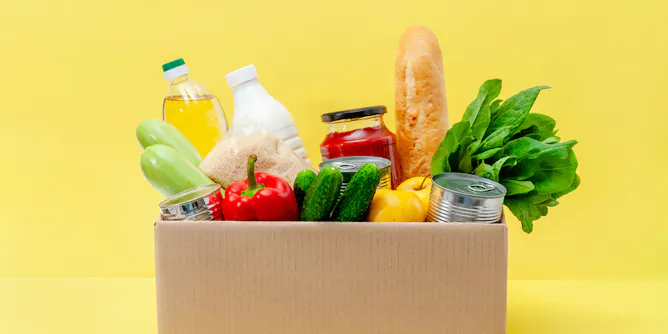
Food is a fundamental human right. But governments have left it to charities and food suppliers to step in after disasters. That has to change as climate change throws up greater stresses.
Articles on Food insecurity
Displaying 141 - 160 of 273 articles

Adolescence lies between childhood and adulthood, but adolescents are neither big children nor little adults. They have increased food requirements to support their rapid physical growth and maturation.

The 2021 child tax credit expansion helped lift millions of families with children out of hunger. After those payments ended in December 2021, those families may again face food insufficiency.

Child care workers are at the center of the food insecurity crisis in America. In 2020, nearly one-third of them were food insecure.
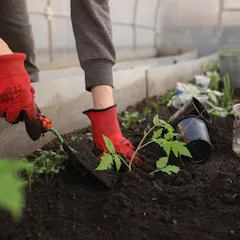
Helping more city-dwellers to grow their own fruit and veg could improve health, wellbeing and food security for growing populations.
The time is ripe to develop federal-provincial/territorial accords towards implementing a national school nutritious meal program.

International refugee law must be overhauled to consider climate change and include “deadly environments” as a form of persecution.

COVID-19 greatly disrupted local market dynamics at landing sites, within the communities, and connections to more distant markets.

Even in the absence of a moral motive to alleviate famine, there is a strong rationale for the West to do whatever’s necessary to alleviate hunger in Afghanistan this winter.
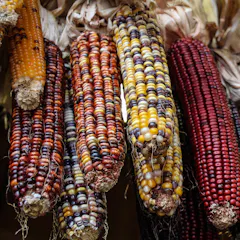
Our food systems are failing to feed all of us.
In this episode of Don’t Call Me Resilient, we pick apart what is broken and ways to fix it with two women who battle food injustice.
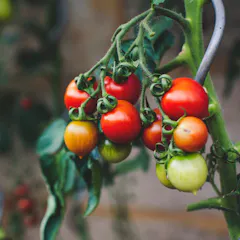
The COVID-19 pandemic has highlighted the problem of food insecurity for many people, especially racialized and Indigenous households.

With the high cost of infant formula, food-insecure mothers who cannot breastfeed are struggling to feed their babies.

The network collectively applied ingenuity to provide essential care and support to vulnerable people.
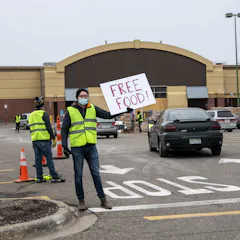
Congregations can help bridge gaps left by government programs, especially for many immigrants and others who are not eligible for SNAP benefits.
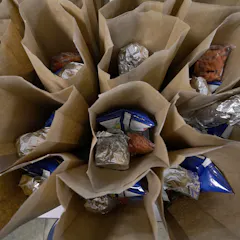
A recent survey finds that the pandemic made it harder for many US households to put food on the table. It also changed the ways in which people buy and store food.

There’s a crucial need to connect the most vulnerable people with public services in order to tackle systemic poverty and disadvantage. An integrated approach is key.
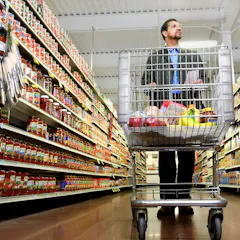
Long-term increases like this are unusual. So is the fact that this increased governmental generosity began with a measure approved by Congress when Republicans held majorities in both chambers.

Food insufficiency rates rose across the board, researchers who analyzed government data found.

A scholar of nutrition opens up with a personal take on food insecurity in America.
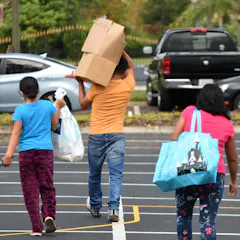
While the food insecurity rate held steady in 2020, the racial hunger gap increased.
Top contributors
-

Associate Professor of Political Science, University of Richmond
-
Professor of Economics, Baylor University
-
Professor of Social Development Studies, University of Johannesburg
-
Professor of Human Development and Family Sciences, University of Connecticut
-
Senior Lecturer in Nutrition and Dietetics, University of Wollongong
-
Professor of Health Studies, Queen's University, Ontario
-
Senior Researcher, Associate Professor: Economic Management Sciences, University of Pretoria
-
Assistant Professor of Nutrition, Texas State University
-
Associate Professor of Allied Health Sciences, University of Connecticut
-
Assistant Professor of Public Health, Indiana University
-
Assistant Professor of Dietetics and Nutrition, University of Dayton
-
Professor of Nutritional Sciences, University of Toronto
-
DSTI/NRF Research Chair in Welfare and Social Development, University of Johannesburg
-
Research Program Coordinator, Food Insecurity, University of Toronto
-
Associate Professor of Nutrition Science, Purdue University