

The National Food Security Strategy could make Canada’s food system more equitable, sustainable and sovereign. Implementation challenges mean rural areas most in need may be left out.
Articles on Food insecurity
Displaying 1 - 20 of 273 articles

Food is medicine aims to help patients prevent or manage chronic illnesses by eating food that supports their health.

When it comes to Canada’s progress on poverty alleviation, the 2026 federal Budget isn’t helping. It privileges corporate welfare over the needs of Canadians who are struggling with poverty and food insecurity.

Hungry learners struggle to concentrate, take part in lessons and attend school. A rural South African study shows why nutrition must be a priority for education.

A food systems researcher shows how trucking deregulation and lax antitrust enforcement let big grocery chains grow as rural distribution thinned.
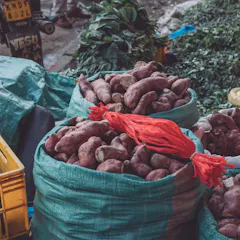
Investments should support entire value chains, linking farmers to storage, processing, transport and reliable markets.
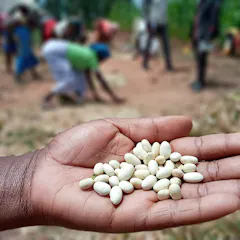
A super El Niño could spell disaster for southern Africa’s bean farmers. Better seeds, water storage and early warnings could help protect the next harvest.

Some of these changes have already taken effect. Others that are a year or more away could make it hard for some states to keep participating in the program at all.

The high cost of housing is also keeping half of young adults up to age 29 living with their parents.

Detroit had 20,370 eviction cases filed in 2025. But evictions that do not go through the formal court process are not included in the city’s official eviction data.

While the National Food Security Strategy does include important food systems initiatives, it fails to address the root causes of food insecurity or its health consequences.

Partnerships need to grapple with the tension between what to preserve and what to change rather than be paralysed by it.
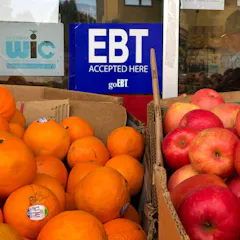
Nearly 14,000 people in one Pittsburgh-area county could lose a benefit that’s long been considered one of the country’s most effective anti-poverty tools.

A resilient food system requires connecting affordability, trade, food safety, biosecurity, regional infrastructure and preparedness before the next disruption.
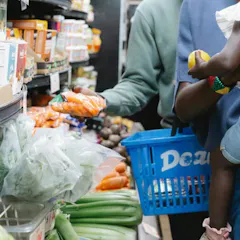
Early exposure to malnutrition from conception to a child’s second birthday can have an irreversible effect on their long-term health and development.

Picking up food more frequently from supermarkets doesn’t close the gap between what’s donated and could be donated, a supply chain scholar explains.
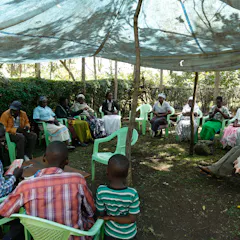
A powerful Super El Niño is looming. Africa has learned hard lessons from past climate disasters that could help the world prepare.

As climate crises deepen, Africa must turn its hard-won experience and local knowledge into global leadership on climate, health, food systems and clean energy.

Every city is different but they can learn from each other.

Policy frameworks shaping farming in the EU and beyond are suffering from funding misalignment and fragmented priorities, resulting in ineffective global climate efforts.
Top contributors
-

Associate Professor of Political Science, University of Richmond
-
Professor of Economics, Baylor University
-
Professor of Social Development Studies, University of Johannesburg
-
Professor of Human Development and Family Sciences, University of Connecticut
-
Senior Lecturer in Nutrition and Dietetics, University of Wollongong
-
Professor of Health Studies, Queen's University, Ontario
-
Senior Researcher, Associate Professor: Economic Management Sciences, University of Pretoria
-
Assistant Professor of Nutrition, Texas State University
-
Associate Professor of Allied Health Sciences, University of Connecticut
-
Assistant Professor of Public Health, Indiana University
-
Assistant Professor of Dietetics and Nutrition, University of Dayton
-
Professor of Nutritional Sciences, University of Toronto
-
DSTI/NRF Research Chair in Welfare and Social Development, University of Johannesburg
-
Research Program Coordinator, Food Insecurity, University of Toronto
-
Associate Professor of Nutrition Science, Purdue University