
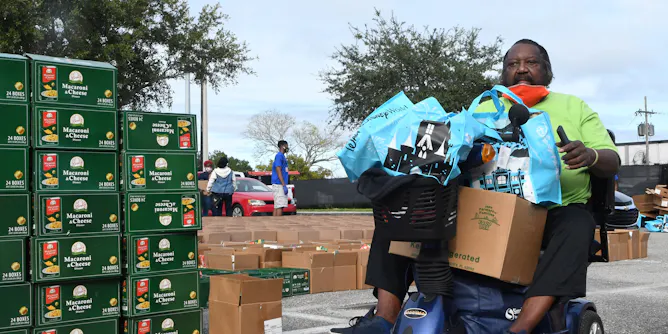
While long lines and food shortages are frustrating for most consumers, they can be physically and emotionally grueling for people with disabilities.
Articles on Food insecurity
Displaying 181 - 200 of 273 articles

CERB was a lifeline but no paradise, highlighting the struggles of social assistance recipients to get by on much less.
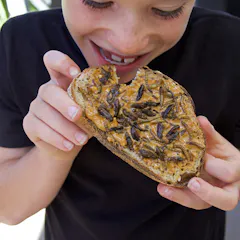
Two billion people already eat ‘prawns of the land’, so why don’t many Australians? A new CSIRO industry roadmap on edible insects explains why we should bring bugs into mainstream diets.
The federal government has temporarily widened eligibility for food assistance to more students. Two scholars argue this needs to be made permanent and be accompanied with an awareness campaign.
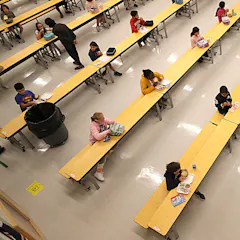
Students are spreading out when they eat and using more single-serve packaging. Future changes to school meals could be less visible.
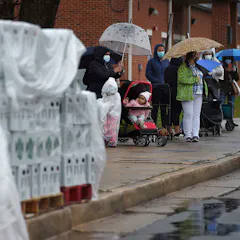
A team of experts are projecting that after a steep increase in 2020, food insecurity rates will dip in 2021. But behind this is a racial gap – rates for Black Americans will remain stubbornly high.
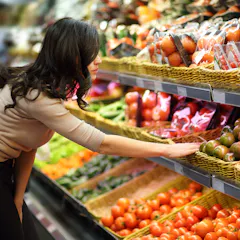
Food insecurity affected many students even before the pandemic hit, with international students the worst hit. But students and universities have shown a lot can be done to end the problem.

Economists estimate the tax on households worth over $50 million could bring in $3 trillion over 10 years, but it will run into constitutional challenges.
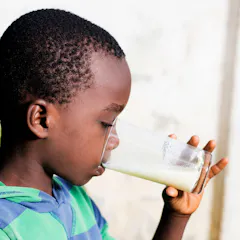
Poor nutrition stunts children’s growth and hollows out their life chances.

A tax on sugar-sweetened beverages may be intended to improve health, but for Indigenous consumers, such a tax would be unethical, contravene tax law and undermine Indigenous rights.

The Biden administration is trying to shore up SNAP, a mainstay of the safety net.
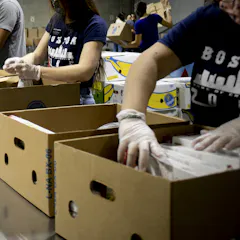
Food production in the US is heavily concentrated in the hands of a small number of large agribusiness companies. That’s been good for shareholders, but not for consumers.

The United States has a robust food supply chain and a social safety net in place that could, if fully utilized, nearly eliminate hunger within its borders.

A food policy researcher helps make sense of the lexicon of US food policy terms, and explains how they relate to racial justice.
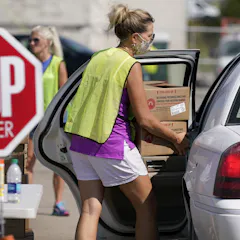
The number of people assisted by food banks had been growing over the two decades before the COVID-19 pandemic. Today, these nonprofits are facing even more demand.
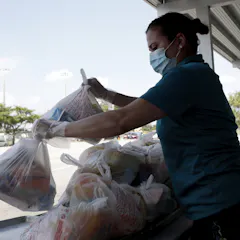
It helped that school food service staff quickly changed their preparation, packaging and distribution methods to feed students who were no longer eating in cafeterias.
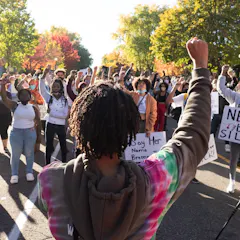
Professors explained how the topics they research are being affected by the COVID-19 pandemic and racial injustice in real time and as history unfolded.
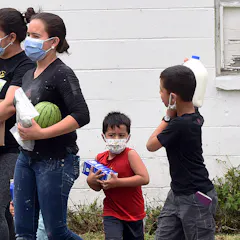
An estimated 1 in 4 US children have trouble getting enough to eat at least sometimes. We asked four scholars for their insights..
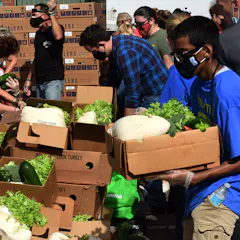
The boxes and bags people get from food pantries contain healthier food than you might suspect.
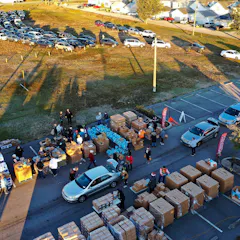
By not attaching any strings to the money, championing representation and generally taking care to respect nonprofit leaders, she’s following five best practices.
Top contributors
-

Associate Professor of Political Science, University of Richmond
-
Professor of Economics, Baylor University
-
Professor of Social Development Studies, University of Johannesburg
-
Professor of Human Development and Family Sciences, University of Connecticut
-
Senior Lecturer in Nutrition and Dietetics, University of Wollongong
-
Professor of Health Studies, Queen's University, Ontario
-
Senior Researcher, Associate Professor: Economic Management Sciences, University of Pretoria
-
Assistant Professor of Nutrition, Texas State University
-
Associate Professor of Allied Health Sciences, University of Connecticut
-
Assistant Professor of Public Health, Indiana University
-
Assistant Professor of Dietetics and Nutrition, University of Dayton
-
Professor of Nutritional Sciences, University of Toronto
-
DSTI/NRF Research Chair in Welfare and Social Development, University of Johannesburg
-
Research Program Coordinator, Food Insecurity, University of Toronto
-
Associate Professor of Nutrition Science, Purdue University