
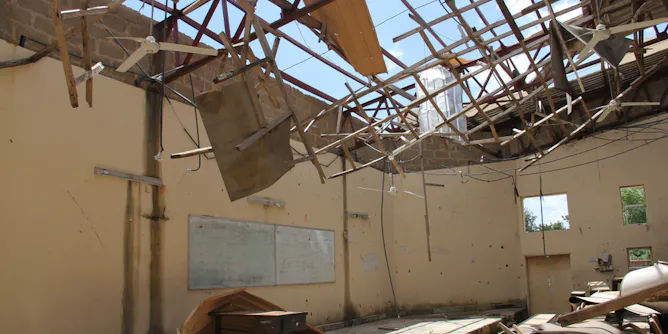
International scholarships make up most of the foreign aid to higher education in conflict-affected countries.
Articles on Development finance Africa
Displaying 101 - 120 of 122 articles
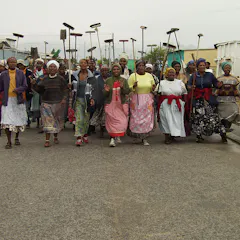
Social transfers don’t operate in a vacuum. They can strengthen trust or erode it, build cohesion or fuel resentment.
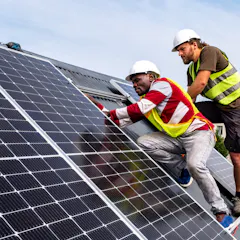
South Africa needs a renewable energy industrial strategy, not just requirements for green power projects to buy a percentage of solar parts from local companies.

The aim was to increase the city’s own source revenue by improving fairness, transparency, and compliance while modernising outdated systems.

Tensions over the role that credit rating agencies play in assessing African countries have broken into the open.
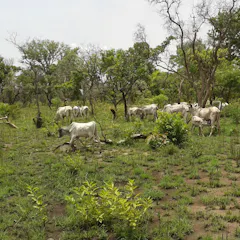
Benin’s smallholder dairy farmers need development finance to plant shady trees on the land where their cattle graze, to improve cattle health.
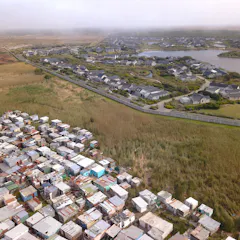
Tax records of the past can inform about governance, markets and inequality today.
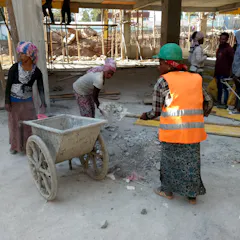
Ethnicity can be consciously adjusted in response to the risks women face in public spaces.

Most African climate-related financial policies remain voluntary, leaving climate risk as something to consider rather than a firm requirement.
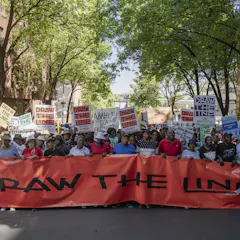
For the first time, countries now have a shared way to understand whether the world is actually improving at adapting to climate impacts.
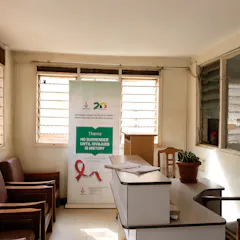
A mix of domestic revenue generation, efficiency gains and strategic partnerships is essential to sustain and expand HIV programmes despite declining external aid.

South Africa’s water, energy and food crises are interconnected. Coordinated funding across all three, including community-led and blended finance, is needed.

Development banks have spent over US$1 billion on factory farming in Africa, locking in high greenhouse gas emissions. Natural farming systems are a better choice.
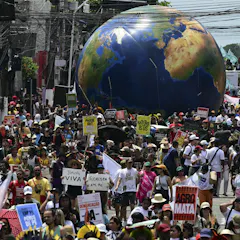
African countries need funding, skilled staff, and technology to make adaptation happen.

This year, on 10 November, it is World Science Day for Peace and Development. SALT has had considerable social benefits for the community in Sutherland.

The skit economy is estimated to be Nigeria’s third-largest entertainment sector, with a net worth of over US$31 million.

South Africa’s G20 presidency is a chance to lobby for investment in drought-tolerant crops, better irrigation, and early warning systems.

What happens when promises of increased tourism revenue and reduced environmental impact aren’t met?

Africa’s second climate summit agreed that climate finance to Africa must be a legal obligation and that every country on the continent should have a climate law.
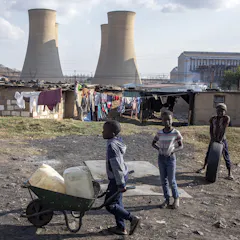
The G20 must establish a fair mineral trade for Africa, fund Africa’s climate needs, and make sure the move to clean energy benefits everyone.
Top contributors
-

Post Doctoral Researcher, Graduate School of Business (GSB), University of Cape Town
-
Professor/Senior Research Fellow, Centre for Advancement and Senior Non-Resident Fellow, Global Development Policy Center, Boston University of Scholarship, University of Pretoria
-
Senior Fellow, Centre for Policy Research (UNU-CPR), United Nations University; Aston University
-
Associate Professor of Development Economics, DSTI/NRF South African Research Chair in Industrial Development, University of Johannesburg
-
Professor of Economics, Salisbury University
-
Assistant Professor of Economics, Delft University of Technology
-
Professor and Acting Head of Department: Department of Finance and Investment Management, University of Johannesburg
-
Researcher in Renewable Energy, University of Cape Town
-
Associate Professor at the Southern Centre for Inequality Studies, University of the Witwatersrand
-
Postdoctoral Research Fellow, University of Johannesburg
-
Director, Columbia Center on Sustainable Investment, Columbia University
-
Research Fellow, World Institute for Development Economics Research (UNU-WIDER), United Nations University
-
Senior Researcher, Associate Professor: Economic Management Sciences, University of Pretoria
-
Senior Lecturer in Organisational Behaviour, University of Cape Town
-
Professor Entrepreneurship and Innovation, University of Cape Town