
Sovereign debt markets are beginning to develop a way to manage shocks before they escalate into full restructuring episodes.
Articles on Development finance Africa
Displaying 61 - 80 of 122 articles
Wealthy nations will need to help fund clean energy, green industrial growth and mineral processing.
Africa needs to invest in itself.

The World Bank Group’s integration process must at least maintain the current independence, accessibility and effectiveness of its three accountability mechanisms.

Circular economies don’t follow the ‘take, make and dispose’ model but try to keep products in use for as long as possible by reusing and recycling them.
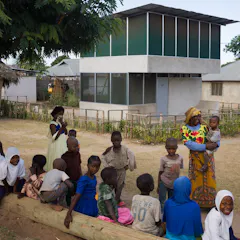
A three year study of Tanzanian children found that changing the way homes are designed can prevent diarrhoea, pneumonia and malaria, and help children grow taller.
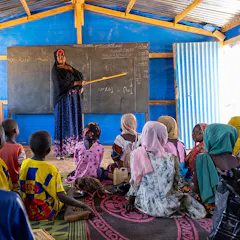
Eroding the gains made in education has severe consequences, especially for girls.

As cities grow, it would be better to have more efficient, higher-capacity transport than more vehicles on the road.
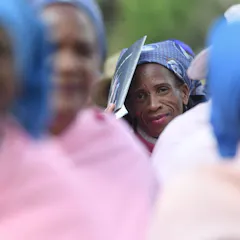
Botswana has significantly expanded income support for older people but it’s left them without the care they need.
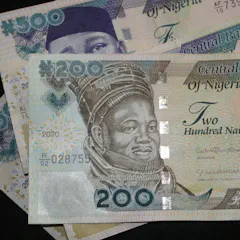
Nigeria’s government must invest in digital infrastructure to reduce corruption in its budget.
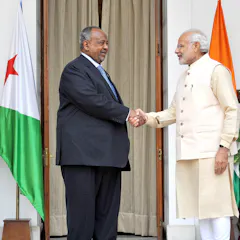
Over the past decade, India has come to see the Horn of Africa as a primary theatre of influence.
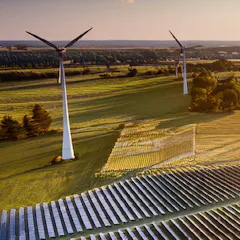
Africa’s clean energy funding would work much better if projects could borrow on fairer terms, and have longer to pay back loans.
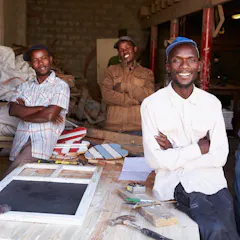
When up to 3.5 million small businesses go green, this will benefit South Africa’s environment and help the businesses survive in a changing climate.
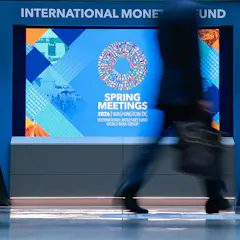
The IMF is not a neutral arbiter on any discussions relating to preferred creditor status. It is itself a direct beneficiary of the creditor hierarchy.
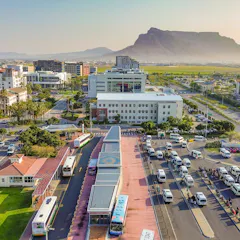
Electric taxis are a long-term climate solution whose immediate value lies in cleaner air, lower operating costs, lower noise and better urban health.

External assessors don’t always have a full view of a country’s creditworthiness.

The flaws in Standard & Poor’s Global’s report could influence investor perceptions and reinforce existing biases against Africa.

Kenya’s devolution has led to tangible improvements in everyday life in places that had long been left behind.
The sad truth is that African countries cannot avoid being harmed by the current Gulf war. But they can make efforts to emerge from the crisis in a better place.

The Infrastructure Fund’s architecture undermines the expectation of full autonomy from political and executive meddling.
Top contributors
-

Post Doctoral Researcher, Graduate School of Business (GSB), University of Cape Town
-
Professor/Senior Research Fellow, Centre for Advancement and Senior Non-Resident Fellow, Global Development Policy Center, Boston University of Scholarship, University of Pretoria
-
Senior Fellow, Centre for Policy Research (UNU-CPR), United Nations University; Aston University
-
Associate Professor of Development Economics, DSTI/NRF South African Research Chair in Industrial Development, University of Johannesburg
-
Professor of Economics, Salisbury University
-
Assistant Professor of Economics, Delft University of Technology
-
Professor and Acting Head of Department: Department of Finance and Investment Management, University of Johannesburg
-
Researcher in Renewable Energy, University of Cape Town
-
Associate Professor at the Southern Centre for Inequality Studies, University of the Witwatersrand
-
Postdoctoral Research Fellow, University of Johannesburg
-
Director, Columbia Center on Sustainable Investment, Columbia University
-
Research Fellow, World Institute for Development Economics Research (UNU-WIDER), United Nations University
-
Senior Researcher, Associate Professor: Economic Management Sciences, University of Pretoria
-
Senior Lecturer in Organisational Behaviour, University of Cape Town
-
Professor Entrepreneurship and Innovation, University of Cape Town