

Well-run institutions are more resilient to financial instability and better positioned to attract long-term partnerships.
Articles on Development finance Africa
Displaying 41 - 60 of 122 articles
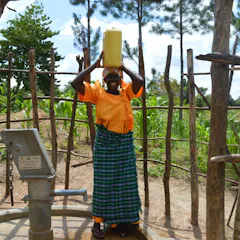
Solutions for food systems exist; scaling them is where the challenge lies.

From roadside plots to community gardens, urban farmers in Alexandra township, South Africa are growing food, earning income and coping with climate change.
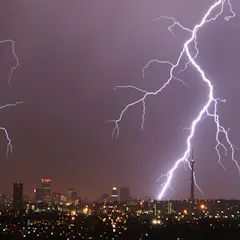
Citizens don’t just respond to disasters. They also respond to how governments manage them.

The economic and social conditions in which anti-migrant sentiment has exploded in South Africa include high joblessness and a collapse of government services.

Most states know that without widely understood and accepted international laws and principles it would be harder to resolve their disagreements peacefully.
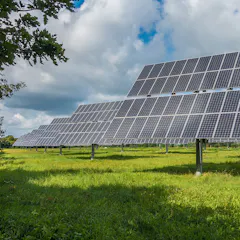
Africa is rapidly expanding electricity generation, but new research shows energy planning must also account for water scarcity and carbon dioxide emissions.

A German loan for fixing Johannesburg’s electricity utility is unlikely to make much difference to users yet: prices will probably rise faster than inflation.
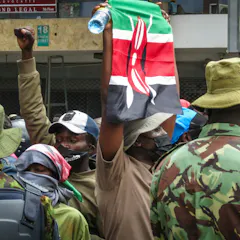
State spending has remained high despite public demands for greater fiscal discipline.
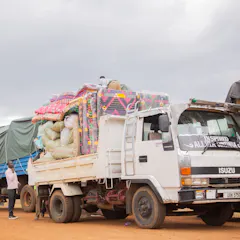
Africa does not need another grand vision. It needs to treat the vision it already has as a discipline.
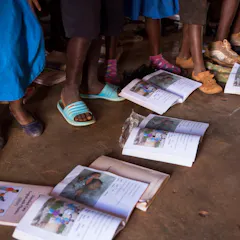
USAID’s closure, while painful and damaging, might give rise to a new arrangement beyond aid.
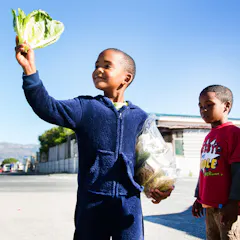
As food and living costs rise, rooftop solar and rainwater harvesting could help low income South African households save money and buy more food.
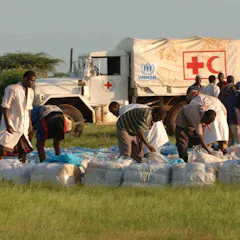
Kenya’s new refugee policy seeks to shift away from a camp-based system to one centred on inclusion into the local economy.

In areas that had received the most American aid, the probability of conflict increased by 3.1 percentage points.

South Africa shouldn’t settle for a future in which millions who are willing and able to work go hungry while the country waits for the formal sector to grow.
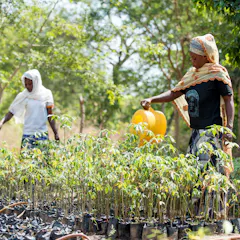
Ghana’s community conservation areas protect forests and wildlife while supporting rural livelihoods, but weak laws and funding threaten their future.
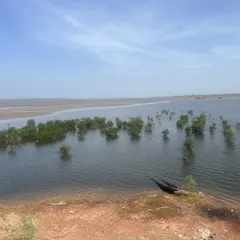
Nature-based solutions like mangrove restoration are key to climate action, but weak monitoring can overstate carbon storage, creating ‘ghost carbon’.

Africa needs to navigate the tension between interdependence, economic security, and economic diversification.

Mauritius is securing climate funding, but weak oversight and poor coordination risk leaving vital adaptation money mismanaged.
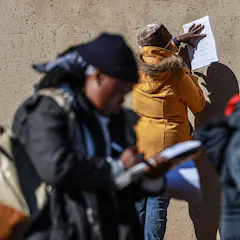
Data labs in Zambia, South Africa and Uganda are deepening how governments understand the economies they are responsible for, and the people within them.
Top contributors
-

Post Doctoral Researcher, Graduate School of Business (GSB), University of Cape Town
-
Professor/Senior Research Fellow, Centre for Advancement and Senior Non-Resident Fellow, Global Development Policy Center, Boston University of Scholarship, University of Pretoria
-
Senior Fellow, Centre for Policy Research (UNU-CPR), United Nations University; Aston University
-
Associate Professor of Development Economics, DSTI/NRF South African Research Chair in Industrial Development, University of Johannesburg
-
Professor of Economics, Salisbury University
-
Assistant Professor of Economics, Delft University of Technology
-
Professor and Acting Head of Department: Department of Finance and Investment Management, University of Johannesburg
-
Researcher in Renewable Energy, University of Cape Town
-
Associate Professor at the Southern Centre for Inequality Studies, University of the Witwatersrand
-
Postdoctoral Research Fellow, University of Johannesburg
-
Director, Columbia Center on Sustainable Investment, Columbia University
-
Research Fellow, World Institute for Development Economics Research (UNU-WIDER), United Nations University
-
Senior Researcher, Associate Professor: Economic Management Sciences, University of Pretoria
-
Senior Lecturer in Organisational Behaviour, University of Cape Town
-
Professor Entrepreneurship and Innovation, University of Cape Town