
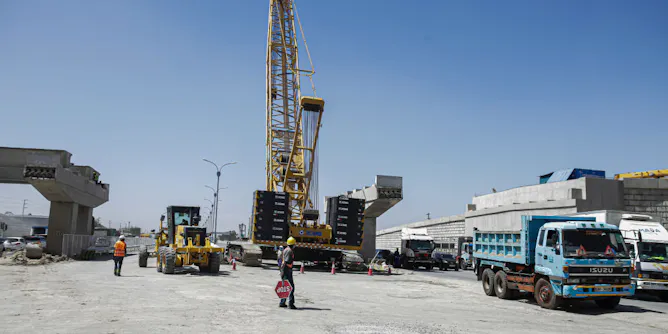
Chinese-funded infrastructure projects in African cities are driven by the national elites and therefore do not necessarily lead to community-level improvements.
Articles on Development finance Africa
Displaying 81 - 100 of 122 articles

Africa does not lack household savings, but only a small share of these are placed in formal institutions.

In eastern DRC, a hydropower mini-grid shows how access to electricity happens through public-private partnerships and community programmes.

Carbon capture projects could provide the funds needed to restore land degraded by commercial farming and forestry.

Kenya faces extreme weather crises. Humanitarian aid must be part of the solution.
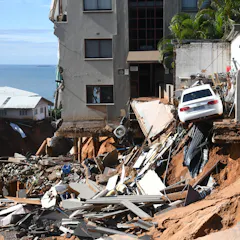
South Africa needs almost US$15 billion over a decade just to reach a basic level of climate adaptation, that protects water, food, health and infrastructure.

African countries face unfair trade rules, delayed decisions and weak support, leaving them exporting raw goods and losing out economically.

Africa holds key green energy minerals but exports them raw. If the continent had its own Green Bank, it could finance local manufacturing and green industry.
Infrastructure reflects political choices.
The most important thing to do is to lower the cost of capital for African countries.
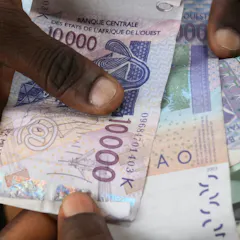
The lessons learned from this crisis must extend beyond Senegal and lead to greater debt transparency and banking supervision in the region.

Africa doesn’t need a technological breakthrough to scale EV adoption. It needs cheaper capital and supportive policy environments.

China’s zero tariff regime has the potential to boost trade between African countries and lead to better coordination.
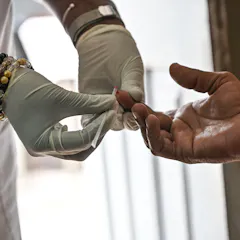
African countries must not sign away their health data or release their pathogens in exchange for donor funding.
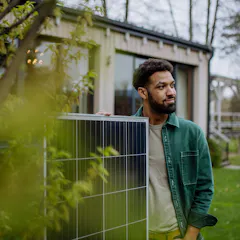
With cement production driving 8% of greenhouse gas emissions, green housing is needed urgently.

A simple solution of moving from paper to electronic records improved healthcare for many HIV patients.

Polluting companies in South Africa have had to pay a tax on their carbon emissions since 2019. This gives them a good incentive to reduce emissions.
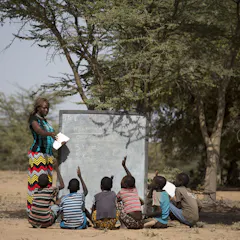
Public finance is the means through which societies either raise living standards or entrench dependence.

Working within existing informal regulations in Kenya’s sand industry would help boost livelihoods and inclusion.
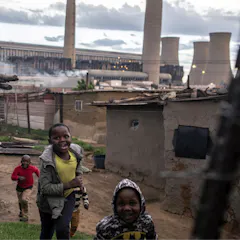
The South African government and coal industry need to move fast to set up a plan to turn old coal mines and power stations into job-creating hubs after they close.
Top contributors
-

Post Doctoral Researcher, Graduate School of Business (GSB), University of Cape Town
-
Professor/Senior Research Fellow, Centre for Advancement and Senior Non-Resident Fellow, Global Development Policy Center, Boston University of Scholarship, University of Pretoria
-
Senior Fellow, Centre for Policy Research (UNU-CPR), United Nations University; Aston University
-
Associate Professor of Development Economics, DSTI/NRF South African Research Chair in Industrial Development, University of Johannesburg
-
Professor of Economics, Salisbury University
-
Assistant Professor of Economics, Delft University of Technology
-
Professor and Acting Head of Department: Department of Finance and Investment Management, University of Johannesburg
-
Researcher in Renewable Energy, University of Cape Town
-
Associate Professor at the Southern Centre for Inequality Studies, University of the Witwatersrand
-
Postdoctoral Research Fellow, University of Johannesburg
-
Director, Columbia Center on Sustainable Investment, Columbia University
-
Research Fellow, World Institute for Development Economics Research (UNU-WIDER), United Nations University
-
Senior Researcher, Associate Professor: Economic Management Sciences, University of Pretoria
-
Senior Lecturer in Organisational Behaviour, University of Cape Town
-
Professor Entrepreneurship and Innovation, University of Cape Town