
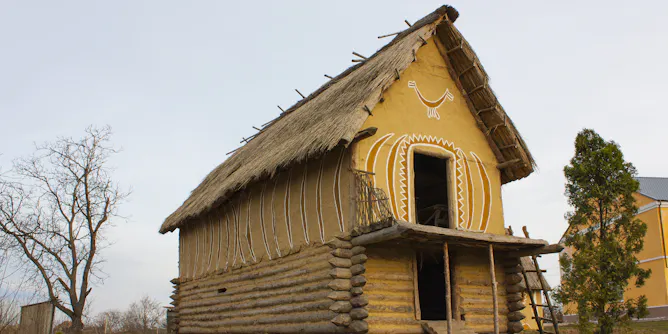
Anthropologist Alex Bentley tells The Conversation Weekly about his research how modelling the spread of COVID sparked new research on the spread of disease in early civilisations.
Articles on Archaeology
Displaying 121 - 140 of 670 articles
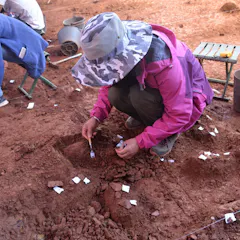
Discovery in China of tools called Quina scrapers suggests the people of East Asia were as inventive and flexible with technology during the Middle Paleolithic era as those in other parts of the world.

The Maghreb has long been absent from studies on the recent prehistory of the Mediterranean. The new findings change that.
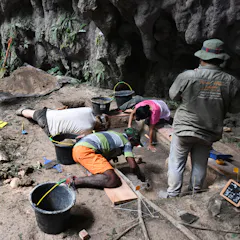
Archaeologists show some of the first people to settle the ancient continent of Sahul arrived on the shores of present-day West Papua, some 50,000 years ago.
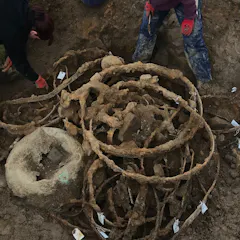
Among the over 800 Iron Age metal artefacts are finds that prove Iron Age Brits had conact with Europe.
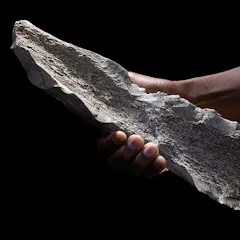
By 1.5 million years ago, Homo erectus was able to transfer tool-making skills from stone to bone.

Research that combined archaeology, history and ecology provides a nuanced understanding of the past that could help conservationists better plan for the future.
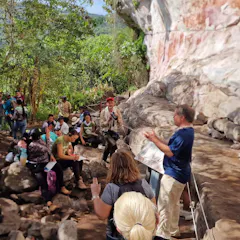
Local community archaeology tourism benefits the heritage, the people and the rainforest.
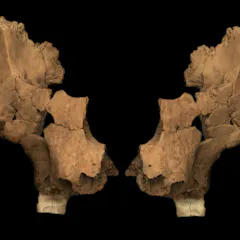
The bone fragments belong to an extinct species of human who lived 1.4 million years ago.

A fossil face reveals that a prehistoric human species reached Western Europe much earlier than anybody thought.
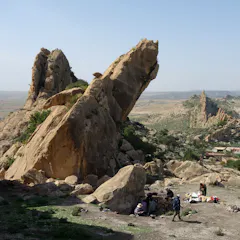
These findings challenge the long-held narrative about migration into and out of North Africa before and during the Neolithic.
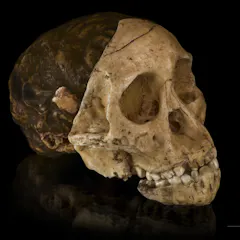
Historian Christa Kuljian and paleoanthropologist Dipuo Kgotleng talk to The Conversation Weekly podcast about the complicated legacy of the Taung child skull, 100 years since its discovery.

A rare sequence of heating and cooling triggered the chain of chemical reactions that turn organic material into glass.
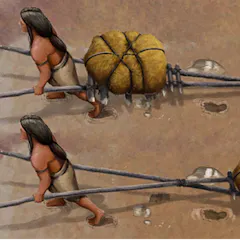
How people got stuff around before wheels.

Visibility patterns of settlements may be influenced by social, economic and defensive needs.
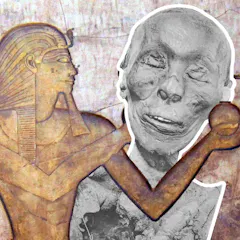
An empty tomb, yet a groundbreaking find – archaeologists in Egypt have uncovered the tomb of Thutmose II, a ruler overshadowed by his powerful wife, Hatshepsut.
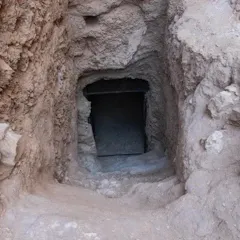
The discovery of Thutmose II’s original burial site is one of Egypt’s last missing royal tombs.
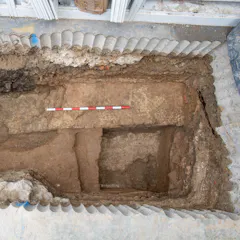
The building formed the centre of administrative and civic life in the ancient Roman city of Londinium.
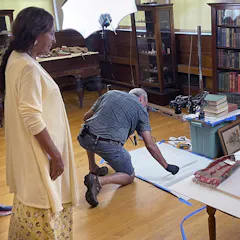
Repatriation is now a legal responsibility, but also a matter of human rights, an anthropologist writes.

Between the 10th and 15th centuries, the gold market boomed, especially in Egypt, Persia, India and China. Southern Africa played a crucial role in meeting demand.
Top contributors
-

Professor of Environmental and Geographical Sciences, Bournemouth University; University of Reading
-
PhD Candidate, Anthropology and Archaeology, University of Bristol
-
Associate Professor of Archaeology, Griffith University
-
Professor in Geochronology and Geochemistry, Southern Cross University
-
Director, ARC Centre of Excellence for Transforming Human Origins Research, Griffith University
-
Professor of Archaeology and Biological Anthropology, School of Social Science, The University of Queensland
-
Professor of Archaeology, Griffith University
-
Associate Professor and Director, Flinders Microarchaeology Laboratory, Flinders University
-
Curator of Human Evolution of the Cleveland Museum of Natural History and Research Assistant Professor of Anthropology, Stony Brook University (The State University of New York)
-
Senior Lecturer, University of Mpumalanga
-
Honorary Professor, Archaeology, The University of Queensland
-
Honorary Associate Professor, UNSW
-
Associate professor, University of Johannesburg
-
Postdoctoral fellow, University of Tübingen
-
Associate Professor of Anthropology, Rice University