
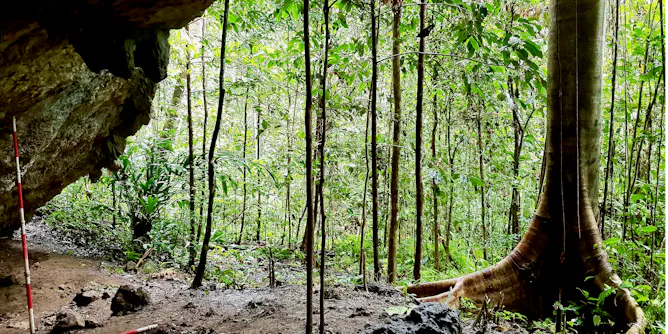
Archaeological discoveries in a jungle cave in central Indonesia suggest humans arrived there 18,000 years ago and decided to stay a while, hunting in the jungle and building canoes.
Articles on Archaeology
Displaying 381 - 400 of 670 articles
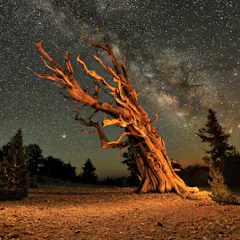
The updated methods are providing a clearer picture of how Earth and its inhabitants evolved over the past 60,000 years - and thus, providing new insight into its future.
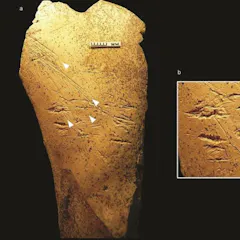
The Boxgrove people, like all other human species, were capable of sharing time, care and knowledge in all parts of their life.
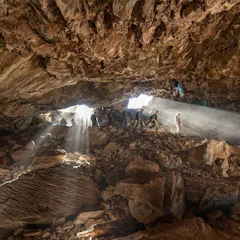
Stone tools found in a cave in Mexico have archaeologists rewriting the human history of the Americas.
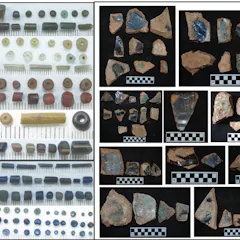
Africa has always contributed to global technological breakthroughs and economic systems.
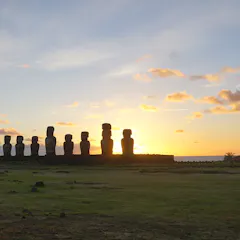
New research claiming indigenous Americans traveled to Polynesia is sensational, but the science is flawed and ignores other evidence.
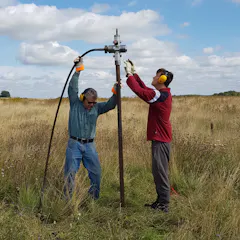
Archaeologists reveal two-kilometre ring of pits around the neolithic Durrington Walls by studying old geophysical surveys.

New research suggests ancient climate change shaped the fate of western civilisation.

Archaeologists working with museums in Iraq have protected more than 270,000 artefacts using SmartWater liquid technology.

Recent excavations reveal that what was once thought to be a Bronze Age fort is actually much younger, and produce evidence of a huge settlement that was home to 4,000 people.
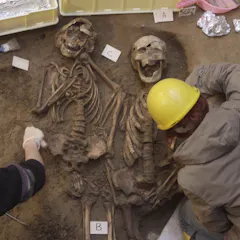
People have lived with infectious disease throughout the millennia, with culture and biology influencing each other. Archaeologists decode the stories told by bones and what accompanies them.
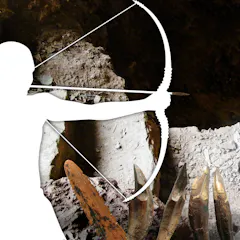
The ancient bone arrowheads are the oldest ever found outside Africa, and show how humans adapted to a new environment.
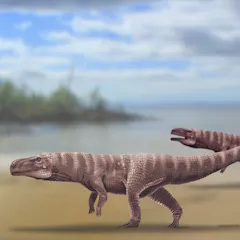
We found footprints that measure around 24 centimetres long. We suspect they came from animals with legs the same height as humans.

An Aboriginal tree on Wiradjuri Country is much younger than anybody thought.
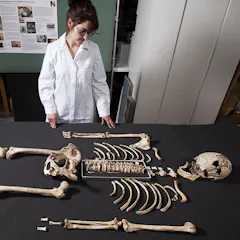
You can’t own a human, so why can you own their remains? We need to stop treating human fossils as objects.
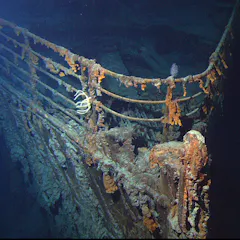
A recent ruling allowing a new expedition to the Titanic wreck gives the go ahead to commercial exploitation.
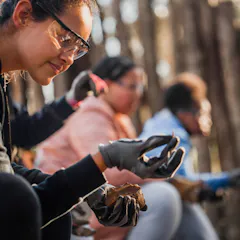
There are some moves towards recognising and redressing archaeology’s colonial history.
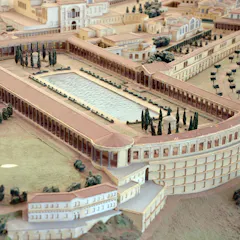
The plants a Roman chose could say a lot about the person they were.
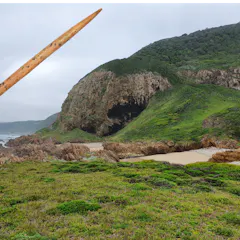
The artefact comes from deposits dated to more than 60,000 years ago. It closely resembles thousands of bone arrowheads used by the indigenous San hunter-gatherers from the 18th to the 20th centuries.

Without a clear framework within which decisions can be made, heritage resources will forever be threatened by development.
Top contributors
-

Professor of Environmental and Geographical Sciences, Bournemouth University; University of Reading
-
PhD Candidate, Anthropology and Archaeology, University of Bristol
-
Associate Professor of Archaeology, Griffith University
-
Professor in Geochronology and Geochemistry, Southern Cross University
-
Director, ARC Centre of Excellence for Transforming Human Origins Research, Griffith University
-
Professor of Archaeology and Biological Anthropology, School of Social Science, The University of Queensland
-
Professor of Archaeology, Griffith University
-
Associate Professor and Director, Flinders Microarchaeology Laboratory, Flinders University
-
Curator of Human Evolution of the Cleveland Museum of Natural History and Research Assistant Professor of Anthropology, Stony Brook University (The State University of New York)
-
Senior Lecturer, University of Mpumalanga
-
Honorary Professor, Archaeology, The University of Queensland
-
Honorary Associate Professor, UNSW
-
Associate professor, University of Johannesburg
-
Postdoctoral fellow, University of Tübingen
-
Associate Professor of Anthropology, Rice University