

New research shows that Neolithic migrants from Spain brought agriculture to Northern Morocco over 7,500 years ago.
Articles on Archaeology
Displaying 201 - 220 of 670 articles
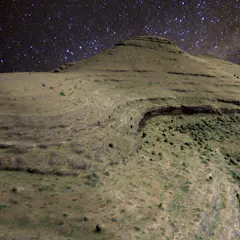
One criticism of current 3D models of archaeological sites is that they are presented devoid of human traces and history.

More discoveries are being made with the use of technology, but that’s just the start of the investigation.
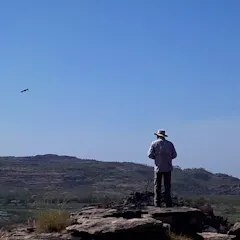
Rock art directly represents how our ancestors saw the world. A new approach involving the history of the landscape brings fresh meaning to Arnhem Land rock art.
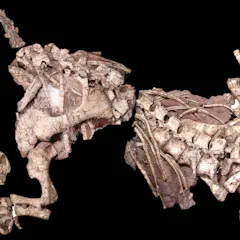
Some time between 1100 and 1700 AD, a Massospondylus bone was discovered and carried to a rock shelter in Lesotho.

A team of archaeologists discovered the remains of the 16th-century father of modern astronomy, who demonstrated that the Earth orbits the Sun.

Our new study reveals a mosaic of habitable landscapes – now submerged by the ocean – once supported up to 500,000 people living in Australia’s northwest.
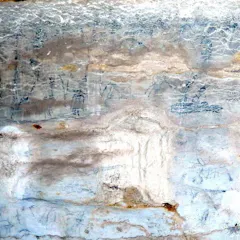
Rock art from a Malagasy cave hints at some remarkable cultural connections.

Historians know a fair bit about Herod the Great, the king of Judea at the time of Jesus’ birth.
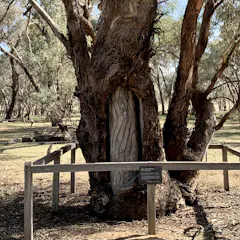
A new study unlocks the mysteries of ancient burial marker trees made by Wiradjuri people in southeastern Australia.
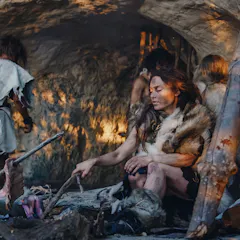
Female bodies have an advantage in endurance ability that means Paleolithic women likely hunted game, not just gathered plants. The story is written in living and ancient human bodies.
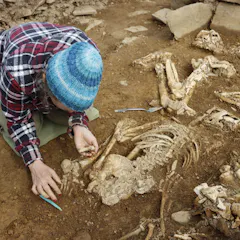
It is unusual to find a tomb so intact and so well preserved.

For a decade, debate has raged over Dark Emu’s account of Aboriginal agriculture. But ancient food production in Australia is more complex than labels like farming or hunter-gathering suggest.
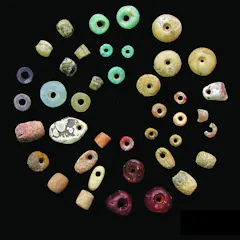
Mineralogical analysis of 5,000-year-old stone beads from Turkana, Kenya suggest a novel mortuary tradition by early pastoralists.
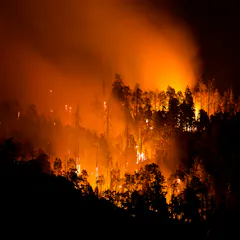
A changing climate, humans and fire were a deadly combination for the big animals that used to roam southern California. Listen to The Conversation Weekly podcast.
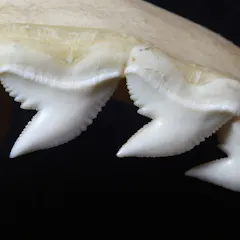
Archaeologists have discovered two 7,000-year-old tiger shark teeth that were once part of ritual or fighting blades on the Indonesian island of Sulawesi.

Archaeological data alone can’t always help to answer researchers’ questions: multiple lines of evidence are needed.
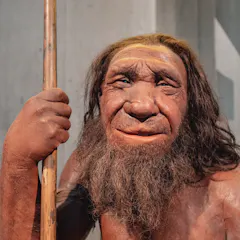
What could the extinction of Neanderthals tell us about our own species? An archaeologist explains in The Conversation Weekly podcast.
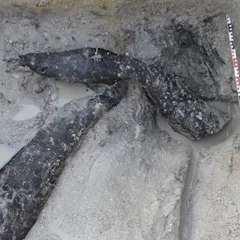
Experts speculated that very early humans worked wood, but previously didn’t have the evidence.
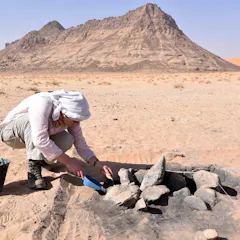
A close look at 7,000-year-old grinding stones left in ancient firepits shows wandering herders in northern Saudi Arabia carried heavy tools for working on bones, plants and rocks.
Top contributors
-

Professor of Environmental and Geographical Sciences, Bournemouth University; University of Reading
-
PhD Candidate, Anthropology and Archaeology, University of Bristol
-
Associate Professor of Archaeology, Griffith University
-
Professor in Geochronology and Geochemistry, Southern Cross University
-
Director, ARC Centre of Excellence for Transforming Human Origins Research, Griffith University
-
Professor of Archaeology and Biological Anthropology, School of Social Science, The University of Queensland
-
Professor of Archaeology, Griffith University
-
Associate Professor and Director, Flinders Microarchaeology Laboratory, Flinders University
-
Curator of Human Evolution of the Cleveland Museum of Natural History and Research Assistant Professor of Anthropology, Stony Brook University (The State University of New York)
-
Senior Lecturer, University of Mpumalanga
-
Honorary Professor, Archaeology, The University of Queensland
-
Honorary Associate Professor, UNSW
-
Associate professor, University of Johannesburg
-
Postdoctoral fellow, University of Tübingen
-
Associate Professor of Anthropology, Rice University