

An archaeologist reveals what she learned from sifting through a 200-year-old rat nest recovered from a historic Philadelphia home.
Articles on Archaeology
Displaying 61 - 80 of 670 articles

Long ago, people identified fossils in their environment and explained them within their own cultural framework. This was early citizen science.

By working closely with the objects, students will learn how to become archeological detectives and engage with the process of museum research from start to finish.

Studying ancient genes can tell us more about the evolution of humans’ anatomy, behaviour and thinking.
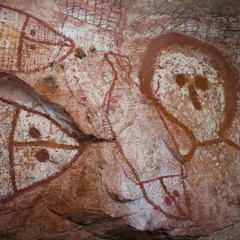
New research confirms humans first reached the Sahul super-continent by two different routes around 60,000 years ago.

The tools reveal how Aboriginal ancestors survived and thrived in the continent’s interior more than 100 years ago.
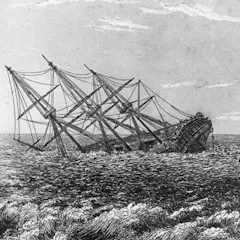
The British Navy’s HMS Pandora struck the Great Barrier Reef around 1791 and sank, taking 35 men with it.

New research details Aboriginal craftsmanship – along with accompanying wall art – at a remote site in the Cape York Peninsula.

Dogs were already remarkably diverse more than 10,000 years ago, long before kennel clubs and pedigrees.

Like the bronze and iron ages, plastic is defining an archaeological era.
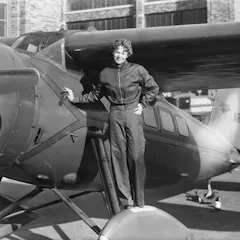
The decades-long search for Amelia Earhart, her aircraft, and her navigator Fred Noonan, has been both controversial and costly.

An ancient band of thousands of precisely aligned small pits stretching 1.5 kilometres across the Pisco Valley in Peru has baffled experts for almost a century.
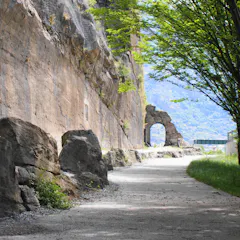
A new comprehensive map reveals the true scale of the ancient Roman road network – but it is still incomplete.

Cylinder seals were intimately tied to their owner, showcasing their identity, beliefs and social status.
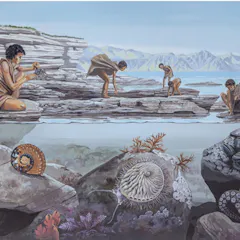
A coastal migration up and out of Africa was more likely to succeed than an overland journey.
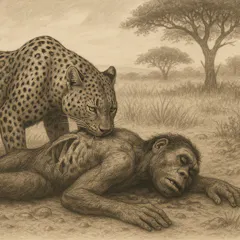
Paleoanthropologists have thought that Homo habilis was the first stone-tool maker and meat-eater in our genus. But new research suggests H. habilis might not have been so advanced.
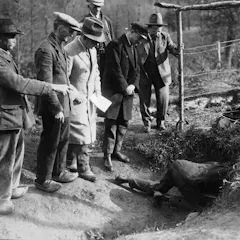
A century-old French archaeological scandal was sensationalized in the press at the time – but responsible scientists also relied on careful reporting to get the truth out.

Grip marks, blood and fire damage hint at the fascinating history of a non-returning boomerang.
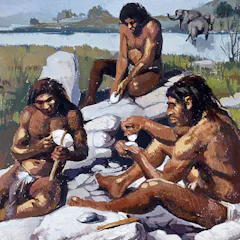
Early nomadic humans living in Europe briefly halted to profit from an unexpected windfall, leaving some important clues about their behaviour.

The large, naturalistic engravings are a striking symbol for survival in the desert.
Top contributors
-

Professor of Environmental and Geographical Sciences, Bournemouth University; University of Reading
-
PhD Candidate, Anthropology and Archaeology, University of Bristol
-
Associate Professor of Archaeology, Griffith University
-
Professor in Geochronology and Geochemistry, Southern Cross University
-
Director, ARC Centre of Excellence for Transforming Human Origins Research, Griffith University
-
Professor of Archaeology and Biological Anthropology, School of Social Science, The University of Queensland
-
Professor of Archaeology, Griffith University
-
Associate Professor and Director, Flinders Microarchaeology Laboratory, Flinders University
-
Curator of Human Evolution of the Cleveland Museum of Natural History and Research Assistant Professor of Anthropology, Stony Brook University (The State University of New York)
-
Senior Lecturer, University of Mpumalanga
-
Honorary Professor, Archaeology, The University of Queensland
-
Honorary Associate Professor, UNSW
-
Associate professor, University of Johannesburg
-
Postdoctoral fellow, University of Tübingen
-
Associate Professor of Anthropology, Rice University