
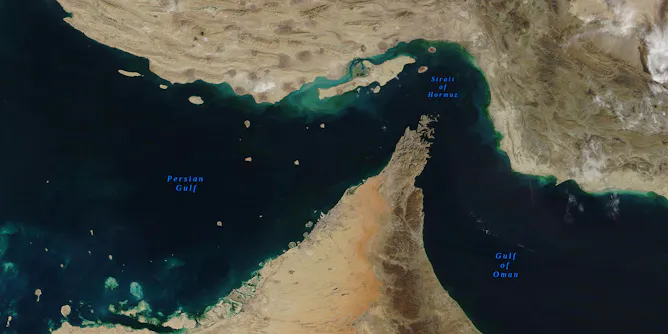
Controlling supply chains puts a country in a very powerful position.
Articles on US-Iran conflict
Displaying 141 - 160 of 434 articles

As uncertainty grows surrounding US-Iran conflict resolution, a social psychology professor pinpoints the intricate layers and “make or break” behavioural mechanics at play in such complex negotiations.

Pyrrhus was said to have remarked that one more victory would leave his kingdom ‘utterly ruined.’ Some see echoes in US interventions in the Middle East.

Increased and effective Ukrainian attacks on Russia’s energy infrastructure have prevented Russia from effectively exploiting higher oil prices.
Politicians and environmental groups are renewing calls for a 25% tax on Australia’s gas exports. An energy law expert explains how it would work.
Access to open sea lanes is critical not just for economic prosperity, but for ensuring Australians can reliably access food.
Frustrations at slow global climate talks has led more than 50 nations to begin plans to phase out fossil fuels – even as oil shocks raise the stakes.
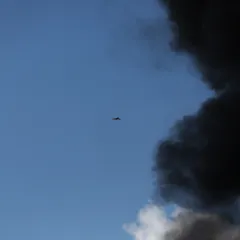
Bureaucratic hurdles mean the US military typically has to wait a decade between the time it sees a new threat and the employment of a new system to defend against it.
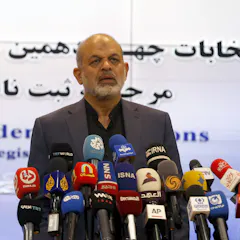
The newly appointed leader of Iran’s Revolutionary Guard Corps, Ahmad Vahidi, has emerged as the key powerbroker as the conflict continues.
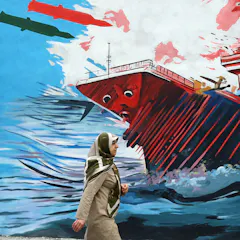
Much like the frozen conflicts between India and Pakistan or North and South Korea, this will keep the entire world on edge.
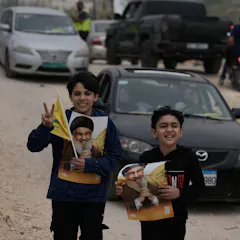
The majority of Lebanese people distrusts Hezbollah, but the Israeli attacks are driving many in the south back into their fold.
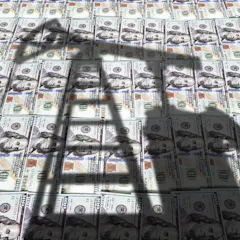
Who gets all that cash, and what do they do with it?
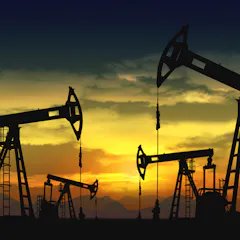
During the 1973 oil shock, Queensland promised to open a huge oilfield. History is repeating as Australia searches for secure supplies of fuel.
Using force against a ship during a blockade is only lawful under certain conditions. A naval expert explains.
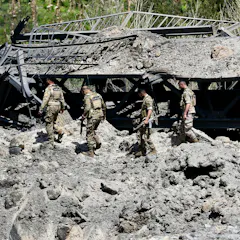
Lebanon and Israel have agreed a ten-day ceasefire, pausing hostilities that broke out in March.
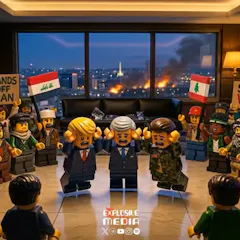
In an online environment which blurs news and entertainment, Iran’s AI propaganda videos are reaching a huge audience globally.
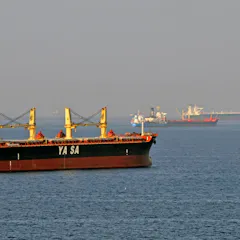
The potential for dangerous escalation has increased with the US decision to pursue any ships anywhere in the world they think may be helping Iran evade sanctions.
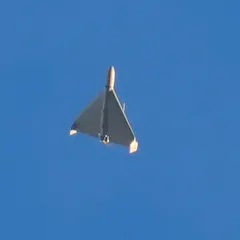
One-way attack drones have changed the face of the Russia-Ukraine war and give Iran a boost in countering US and Israeli forces.

The US president’s slurs against Pope Leo will cost him votes at home and allies abroad.
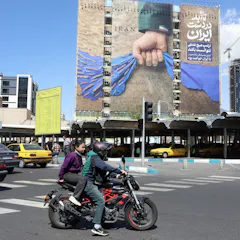
Iran’s leaders are demanding sovereignty over the strait for a reason: it protects them from future attacks and can be a very effective bargaining chip.
Top contributors
-

Honorary Research Fellow, Department of International Politics, City St George's, University of London
-
Emeritus Professor of Middle Eastern Studies, Australian National University; The University of Western Australia; Victoria University
-
Professor in International Politics, City St George's, University of London
-
Associate Professor in International Relations, UNSW
-
Lecturer in History and International Studies, Leiden University
-
Professor of International Security, University of Birmingham
-
Adjunct Professor, Defence and Security Institute, The University of Western Australia; UNSW
-
Associate Professor in International Politics, UCL
-
Lecturer in Energy Systems, University of Oxford
-
Professorial Fellow, University of Canberra
-
Professor of International Relations, Lancaster University
-
Professor of the Practice of Political Science and International Relations, USC Dornsife College of Letters, Arts and Sciences
-
Lecturer, Department of War Studies, King's College London
-
Associate Professor, Defence Studies Department, King's College London
-
Fellow for the Middle East at the Baker Institute, Rice University