
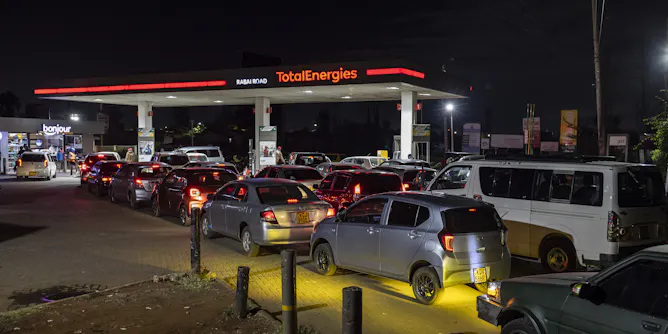
African countries need to remove the obstacles to trade within the continent and hold stocks of fuel and fertiliser.
Articles on Strait of Hormuz
Displaying 1 - 20 of 176 articles
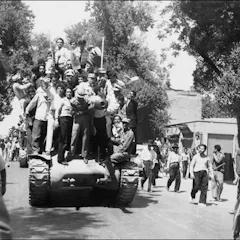
A two-year blockade imposed on Iran by Britain gave way to a coup and leadership change. But seven decades later, circumstances are very different.
The US–Iran war has upended the diesel supply chain. Australia’s supply of diesel has held up, but it now leans on fewer suppliers and a longer, more fragile chain.

The US economy is built on energy prices. When people’s bills are high, they tend to vote against incumbents and their parties.
Suez showed that Britain had lost the leeway to behave like a superpower.
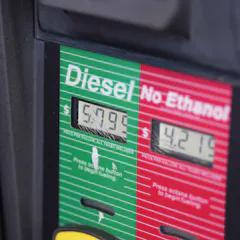
If the US imposed a ban on its diesel exports, as some lawmakers are calling for, it would roil the global market.
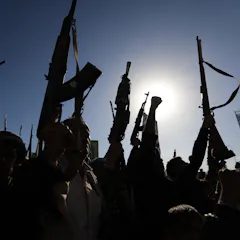
A deadly bombing at Riyadh’s international airport is the latest in a tit-for-tat retaliation campaign the Houthis have ramped up for weeks.

A historian traces how Oil City brokers, then John D. Rockefeller, then futures exchanges decided what the world pays for crude – and why no one entity does today.
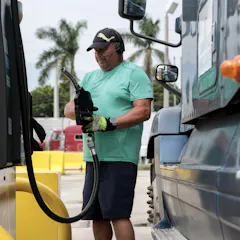
Any work to ease current shortages and price hikes while the Strait of Hormuz remains closed will take years and billions of dollars.
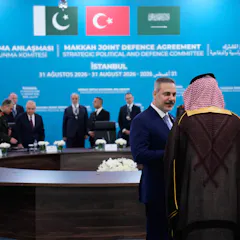
The pact with Turkey and Pakistan has evolved quickly from a vague political commitment. Riyadh hopes it will help it navigate a thorny Middle East crisis.
Seven months into the US conflict with Iran, with no clear end in sight, the global oil market has now largely exhausted the safety measures that exist to keep a lid on petroleum prices.
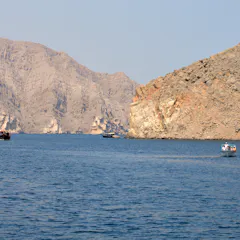
The Portuguese, Dutch and British empires all vied for control over these vital shipping lanes.
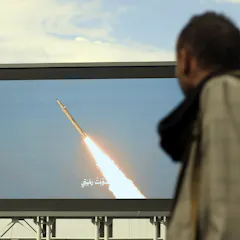
Saudi Arabia’s escalating conflict with the Houthis in Yemen will force its new defence partners Turkey and Pakistan to confront some difficult questions.
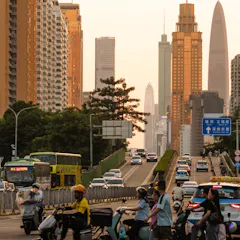
As renewed chaos grips the oil market, China is reaping the benefits of electric vehicles. But Australia’s reliance on diesel leaves it exposed.
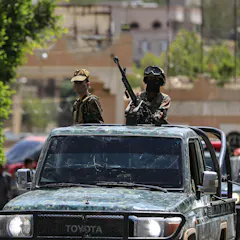
Seizure of the Bab el-Mandeb Strait complicates a widening conflict in the Persian Gulf. It also risks reigniting Yemen’s civil war.
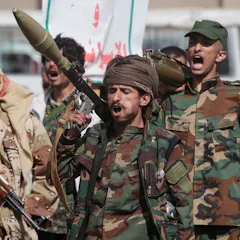
The resumption of fighting, paired with the ongoing closure of the Strait of Hormuz, complicates regional strategy and energy policy for the Gulf powerhouse.
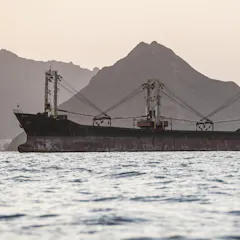
The move suggests Iran and its allies are settling in for a long war. That could mean pain for the global economy.

On the Strait of Hormuz seabed are vital communication cables linking Gulf states with the rest of the world.
Rapid expansion of the bloc means that its 21 members have deeply divergent interests, particularly in the Middle East.
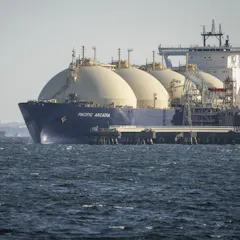
Japan is one of the countries most affected by restrictions placed on one of the world’s most important choke points.
Top contributors
-

Professor in International Politics, City St George's, University of London
-
Honorary Research Fellow, Department of International Politics, City St George's, University of London
-
Lecturer in Energy Systems, University of Oxford
-
Adjunct Professor, Defence and Security Institute, The University of Western Australia; UNSW
-
Professorial Fellow, University of Canberra
-
Associate Professor in International Politics, UCL
-
Fellow for the Middle East at the Baker Institute, Rice University
-
Adjunct Professor, Institute for Water, Environment and Health (UNU-INWEH), United Nations University; Technical University of Hamburg
-
Assistant Professor of International Relations, American University
-
Senior Lecturer in Finance, Macquarie University
-
Professor in Global Thought and Comparative Philosophies, Inaugural Co-Director of Centre for AI Futures, SOAS, University of London
-
Assistant Professor in Circular Supply Chains, University of Bradford
-
Associate Professor in International Relations, UNSW
-
Lecturer in Sustainable Freight Transport and Logistics, University of Leeds
-
Associate Professor in Operations and Supply Chain Management, UTS Business School, University of Technology Sydney