
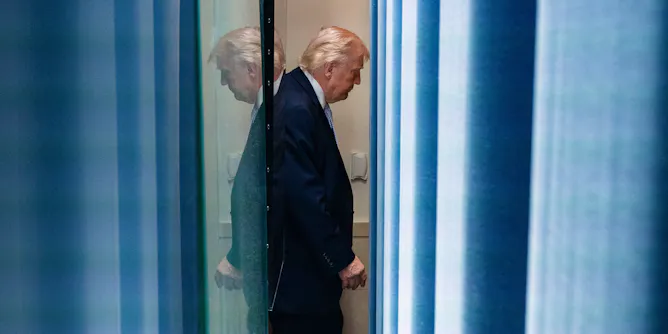
Trump’s net approval has never been lower, while Democrats had a 25-point swing in their favour in a federal special election.
Articles on US-Iran conflict
Displaying 181 - 200 of 434 articles
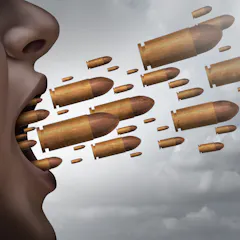
For years, Donald Trump’s rhetoric has relied on insult, ridicule, threat and contempt. But the scale of violence in his words during the first week of April 2026 was new – and had a purpose.
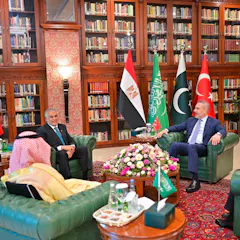
Pakistan played a leading role in negotiating the ceasefire in Iran.
Even in more peaceful times, oil is considered to be one of the world’s most volatile commodities.
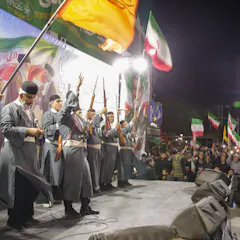
Both sides are claiming success, but it may be Tehran that benefits more from the deal.

Iran feels that the US has repeatedly betrayed its trust in the diplomatic process.
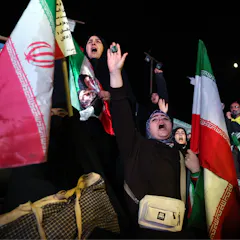
The two-week agreement, brokered by Pakistan, temporarily halts violence and reopens the Strait of Hormuz – but the path to peace remains complicated.
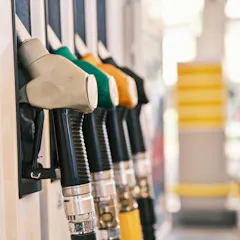
The Strait of Hormuz bottleneck may be about to reopen – but damage to oil infrastructure will mean lingering pain in Australia – and worldwide.
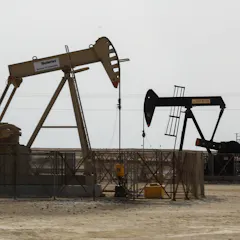
For sheer abundance and ease of production of oil and natural gas, it simply doesn’t get any better than the Persian Gulf region.
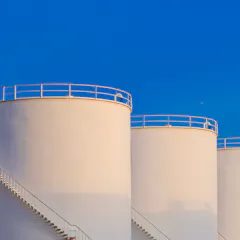
The government’s response to the fuel crisis has been to reassure us normality will resume. Amid global uncertainty, that’s not enough.
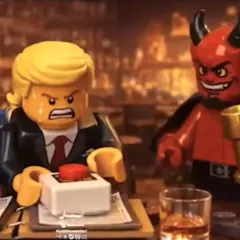
Even obviously fake propaganda videos can influence viewers – and erode their trust in all kinds of information.

The UK is particularly vulnerable to global economic shocks.
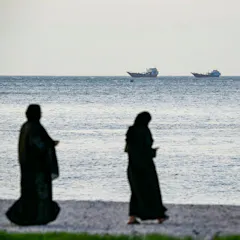
US President Donald Trump has threatened to “demolish” Iran if it doesn’t reopen the crucial shipping channel, but it’s not the most likely path to reopening.

Trump’s language of war is a dangerous fusion of militarism, religious fundamentalism, spectacle and authoritarian politics that is redefining how military power is justified and normalized.
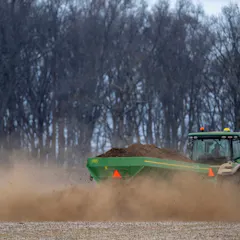
Fertilizer is more expensive and in shorter supply. Without the right amounts of fertilizer at specific times, yields drop, food prices increase and food shortages result.
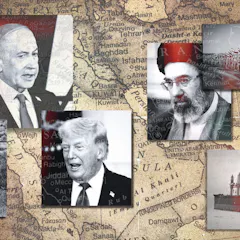
The US, Israel and Iran war will shift alliances and create insecurity for years to come.
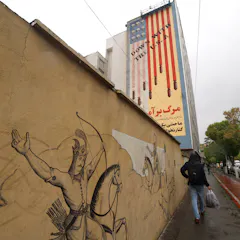
Some major events in the history of US-Iran relations highlight differences between the countries’ views, but others have presented real opportunities for reconciliation.
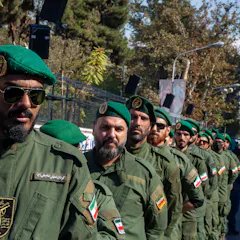
The IRGC commands large paramilitary forces, and has a history of fighting US and Israeli occupations via proxies.
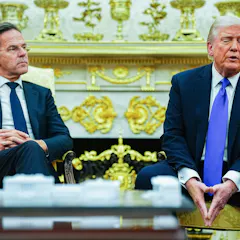
Donald Trump and his senior advisers have threatened to leave Nato over alliance members’ reluctance to join the war in Iran.
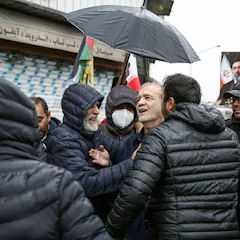
Once a strong force after the Iranian Revolution, the office of the president slowly diminished over time as power centralized under the supreme leader.
Top contributors
-

Honorary Research Fellow, Department of International Politics, City St George's, University of London
-
Emeritus Professor of Middle Eastern Studies, Australian National University; The University of Western Australia; Victoria University
-
Professor in International Politics, City St George's, University of London
-
Associate Professor in International Relations, UNSW
-
Lecturer in History and International Studies, Leiden University
-
Professor of International Security, University of Birmingham
-
Adjunct Professor, Defence and Security Institute, The University of Western Australia; UNSW
-
Associate Professor in International Politics, UCL
-
Lecturer in Energy Systems, University of Oxford
-
Professorial Fellow, University of Canberra
-
Professor of International Relations, Lancaster University
-
Professor of the Practice of Political Science and International Relations, USC Dornsife College of Letters, Arts and Sciences
-
Lecturer, Department of War Studies, King's College London
-
Associate Professor, Defence Studies Department, King's College London
-
Fellow for the Middle East at the Baker Institute, Rice University