

Damage to heritage sites across Iran has been reported since the onset of war with Israel and the US in February.
Articles on US-Iran
Displaying 1 - 20 of 248 articles
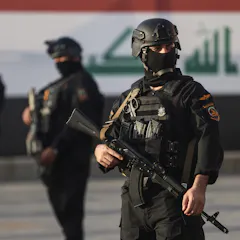
Washington has reportedly warned of consequences should Baghdad not rein in pro-Iranian groups.
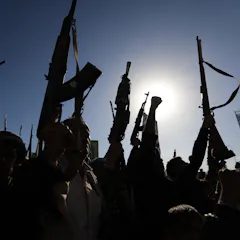
A deadly bombing at Riyadh’s international airport is the latest in a tit-for-tat retaliation campaign the Houthis have ramped up for weeks.
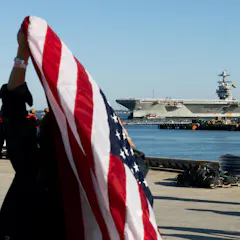
‘Credibility is on the line’ has long been a refrain guiding U.S. foreign policy.

The region may become less of a target for groups seeking to pressure the United States. But the Kurds also have less security support now, should they need it.
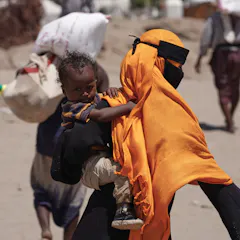
Turkey and Pakistan are poised to send troops to Saudi Arabia, but so far the Trump administration has avoided getting involved.
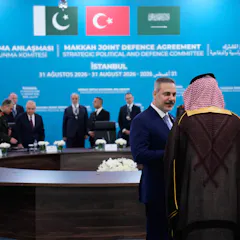
The pact with Turkey and Pakistan has evolved quickly from a vague political commitment. Riyadh hopes it will help it navigate a thorny Middle East crisis.
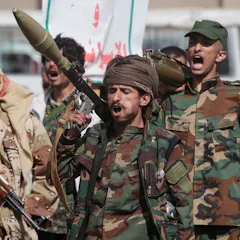
The resumption of fighting, paired with the ongoing closure of the Strait of Hormuz, complicates regional strategy and energy policy for the Gulf powerhouse.
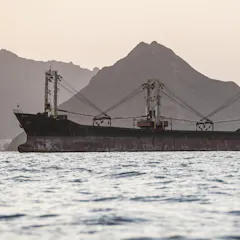
The move suggests Iran and its allies are settling in for a long war. That could mean pain for the global economy.

Washington has promised to unleash “economic D-Day” on Tehran and its allies. But Iran has lived through US sanctions for nearly 50 years.
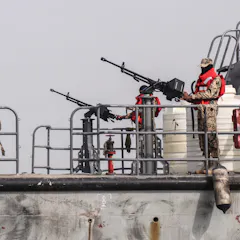
The ongoing war in Iran has created an expanding zone of risk for shipping, including for Saudi Arabia’s strategy of redirecting oil exports away from Hormuz.
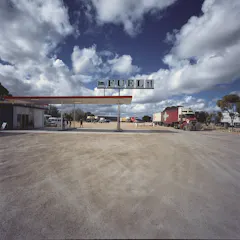
The closed Hormuz Strait and a dearth of Russian diesel will trigger further volatility.
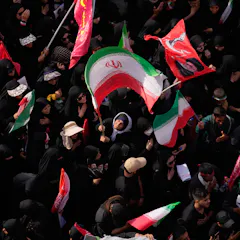
New tit-for-tat airstrikes between the US and Iran over control of the Strait of Hormuz suggest the ceasefire will not turn into a permanent peace.

With the declining power of financial sanctions, many countries are now physically boarding ships to enforce scattershot rules of trade, conflict and commerce.
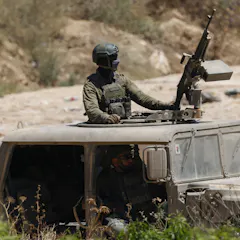
Israel has long sought to gain a military advantage by degrading its adversaries’ military capabilities outside of times of direct conflict.
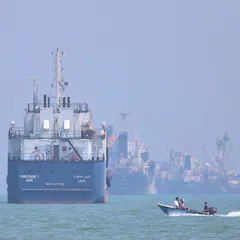
A strong deal would build in real penalties for going back to war: automatic, reversible costs that fall on anyone who restarts the fighting.
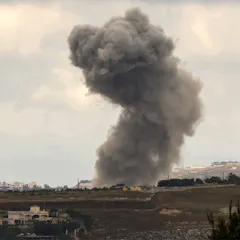
President Donald Trump has talked of a potential role for Syrian forces in fighting Hezbollah – a move that would raise alarm in Lebanon.
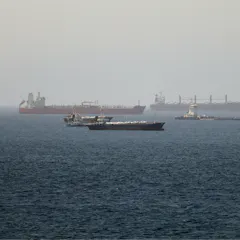
Trump urged ships to return to the Strait of Hormuz and “let the oil flow”. But it’s not that straightforward.
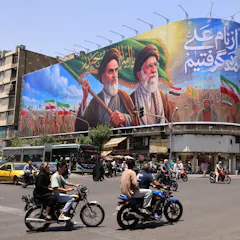
Iran has emerged with its uranium enrichment knowledge intact, its stockpile buried and fresh reason to believe that only a nuclear weapon would have deterred the US-Israel attack.
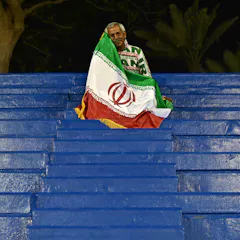
Iran’s team faces a hostile reception from the US government and some of its brethren in the diaspora. Yet others hope the event will trump politics — for now.
Top contributors
-

Professor of International Politics, Clinton Institute, University College Dublin
-
Fellow for the Middle East at the Baker Institute, Rice University
-
Senior Lecturer in International Relations, University of Pennsylvania
-
Honorary Research Fellow, Department of International Politics, City St George's, University of London
-
Assistant Professor of International Relations, American University
-
Associate Professor of Practice of Public Policy, University of Michigan
-
Professor in the Department of Government, University of Essex
-
Professor of the Practice of Political Science and International Relations, USC Dornsife College of Letters, Arts and Sciences
-
Professor of Practice in International Relations, USC Dornsife College of Letters, Arts and Sciences
-
Lecturer in Energy Systems, University of Oxford
-
Associate Professor of Politics and International Relations, Florida International University
-
Tony Walker AM is a Friend of The Conversation.
Director, La Trobe University
-
Professor of History and Peace Studies, University of Notre Dame
-
Lecturer in International Relations, University of East London
-
Graduate Teaching Associate, School of Politics and Global Studies, Arizona State University