
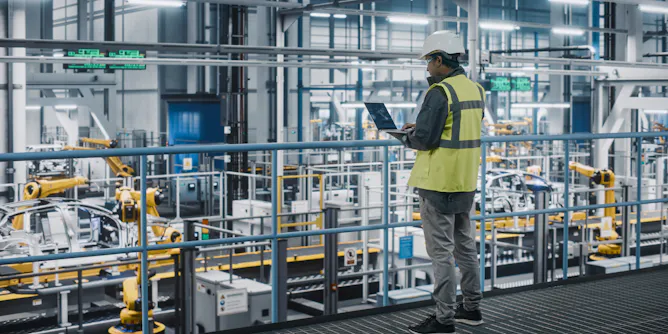
There has been an unprecedented surge in government intervention through industrial policies. It doesn’t benefit consumers.
Articles on Supply chains
Displaying 81 - 100 of 360 articles

The global Chocolate Scorecard evaluates traders and brands on efforts to address child labour, deforestation and other measures.
To date, projections of how climate change will affect global GDP have been massively underestimated.

Consumers and politicians blame cage-free egg laws and bird flu outbreaks for high egg prices. But the root cause is an outdated supply chain system.

Bringing chip manufacturing back to America is a national security and economic priority, but a shortage of skilled workers threatens to derail the effort.

The resilience of digital supply chains are given little attention, despite its critical role in the global economy.
Sanctions drive nations towards building domestic industries to replace imported goods and strengthening alliances with supportive countries.

Canadian supply chains have become the epicentre of these looming disruptions. The country urgently needs to strengthen its supply chain resilience.

Since 2011, the weaponization of regional and global supply chains through economic sanctions has devastated Syria’s economic and social activities.
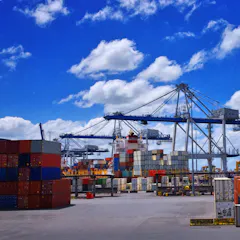
A study shows president-elect Donald Trump’s promised tariffs on Chinese, Mexican and Canadian imports will be a case of economic snakes and ladders for New Zealand. But bigger threats still loom.
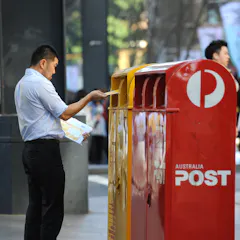
Australia Post’s letter business has been in terminal decline, but its ‘community service obligations’ mean it has to find a way to keep delivering them.
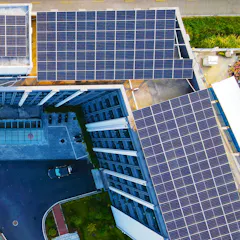
Microsoft, Walmart and a few other high-profile companies made news for scaling back their public climate commitments. However, a closer look at the numbers shows commitments are still booming.

By phasing out sugar, we could spare land that could be rewilded and stock up on carbon. Sugar could also be used to produce biofuels and bioplastics.

Should Trump be re-elected, the CDC will likely exist on a smaller budget with a reduced role internationally. Lessons from COVID-19 show this will increase Canadian vulnerabilities.
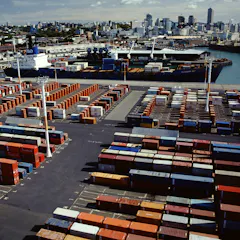
COVID-19 and recent geopolitical crises have shown just how vulnerable New Zealand’s supply chain is. Resilience and sustainability will require businesses to find new ways of working,
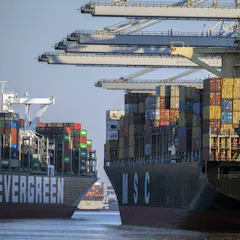
This is the first strike at East Coast ports since 1977. About 45,000 workers have walked off the job.
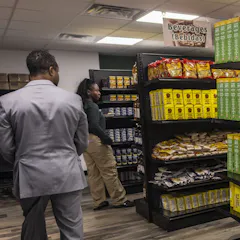
Supply chain improvements could help lower the food insecurity rate and reduce food waste while boosting profits for retailers.
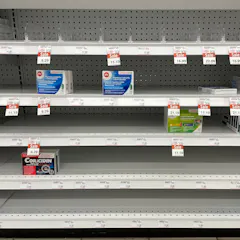
Contingency planning for a potential conflict shouldn’t cause a national panic. Australia needs a ‘first 90 days’ plan to ensure we’d survive until supply lines could be reestablished.

The Democratic Republic of Congo is the world’s major supplier of cobalt, used in electric vehicle batteries, and is asserting its rights as an equal partner in the renewable energy transition.

The space missions of the future will need to coordinate multiple satellites and spacecraft − and figure out how to refuel, repair and even replace them in orbit.
Top contributors
-

Associate Dean, School of Business and Law, Edith Cowan University
-
Eugene M. Isenberg Chair in Integrative Studies, UMass Amherst
-
Professor of Health Service Operations, School of Pharmacy & Medical Sciences, University of Bradford
-
Deputy Director of the HUMLOG (Humanitarian Logistics and Supply Chain Management Research) Institute, Hanken School of Economics
-
Professor in Sustainable Production and Consumption, Anglia Ruskin University
-
Lecturer in Logistics, Technological University Dublin
-
Associate Professor in Operations and Supply Chain Management, UTS Business School, University of Technology Sydney
-
Assistant Professor of Operations Management, University of Manchester
-
Senior Lecturer in Operations and Supply Chain Management, Anglia Ruskin University
-
Professor of Logistics and Supply Chain Management, Heriot-Watt University
-
Associate Professor of Supply Chain & Analytics, University of Missouri-St. Louis
-
Associate Professor, University of Sydney Business School, University of Sydney
-
Distinguished Professor of Supply Chain Management, Northeastern University
-
Associate Professor, Supply Chain Analytics, University of Bradford
-
Professor of Accounting, University of Portsmouth