
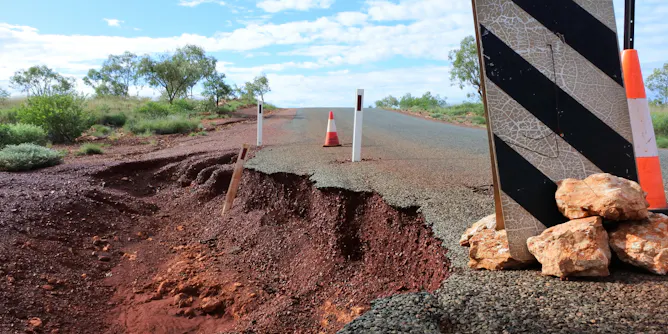
If you’ve noticed Australia’s roads are worse for wear, you’re not alone. Extreme weather and climate change are already taking their toll.
Articles on Supply chains
Displaying 61 - 80 of 360 articles

Flexible supply chains sometimes need support.
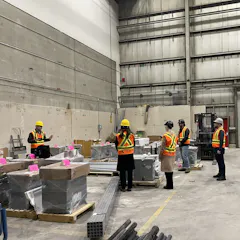
Canadian officials have pledged more than $43 billion in subsidies to create new low-carbon supply chains. A new study identifies some problems.

Small farms will have the hardest time meeting the rules, giving big producers an edge. One potential solution: agroforestry, growing coffee plants among the trees.

Businesses are scrambling to rethink their global supply chains in the face of tariffs.

The US is moving away from a laissez-faire version of capitalism and toward a state-directed form.

When confronted with modern slavery risks, some companies justify their inaction or adopt ineffective measures that do little to address the problem.

The elimination of the Business and Human Rights team strips US companies of critical guidance just as new international laws raise the stakes.
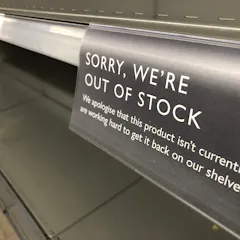
Product shortages can trigger memories of stressful times like Brexit and COVID.

The fashion industry is constantly in the spotlight for problems in its supply chains. Blockchain might be the answer.

While green technologies can hypothetically make supply chains more efficient, enhanced efficiency often leads to more production and economic growth, not less.

High demand for dairy has been good for farmers. But with the price of butter nearing $10, shoppers are asking if it’s time for the government to get involved.
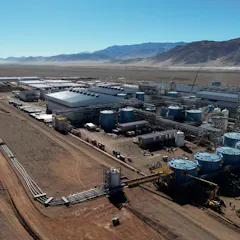
Regulations on sustainability reporting must be crafted with stakeholders across value chains to minimise harm to vulnerable communities.

Lost pallets come at a cost to both businesses and consumers.
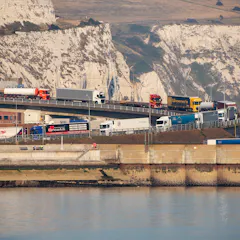
COVID and Brexit showed how fragile import networks can be.

When most Americans imagine a home, they picture a wood-framed house. But in an era of high housing costs and extreme weather events, precast concrete offers a mix of durability and efficiency.
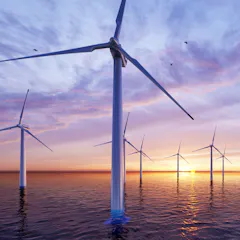
Ørsted’s cancellation of Hornsea 4 bodes ill for the UK’s 2030 clean power target.
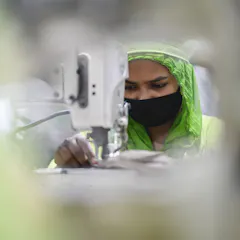
An innovative new strategy to address gender-based violence and harassment is showing promising early signs of effectiveness, but these gains are being undermined by ‘America First’ policies.

Boosting Australia’s ability to make pharmaceuticals sounds like a great way to ease medicine shortages. But there are simpler, cheaper options we could try first.
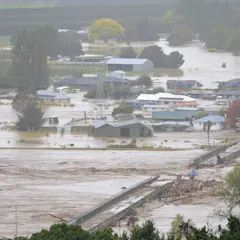
Despite thousands of kilometres of coastline, 93% of domestic freight is transported on New Zealand’s roads. But shipping – and rail – can help build resiliency.
Top contributors
-

Associate Dean, School of Business and Law, Edith Cowan University
-
Eugene M. Isenberg Chair in Integrative Studies, UMass Amherst
-
Professor of Health Service Operations, School of Pharmacy & Medical Sciences, University of Bradford
-
Deputy Director of the HUMLOG (Humanitarian Logistics and Supply Chain Management Research) Institute, Hanken School of Economics
-
Professor in Sustainable Production and Consumption, Anglia Ruskin University
-
Lecturer in Logistics, Technological University Dublin
-
Associate Professor in Operations and Supply Chain Management, UTS Business School, University of Technology Sydney
-
Assistant Professor of Operations Management, University of Manchester
-
Senior Lecturer in Operations and Supply Chain Management, Anglia Ruskin University
-
Professor of Logistics and Supply Chain Management, Heriot-Watt University
-
Associate Professor of Supply Chain & Analytics, University of Missouri-St. Louis
-
Associate Professor, University of Sydney Business School, University of Sydney
-
Distinguished Professor of Supply Chain Management, Northeastern University
-
Associate Professor, Supply Chain Analytics, University of Bradford
-
Professor of Accounting, University of Portsmouth