
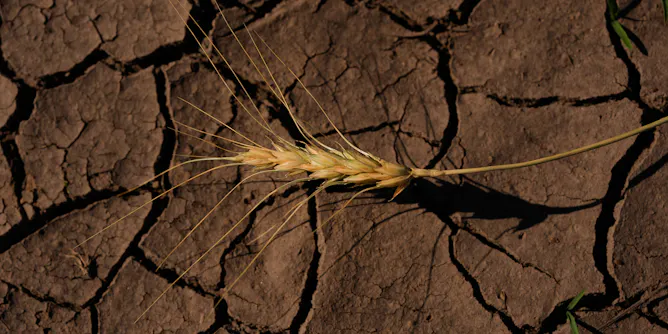
The Trump administration has retired several key websites that scientists and businesses alike have used to track weather events.
Articles on Supply chains
Displaying 1 - 20 of 360 articles
Organisations with close ties to a local community, and others with ties to the wider economy, can make an effective pairing.

Supply chains have been designed for efficiency rather than resilience.
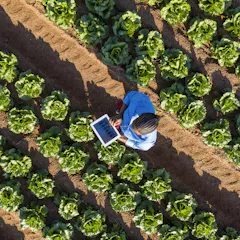
What’s missing are clear rules about who controls farm data and how farmers’ needs are met.
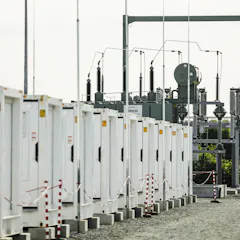
Whether you want renewable energy, fossil fuel power plants, data centers or reduced storm vulnerability, it will require equipment that’s hard to make out of materials that are hard to get.

A food systems researcher shows how trucking deregulation and lax antitrust enforcement let big grocery chains grow as rural distribution thinned.
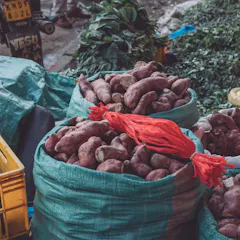
Investments should support entire value chains, linking farmers to storage, processing, transport and reliable markets.

AI agents are starting to transform procurement overseas. For isolated, trade-dependent New Zealand, they could offer a powerful tool against disruption.

There’s not much diesel fuel lying around, and lots of people want to buy what is available, as well as what little is produced each day. It’s all a matter of supply and demand.
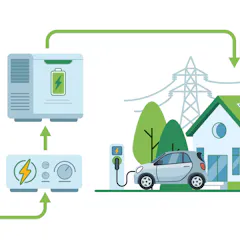
Our transport infrastructure and logistics supply chains were built for a stable environmental and energy baseline that no longer exists.
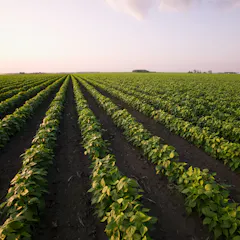
Canada is a major US supplier of fertilizer ingredients that could get pulled into Trump’s trade war. Farms can go without fertilizer for a while, but not long.
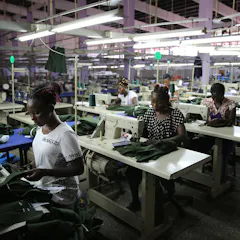
Going circular doesn’t have to mean buying expensive technology. African manufacturers can innovate by learning from what already exists.

Compost, manure and food waste can be turned into biofertilisers made from natural materials.

With a half-billion-dollar loan, the US hopes to cut its reliance on Chinese supplies of scandium, a crucial mineral for aerospace. But China still has leverage.

The Gironde wildfires reveal how logistics are key in firefighting. Emergency operations in the French region are twofold: providing relief and evacuating large populations.

Picking up food more frequently from supermarkets doesn’t close the gap between what’s donated and could be donated, a supply chain scholar explains.

In Agbogbloshie, Ghana, thousands of young women and men burn electronic waste to extract minerals at a cost to their health. They need more protection.
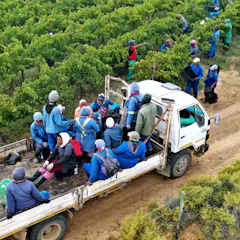
Global supply chains lead to companies capturing most of the value, while suppliers – and especially workers – get a much smaller share.

By improving how freshness data is measured and shared, Canada can waste less food, lower costs for households, reduce emissions and build a more resilient food system

Prescription drug shortages can have a significant effect on quality of life for patients.
Top contributors
-

Associate Dean, School of Business and Law, Edith Cowan University
-
Eugene M. Isenberg Chair in Integrative Studies, UMass Amherst
-
Professor of Health Service Operations, School of Pharmacy & Medical Sciences, University of Bradford
-
Deputy Director of the HUMLOG (Humanitarian Logistics and Supply Chain Management Research) Institute, Hanken School of Economics
-
Professor in Sustainable Production and Consumption, Anglia Ruskin University
-
Lecturer in Logistics, Technological University Dublin
-
Associate Professor in Operations and Supply Chain Management, UTS Business School, University of Technology Sydney
-
Assistant Professor of Operations Management, University of Manchester
-
Senior Lecturer in Operations and Supply Chain Management, Anglia Ruskin University
-
Professor of Logistics and Supply Chain Management, Heriot-Watt University
-
Associate Professor of Supply Chain & Analytics, University of Missouri-St. Louis
-
Associate Professor, University of Sydney Business School, University of Sydney
-
Distinguished Professor of Supply Chain Management, Northeastern University
-
Associate Professor, Supply Chain Analytics, University of Bradford
-
Professor of Accounting, University of Portsmouth