
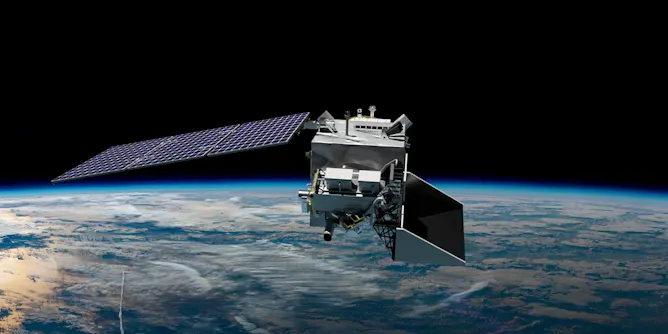
New US legislation could force Nasa to include enhanced cybersecurity for all its spacecraft.
Articles on Space
Displaying 321 - 340 of 1109 articles
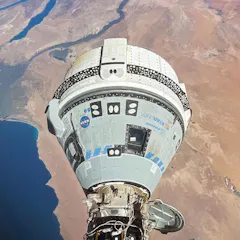
The spacecraft’s return has been delayed while experts study helium leaks and thruster problems.
X-rays emitted around black holes can tell astrophysicists about how fast they’re growing.

These rare rocks come in a few different types, which can tell geologists about Mars’ volcanic past and hint at its potential habitability.
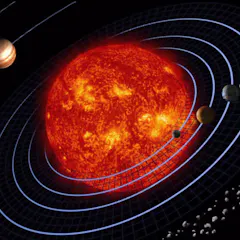
Magnetism and gravity both shape the boundaries of our cosmic neighbourhood.

Astronomers and stargazers around the world are excited to witness a rare event that only happens once every 80 years – a recurrent nova.
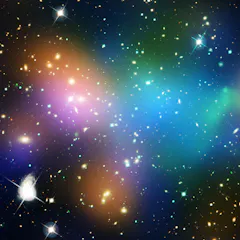
Cosmology does not need dark matter or dark energy in an expanding universe that allows the constants of nature to evolve, and light loses energy as it travels vast distances.
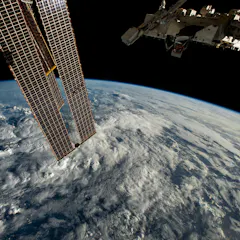
Sabotaged space stations, falsified space probe data and faked alien contact are just a few of the scenarios a report on space cybersecurity outlines.
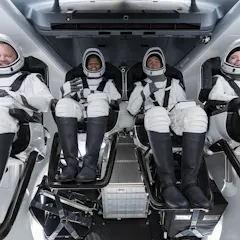
A set of papers published in Nature contain groundbreaking research into how even quick jaunts to space can affect an astronaut’s health.
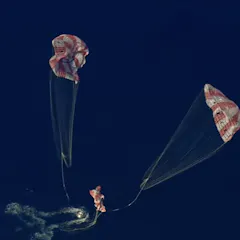
Safely landing a spacecraft that’s falling from the sky very quickly is easier said than done.
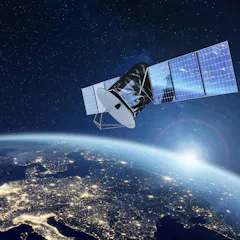
Cyberattacks are a growing threat to government and commercial spacecraft.
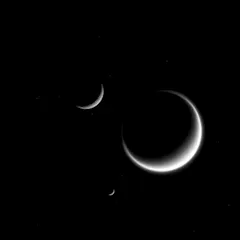
It’s not a competition, but if it were, Saturn would be winning.

Spacecraft exteriors that automatically heal from radiation damage would change the game − one material shows promise.
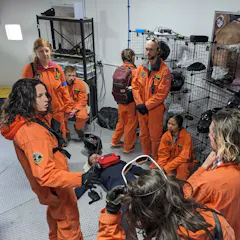
Future space missions will fly farther and longer than ever before – which means crew members may need more involved medical care in space.
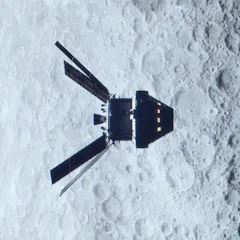
There’s intense competition between the US and China to establish bases on the Moon.
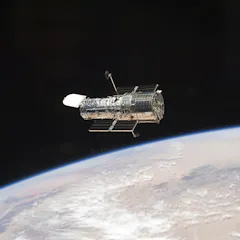
Hubble’s technical issues continue. But through some clever engineering, the telescope can continue operations with just 1 gyroscope.
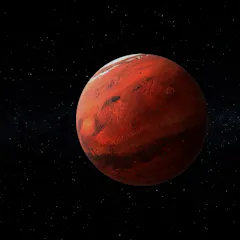
Aquaponics could help feed Martian colonies in the future and offer a sustainable food system on Earth.
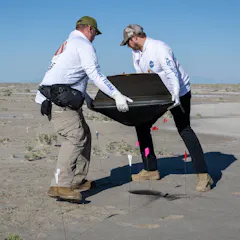
Scientists don’t often have the time to get all their equipment set up to study incoming meteors from space. Instead, they can study capsules from space missions as ‘artificial meteors.’
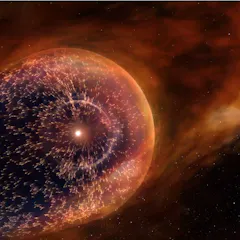
An interstellar probe could help scientists answer fundamental questions about how the Sun influences Earth, space and other planets in the solar system.
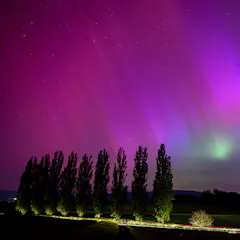
Here’s what’s going on to cause more widespread northern and southern lights.
Top contributors
-

University Distinguished Professor of Astronomy, University of Arizona
-
Professor of Strategy and Security Studies, Air University
-
Professor of Planetary and Space Sciences, The Open University
-
Professor (Astrophysics), University of Southern Queensland
-
Associate Professor in Archaeology and Space Studies, Flinders University
-
Associate Professor in Astronomy, Monash University
-
Emeritus Professor of International Law, Western Sydney University
-
Senior Lecturer in Physics, Nottingham Trent University
-
Reader in Astrophysics, Keele University
-
Associate Dean of Innovation and Engagement, Swinburne University of Technology
-
Associate Professor, Astronomy, University of Regina
-
Professor of Air and Space Law, University of Mississippi
-
Kevin Orrman-Rossiter is a Friend of The Conversation.
Sterrenkenner, History & Philosophy of Science, The University of Melbourne
-
Lecturer in Astronomy, Nottingham Trent University
-
Professor of Physics and Astronomy, USC Dornsife College of Letters, Arts and Sciences