
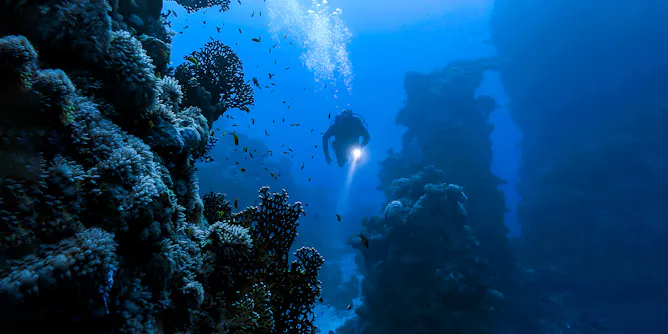
How good are our current seafloor maps?
Articles on Oceans
Displaying 61 - 80 of 935 articles
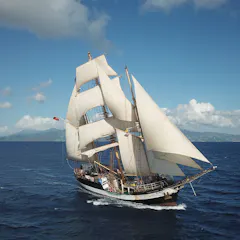
Sailing voyages help young people develop strong connections with the sea that can last a lifetime.
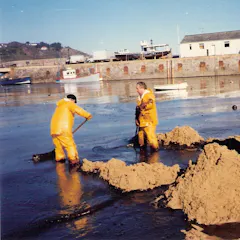
With better ships, clearer command and smarter plans, the risk of major oil spills can be minimised.
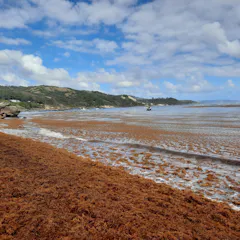
Floating seaweed can travel long distances to new territories and accumulate in large mats or wash ashore in huge quantities.
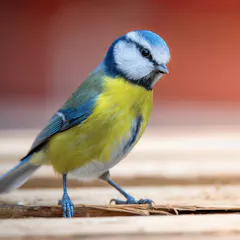
Humans and birds both have an underappreciated sense of smell.
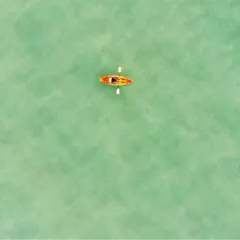
A dramatic ocean rescue reminded us that Australian coastal weather can be unpredictable. Here’s how to spot when conditions are changing.
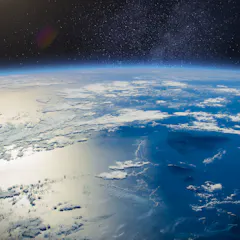
The ocean is warming as the upper atmosphere is cooling – both as a result of excessive greenhouse gas emissions.
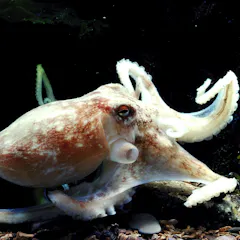
Batteries are typically held together by chemicals that don’t easily degrade. However, some marine animals have evolved remarkable natural ways to attach themselves to wet, slippery surfaces.
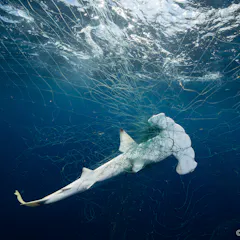
Trade bans on sharks won’t reduce the threat of overfishing.
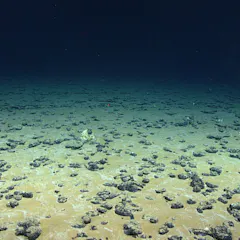
The deep ocean is not a silent, static place – it’s active, connected to the oceans above and always changing.
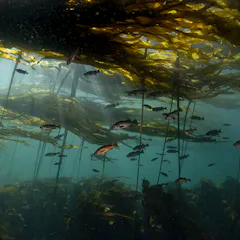
Researchers have known for centuries that some fish make sounds. Now, using special underwater acoustics, researchers have been able to identify sounds from eight different species.
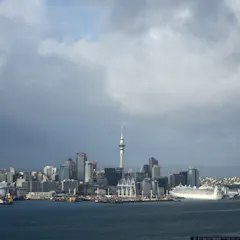
A run of damaging storms that has spoiled midsummer and caused floods and landslides isn’t bad luck, but a combination of local, regional and global drivers.
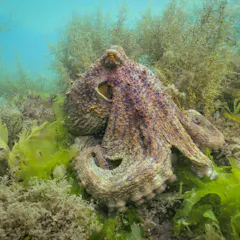
Climate-driven shifts in ocean and atmospheric dynamics underpin these recent blooms in octopus numbers in UK waters.
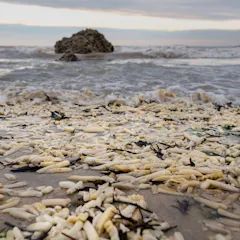
When cargo falls into the sea, it becomes an accidental ocean currents experiment.
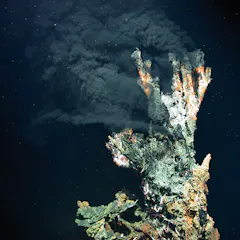
Researchers have discovered that chemical reactions in underwater hydrothermal vents could have produced the necessary ingredients for life on Earth.

A four-year record from the heart of the Ross Ice Shelf shows how subtle changes could shape future sea level rise, ocean ecosystems – and even our weather.
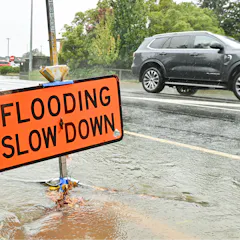
Understanding what is happening deep beneath the ocean surface is key to understanding the weather patterns we are experiencing on land.
More than a fifth of the global ocean has gradually lost underwater light. But short, intense “marine darkwaves” can be just as damaging for life below the surface.
Recent shark attacks may be linked less to shark behaviour – and more to the pollutants, pesticides and parasites humans send into the ocean.
The expansion of Arctic shipping, scramble for seafloor mining and overfishing are all straining international relationships. But the powers of diplomacy go beyond ocean treaties.
Top contributors
-

Professor, School of the Environment, The University of Queensland
-
Harold T. Stearns Professor of Earth Science, Wesleyan University
-
Director of the ARC Centre of Excellence for Our Future Oceans and Scientia Professor in Oceanography, UNSW
-
Research Scientist, Stanford University
-
Distinguished Professor of Marine Science, King Abdullah University of Science and Technology
-
Distinguished Scholar, National Center for Atmospheric Research; Affiliate Faculty, University of Auckland, Waipapa Taumata Rau
-
Senior Principal Research Scientist, Environment, CSIRO
-
Faculty Research Associate in Marine Biology, Arizona State University
-
Chief Research Scientist - Environment, CSIRO
-
Professor of Marine Botany, The University of Western Australia
-
Professor of Biology, Department of Biology, University of Victoria
-
Reader of Applied Mathematics, Cardiff University
-
Associate Professor in Marine Biology, Swansea University
-
Adjunct Research Associate, Faculty of Fisheries and Marine Sciences, IPB University
-
Professor in Conservation Science, School of the Environment, The University of Queensland