
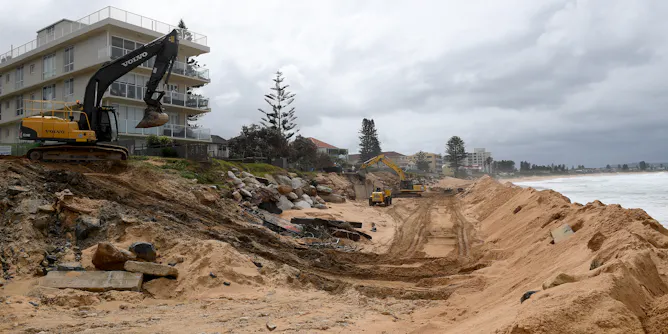
Find out what Australian governments, industries and local groups are doing to adapt to climate change in this new database. Or add your own entry.
Articles on Natural disasters
Displaying 81 - 100 of 703 articles
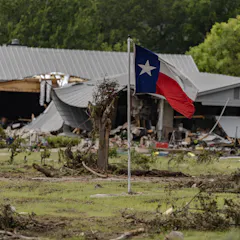
There are ways the state could help these communities, as a team of disaster planning specialists explains.
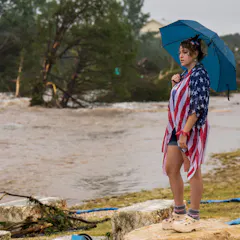
After a natural disaster, survivors often suffer from prolonged trauma for years to come, particularly in places where mental health services are few and far between.
Federal funding cuts in the billions have impacted dozens of universities in the US.

Risk models can’t rely just on the past anymore. A team of geoscientists suggests new ways to forecast evolving hazards in real time as cascading disaster risk worsens.

Changes made to comply with executive orders could interfere with the mission of a program that has historically helped some of the people who most need a hand.
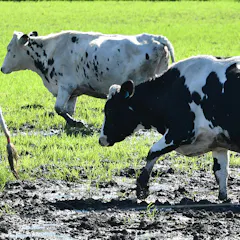
Industry figures have warned consumers to prepare for price rises, amid expected shortages of milk, butter and cheese.

Forecasters already patch together very rough estimates, and ending NOAA’s ‘billion-dollar disasters’ list means less access to insurance data. Texas’ state climatologists explain why that matters.
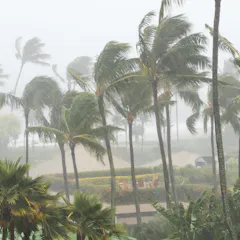
A damaged home and the psychological stress that comes with living through a major cyclone can prompt people to buy private health insurance.
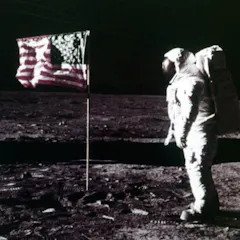
The Trump administration has terminated hundreds of federal grants that support engineering, biology, geology, computer science, STEM education and much more.

As climate-related disasters grow more frequent and intense, one group remains dangerously underprepared: older adults. Planning should involve the entire family.

Natural disasters prompt a flood of social media posts. AI can help sift the wheat of helpful information from the chaff of chitchat and misinformation.
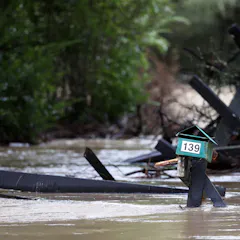
New research shows successive NZ governments keep opting for expensive short-term fixes after floods and other disasters. But there are two other choices available.
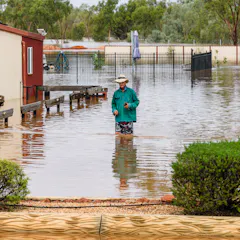
Historically, climate disasters were thought of as rare, singular events. But thanks to climate change, disasters are escalating.

Progressive adaptation could ensure society is not only better prepared for future shocks, but thrives in the face of uncertainty.
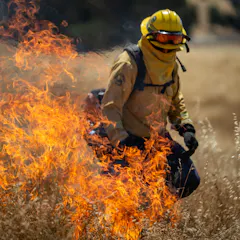
Uncertainty from Washington along with staff and budget cuts have created turmoil for the US Forest Service’s fire management efforts.
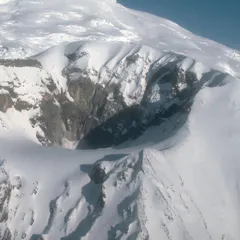
When volcanoes like Alaska’s Mount Spurr erupt, the ash can damage people’s lungs, smother crops and kill animals, and the harm can continue to spread long afterward.

Thousands were killed in 7.7 magnitude earthquake. Yet military generals were slow to agree to pause in civil war fighting, and continued airstrikes.
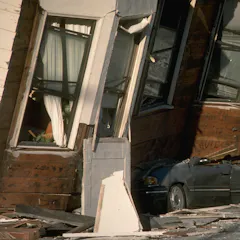
The US experiences violent earthquakes, but the damage and death toll is much lower than in many countries because of the work of federal seismologists and engineers.
President Trump’s national energy emergency declaration does not qualify as an emergency that would exempt energy projects from environmental laws and regulations.
Top contributors
-

Professor of Geology and Environmental Geosciences, University of Dayton
-
Honorary Professor of Hazards and Disaster Risk Sciences, University of Sydney
-
Professor of Climate Science, UMass Lowell
-
Associate Professor of Landscape Architecture and Urban Planning, Texas A&M University
-
Professor of Disasters and Health, UCL
-
Professor Emeritus of Geography, Louisiana State University
-
Clinical Assistant Professor of Education, Health and Behavior Studies, University of North Dakota
-
Professor of Political Science, Public Policy and Urban Affairs, Northeastern University
-
Scientia Professor and ARC Laureate Fellow, Kaldor Centre for International Refugee Law, UNSW
-
Professor of Geography, University of Tennessee
-
Professor of Earthquake Science, The University of Melbourne
-
Associate Professor of Civil Engineering, Boise State University; United Nations University
-
Professor of Public Administration, Binghamton University, State University of New York
-
Associate Professor of Human Geography, University of Tasmania
-
Principal Investigator FiRES Project (SNSF Consolidator Grant), ETH Zürich, Switzerland // Honorary Associate Professor, University of Wollongong, Australia.