

Climate disasters are rising and insurance costs are, too. Canada’s poorest are caught in the middle.
Articles on Natural disasters
Displaying 61 - 80 of 703 articles

Governments and experts need to consider both the frequency and size of floods to better prepare for future ones.
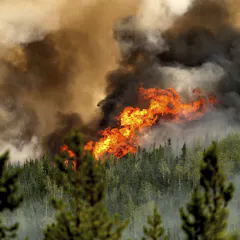
Canadians faces a growing safety crisis yet they remain unprepared. The real danger is complacency.

Wealthy countries promised billions of dollars to help developing nations adapt to climate change, but the result rests on a shaky foundation of fuzzy accounting.
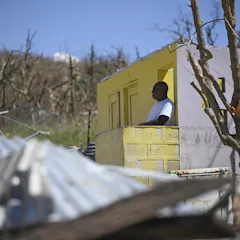
Melissa was just the latest blow, following close on the heels of Beryl. Many islands today have little time to recover before the next disaster hits.
The optimal and safe use of agricultural inputs to increase food production is key to achieving global food security.
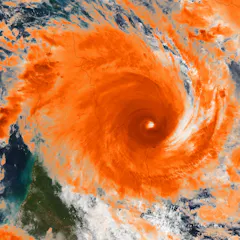
Tropical cyclones can be even more deadly – and for a wider range of reasons – than we ever thought.

Disaster recovery is much harder on isolated islands, and people may migrate away if it’s too slow. Support from Jamaicans in the US, UK and Canada to rebuild for a better future can help.
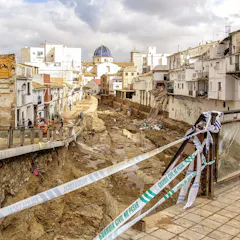
The floods’ death toll was the result of weather and human factors.
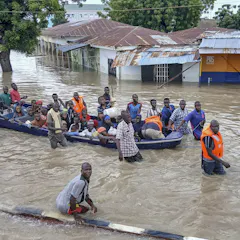
Some countries are making progress but others still face the challenge of weak coordination.
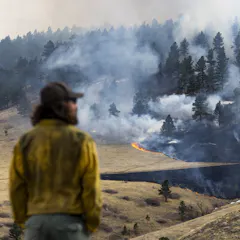
Increasing awareness can help close the gap on the number of people signed up for emergency alerts, but that won’t happen without increased accessibility.
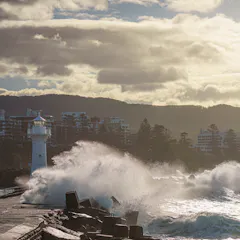
At long last, Australia has a national climate adaptation plan to guide public and private responses to intensifying threats.
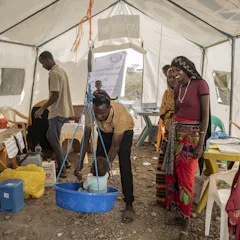
There are lessons for other African countries in how Ethiopia built its health emergency response teams.

One of the largest earthquakes on record struck far eastern Russia this week. The last time the region was hit by a such a huge quake, the Soviets hushed it up.

Huge upheavals of the land and sea were facts of life in the ancient world, just as they are today.
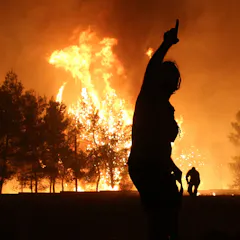
Fire-scorched land is less able to handle climate-driven downpours.
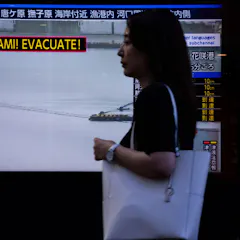
It is not easy to calculate the risk of a tsunami.
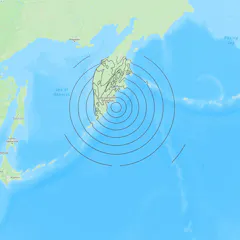
The earthquake in Kamchatka is the largest worldwide since 2011. Its location has been very seismically active in recent months.
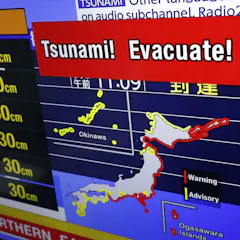
It’s far better to evacuate early and orderly than do it late in a panic. That’s why authorities around the Pacific are taking no chances as a tsunami threat looms.
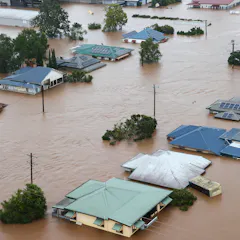
Now is the time for government to act – before the next disaster strikes.
Top contributors
-

Professor of Geology and Environmental Geosciences, University of Dayton
-
Honorary Professor of Hazards and Disaster Risk Sciences, University of Sydney
-
Professor of Climate Science, UMass Lowell
-
Associate Professor of Landscape Architecture and Urban Planning, Texas A&M University
-
Professor of Disasters and Health, UCL
-
Professor Emeritus of Geography, Louisiana State University
-
Clinical Assistant Professor of Education, Health and Behavior Studies, University of North Dakota
-
Professor of Political Science, Public Policy and Urban Affairs, Northeastern University
-
Scientia Professor and ARC Laureate Fellow, Kaldor Centre for International Refugee Law, UNSW
-
Professor of Geography, University of Tennessee
-
Professor of Earthquake Science, The University of Melbourne
-
Associate Professor of Civil Engineering, Boise State University; United Nations University
-
Professor of Public Administration, Binghamton University, State University of New York
-
Associate Professor of Human Geography, University of Tasmania
-
Principal Investigator FiRES Project (SNSF Consolidator Grant), ETH Zürich, Switzerland // Honorary Associate Professor, University of Wollongong, Australia.