
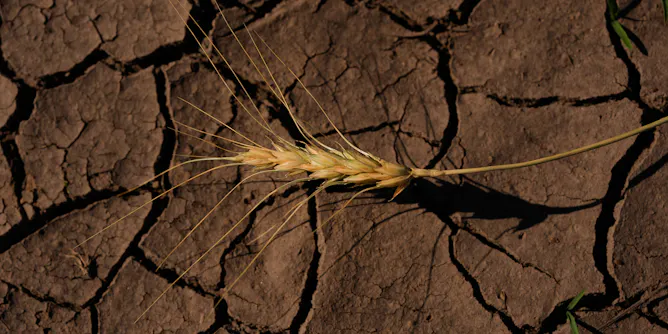
The Trump administration has retired several key websites that scientists and businesses alike have used to track weather events.
Articles on Flooding
Displaying 1 - 20 of 571 articles
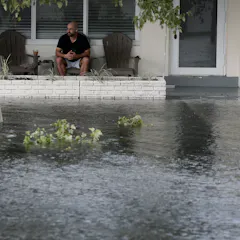
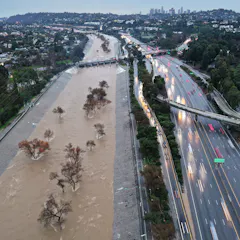
More than a foot of rain flooded streets in the already saturated region in mid-November 2026, with more forecast in the days ahead.
Reducing greenhouse gas emissions and improving coastal adaptation will help determine how severely sea level rise affects everyone.
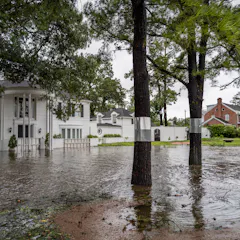
Your home’s true flood risk is far more complex than FEMA flood maps reflect.
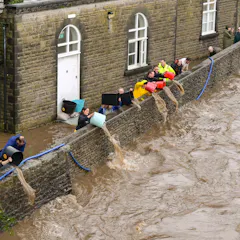
People are increasingly urged to become resilient to flooding. Yet many question whether this shifts responsibility from institutions to residents.
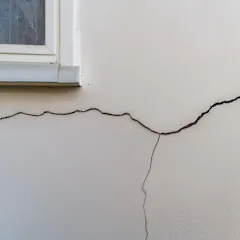
Rain does not necessarily resolve drought-related issues. In some soils, rewetting can disrupt the foundations of buildings.
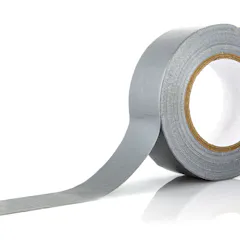
A cheap roll of duct tape cut flood water leakage through a door by 97% in lab tests.
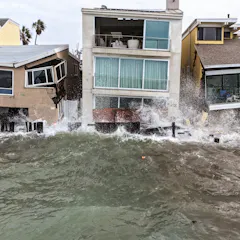
Tropical storms rarely survive in the cool water off California, but waves from storms far to the south can still damaged coastal areas. And flooding rain can sweep in.
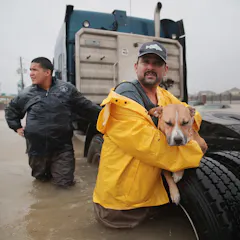
Storms big and small can produce a lot of rain. What matters most is how fast they’re moving, as an atmospheric scientist and educator explains.
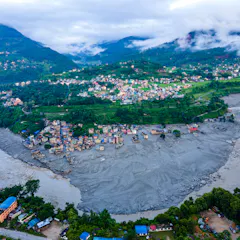
Satellite data shows roads, settlements and infrastructure are expanding into the same valleys that are vulnerable to floods and landslides.
Around 65% of the British public are now concerned about climate change.

The Antarctic ice sheet’s future depends how a chain of events plays out. A new study finds the evidence points in one direction.

Nearly 43% of UNESCO World Heritage Sites in Europe are now highly vulnerable to climate-related risks.
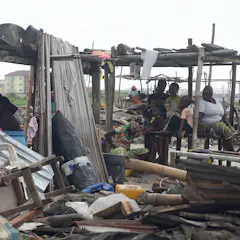
Residents whose homes cluster along waterways, canals and shorelines have built organised systems for living with climate change.
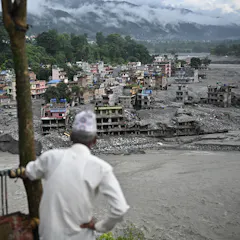
At least 119 countries have asked for aid from the fund set by major greenhouse gas emitting nations four years before the deadly Nepal flood. It has paid zero claims.
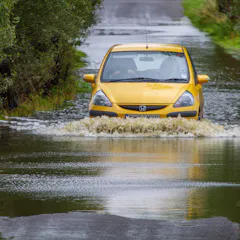
While deep water immobilises a vehicle, flowing water can take a car downstream.
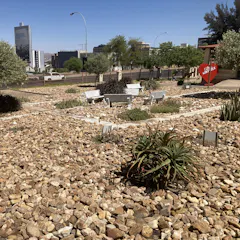
New research shows how Windhoek’s ‘Brown is Beautiful’ approach could use its dry landscape to protect the city from heat, drought and floods.
A new study connects early winter heat high up on the plateau to the jet stream and, ultimately, storms headed for the US coast. The results could mean better forecasts.
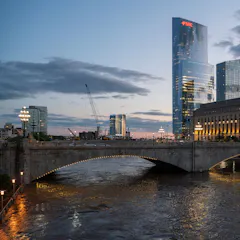
Many levees built in the mid-1900s do not offer enough protection for today’s storms, and small rural communities in particular struggle to afford needed upgrades.
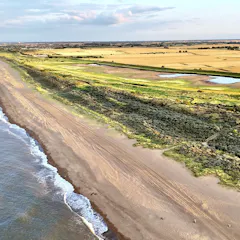
The places most exposed to saltwater flooding, especially the low-lying Fenlands, are also some of the most productive farmland in the UK.
Top contributors
-

ARC Future Fellow and Associate Professor in Climate Science, ARC Centre of Excellence for 21st Century Weather, The University of Melbourne
-
Adjunct Professor of Environmental Geography, CQUniversity Australia
-
Professor of Geology and Environmental Geosciences, University of Dayton
-
Professor of Sociology, Rice University
-
Regius Professor of Meteorology and Climate Science, University of Reading
-
Professor and Director of the Institute for Water Research, Rhodes University
-
Associate Academic Officer – Risk and Recovery Governance, United Nations University
-
Professor Emeritus of Climate and Space Sciences and Engineering, University of Michigan
-
Professor of Physical Geography, University of the Witwatersrand
-
Professor, Department of Forest Resources Management, University of British Columbia
-
Distinguished Scholar, National Center for Atmospheric Research; Affiliate Faculty, University of Auckland, Waipapa Taumata Rau
-
Research Fellow, Australian Rivers Institute, Griffith University
-
Professor of Landscape Architecture and Urban Planning, Texas A&M University
-
Professor Emeritus of Risk Management and Insurance, Georgia State University
-
Senior Research Fellow, The University Centre for Rural Health, University of Sydney