

Quantum dots are a prime example of the way nanotechnology engineers materials at an atomic scale.
Articles on Materials science
Displaying 61 - 80 of 103 articles

We can’t entirely eliminate food waste – but we can find cheap ways to turn it into something useful.

Around half of US industrial energy use goes toward separating molecules in industrial processes. Developing materials that can withstand harsh industrial conditions can help increase efficiency.

A potential new supermaterial isn’t so super after all, but the dream of a room-temperature superconductor is still very much alive.

Room-temperature superconductors could transform technology – but the latest, much-hyped claims should be approached with caution.
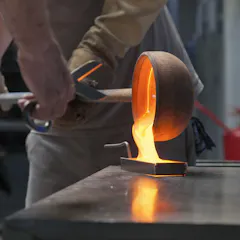
Two glass researchers explain how glass is made, the unique properties of glass and how those properties have allowed it to be a useful material to humans for thousands of years.

Superconductors make highly efficient electronics, but the ultralow temperatures and ultrahigh pressures make them costly and difficult to use. Room-temperature superconductors promise to change that.

Organ models that more accurately capture finer details could reduce surgical error and lead to personalized implants.

Superconductors are materials that can transmit electricity without any resistance. Researchers are getting closer to creating superconducting materials that can function in everyday life.
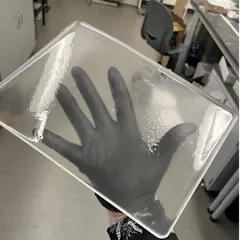
Researchers have developed a method for producing strong plastic materials by tweaking the chemical structure of superglue.

If we’re going to put an AI brain somewhere, it’s likely going to be a robot. The next step – making that robot immortal.

Polyurethane foams are the world’s sixth-most-produced plastic yet among the least recycled materials.
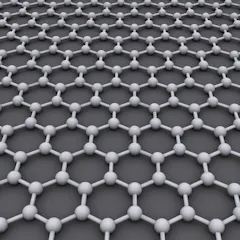
Graphene is superstrong and superconductive, and it has applications in everything from construction to electronics. But to date there have been almost no commercial uses of the material.

Computer-based neural networks can learn to do tasks. A new type of material, called a mechanical neural network, applies similar ideas to a physical structure.

An unusual folded shape in a meteorite prompted scientists to dive deep into a rabbit hole – discovering a potential new way to make specially shaped diamonds in the lab.

The US Environmental Protection Agency is reexamining the health effects of bisphenol A. A chemist explains why BPA is in plastics and why it’s hard to find a safe replacement.

The ability to store information is central to learning and the field of artificial intelligence. Researchers have shown how a unique material shows basic learning properties similar to that of slugs.

More than two-thirds of the world’s energy is wasted as heat. Thermoelectric materials can convert unwanted heat into electricity, but finding the best ones has been slow.

Throughout human history, clay has played a role in many different industries. Its unique properties make it suited for a wide applications in widely ranging industries.

Chemicals found in food and solar cell technology have an interesting history – as my own research shows.
Top contributors
-

Director & Associate Professor of Sports Product Design, University of Oregon
-
Ph.D. Candidate in Chemical Engineering, University of California, Riverside
-
Professor of Advanced Technology Transitions, Arizona State University
-
Assistant Professor of Chemical and Biological Engineering, University of Colorado Boulder
-
Senior Industry Research Fellow, Future Industries Institute, Adelaide University
-
Professor of Geosciences, Franklin & Marshall College
-
Royal Academy of Engineering Chair in Emerging Technologies - Intelligent & Resilient Ocean Engineering, University of Southampton
-
ARC Laureate Professor in Chemistry, The University of Melbourne
-
Professor of Mechanical Engineering and Biology, Adjunct Professor of Physics, Georgia Institute of Technology
-
Associate Professor of Mathematics and Statistics, University of South Florida
-
Professor and Canada Research Chair in Quantum Materials Discovery, University of Winnipeg
-
Assistant Professor of Materials Science and Engineering, North Carolina State University
-
Associate Professor of Mechanical Engineering- Materials and Solid Mechanics, University of Maryland, Baltimore County
-
James R. Rice Distinguished University Professor of Engineering, University of Michigan
-
PhD Student in Solid Mechanics, Brown University