

As new proof for the Riemann hypothesis demonstrates, AI will change how mathematics is practiced and taught to future generations.
Articles on Technology
Displaying 1 - 20 of 1914 articles

A backup plan that is out of date – or difficult for staff to implement – won’t be much help in a crisis.

It deposits metal only where it is needed, potentially preventing extensive repairs or replacements.

The White House has set up a task force to coordinate policy on AI. Whether it matters depends on what sits behind the label.

Academic publications and conference submissions have risen sharply; is the situation sustainable?

Board members are becoming more aware of the personal job consequences that stem from their performance and entanglement in misconduct.

AI is speeding up the pace of uncovering software flaws hackers could exploit, like the one just found in the widely used internet software Java.

A team of researchers charts developments in all-electric ferry travel in Europe and explores the lengths ports and operators would have to go to in order to switch to fully rechargeable technology.

Drawing lessons from other industries could help reinforce the safety of AI systems.

Making AI accountable for “strict liability” in court would shift risk from the public to the companies seeking fortunes.

The time, energy and skills needed to verify AI’s answers to your queries can erase any productivity gains that the technology provides.

When set-top boxes fail and replacements are expensive, remote households turn to expensive prepaid data and less reliable sources of news.

When one email service goes down, others don’t stop trying to send emails to users of the affected service. The result is snarled traffic that takes time to clear up.

Non-consensual sexual deepfakes are easy to make and share. A study with more than 7,000 people shows how widespread they have become.

The attacks show that hackers are exploiting physical devices to spread new forms of disruption to daily life.

The company’s actions show that, above users’ rights, public interest, and democracy itself, prevails its economic interests and the maximization of their profits

Broken devices are contributing to a growing mountain of e-waste.

The sociological concept of ‘risk positions’ helps explain why those who profit from risky technologies often aren’t the ones who bear its consequences.
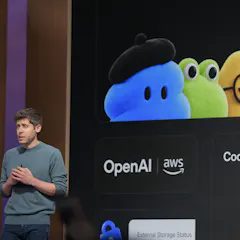
Cute designs can make AI technology feel harmless, but real hazards are still present.
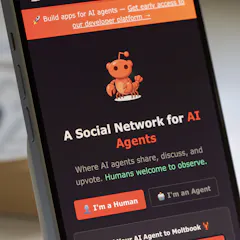
The AI agents do not truly experience friendship, but their exchanges are coherent and resemble the way humans correspond.
Top contributors
-

Professor of Information Systems, Michigan State University
-
Teaching Professor of Computer Science and Electrical Engineering, and Associate Director, UMBC Cybersecurity Institute, University of Maryland, Baltimore County
-
Director of the Center for National Security Initiatives and Professor of Aerospace Engineering Sciences, University of Colorado Boulder
-
Adjunct Lecturer in Public Policy, Harvard Kennedy School; University of Toronto
-
Affiliated Faculty Member, Institute for Computational and Data Sciences, Penn State
-
Researcher, Digital Wellbeing, Western Sydney University
-
University Professor of Electrical and Computer Engineering, Iowa State University
-
Professor of Philosophy and Director of Applied Ethics Center, UMass Boston
-
Associate Professor of Information Science, University of Colorado Boulder
-
Professor of Statistics and Professor of EECS, University of Michigan
-
Professor of Advanced Technology Transitions, Arizona State University
-
Professor of AI, Research Group Leader, UNSW
-
Industry Professor of Emerging Technology and Co-Director, Human Technology Institute, University of Technology Sydney
-
Affiliate, Berkman Klein Center for Internet & Society, Harvard University
-
Senior Lecturer in Economics, Lancaster University Management School, Lancaster University