
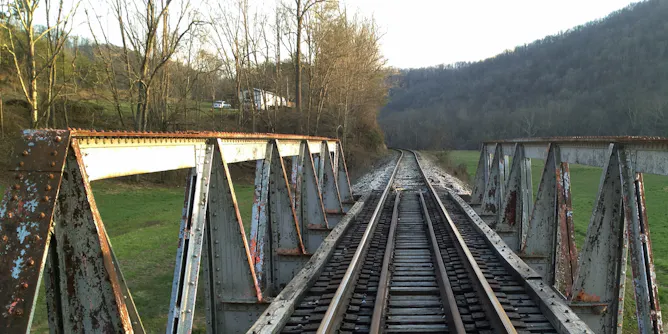
Large parts of Appalachia’s forests, once owned by coal companies, now make money for investors by storing carbon. But the results bring few jobs or sizable investments for residents.
Articles on Global warming
Displaying 301 - 320 of 1178 articles
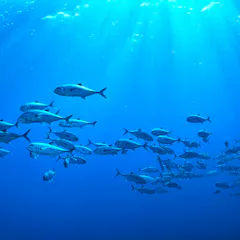
Recent research shows how reducing overfishing is both an ecological imperative and a critical means to addressing climate change.

In the worst-case scenario currently being mapped, Earth’s temperature could increase by 4.3°C before 2100. Southern African rhinos will have no possibility of surviving this unless parks act now.
Canada’s cities must be planned around resident
health and well-being, our research reveals the key barriers to developing truly healthy cities.
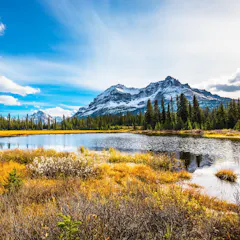
Integrating local and Indigenous knowledge into conservation can help to support diverse diets without compromising biodiversity goals.
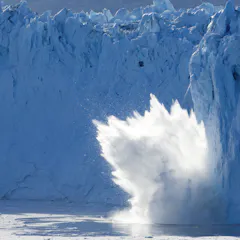
Scientists now have a better understanding of the risks ahead and a new early warning signal to watch for.
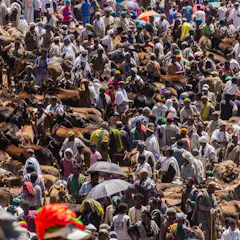
Environmental policymakers and scholars must listen to sub-Saharan Africans’ voices and recognize the importance of population for achieving sustainable development goals.
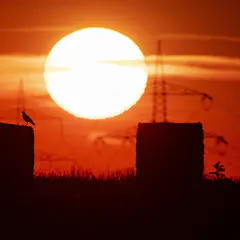
Keeping the average global temperature rise below 1.5°C since pre-industrial times is a goal of the 2015 Paris climate deal. New research suggests that opportunity has passed.

We don’t yet fully understand what global climate tipping points mean for Australia. But we know enough to conclude the impacts of passing one or more tipping points must now be considered.

Climate and environmental insecurity is set to grow in severity as the world warms. The upcoming launch of a new NATO climate change and security centre in Montréal aims to address these concerns.
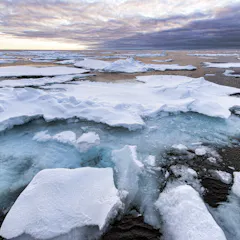
Norway has become the first nation on earth to allow deep-sea mineral exploration. But opening this industry could put Norway in murky legal waters.

Alberta’s experiment with voluntary ‘switching off’ was a success both in terms of saving electricity and in showcasing the power of proactive informed action to address the climate crisis.
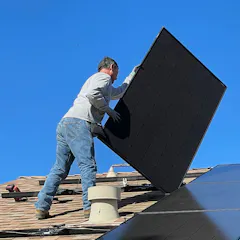
Australians want government to act on climate change, but not necessarily now, or in their neighbourhood. How can governments resolve this dilemma?
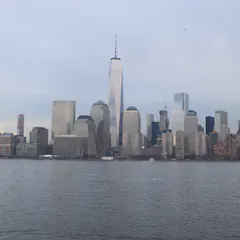
Land subsidence is a factor as preparations are made for rising sea levels and strengthening storms. Human infrastructure, including buildings and groundwater extraction, increases vulnerabilities.
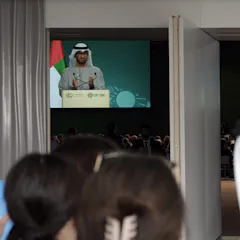
Beyond the international negotiations, COP serves as a critical venue for global civil societies to exchange knowledge, organize and build a better world.
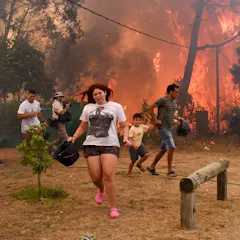
Without urgent action, Earth is heading for climate catastrophe. Yet there are reasons for hope in 2024 – including a possible peak in global greenhouse gas emissions.
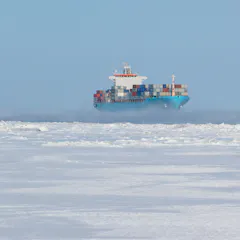
Houthi attacks on ships in the Red Sea have disrupted trade between Asia and Europe – could ships cross the Arctic instead?

The results of a new study are clear: resilient water governance systems are effective and enjoy strong public support. The time is now to build resilience into our global water systems.
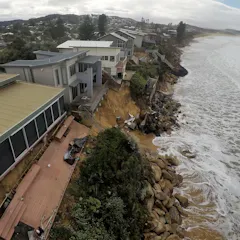
Even a small rise in sea level can have big impacts on coastal properties, so we must do all we can to limit the changes while taking them into account in coastal land-use planning.

Canada, and particularly the Canadian Arctic, is warming at a considerably higher rate than the global average. The consequences for Canada could be devastating.
Top contributors
-

ARC Future Fellow and Associate Professor in Climate Science, ARC Centre of Excellence for 21st Century Weather, The University of Melbourne
-
Research Associate, Institute for Climate Risk and Response, UNSW
-
Distinguished Scholar, National Center for Atmospheric Research; Affiliate Faculty, University of Auckland, Waipapa Taumata Rau
-
Chief Research Scientist, CSIRO Environment; Executive Director, Global Carbon Project, CSIRO
-
Chief Scientist, Australian Antarctic Division and Professor of Climate Science, Australian National University
-
Professor and Climate Scientist, Department of Geography, Planning and Environment, Concordia University
-
Deputy Director, Engagement and Impact, The ARC Centre of Excellence for the Weather of the 21st Century, Australian National University
-
Adjunct professor, UNSW
-
Professor of International Relations, The University of Queensland
-
Professor of Climate Science, University of Reading
-
Professor of Physical Climate Change; Director of the Priestley Centre for Climate Futures, University of Leeds
-
Climate Projections Scientist, CSIRO
-
Lecturer, School of Agriculture, Food and Ecosystem Sciences, The University of Melbourne
-
Director of the ARC Centre of Excellence for Our Future Oceans and Scientia Professor in Oceanography, UNSW
-
Adjunct Professor of Energy, Murdoch University