

A method for measuring the world’s crucial carbon sinks finds that the ocean’s so-far-increasing ability to help might taper off in the future.
Articles on Carbon dioxide (CO2)
Displaying 1 - 20 of 377 articles
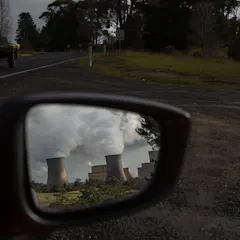
A new report suggests the world is burning fewer fossil fuels, potentially due to international conflicts and surging energy prices.
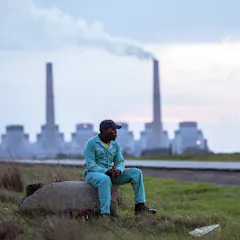
A new study compared power plants’ carbon emissions and found government-owned plants’ emissions were much higher and less responsive to climate policies.

To survive dry spells, trees stop the water-rich process of photosynthesis. When nature’s natural carbon capture machine grinds to a halt entire forests end up producing more CO₂ than they absorb.
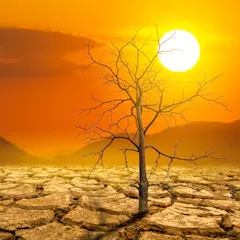
The world is likely to pass 1.5°C of warming. Africa faces worse heat, drought and floods, but faster cuts to emissions can still limit the overshoot damage.
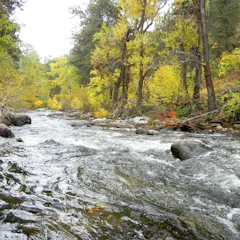
Understanding what happened in these forests 56 million years ago may help humanity recognize similar thresholds before we cross them again, the lead author of a new study writes.

You spend eight hours a night in the one room nobody ventilates. That’s bad for your sleep, and ideal for mould.
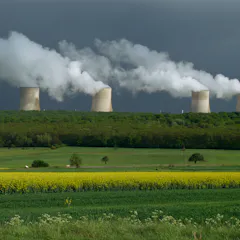
Three researchers take stock of different Union-wide policy approaches to removing and storing carbon emissions in the heavy industry sector.
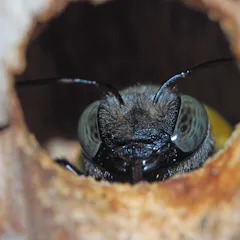
Human-made carbon dioxide emissions threaten the very survival of our larger pollinators.
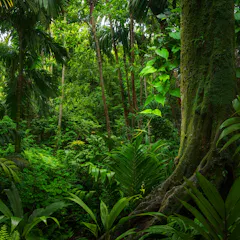
Some of South America’s tropical forests effectively stopped absorbing carbon during the 2015-2016 El Niño.
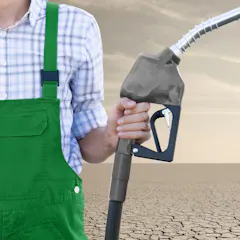
If many countries take the stance that ‘we’re only contributing 1% of global emissions’, responsibility dwindles and action stalls.
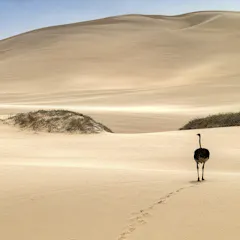
Scientists have extracted atoms from eggshells that are 15 million years old which reveal how plants responded to high levels of carbon dioxide.

Many Formula 1 innovations have made their way from the racetrack to regular roads. But technological improvements can only go so far toward limiting greenhouse gas emissions.
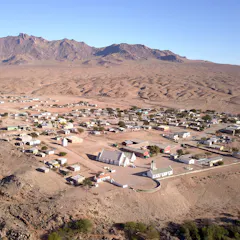
By 2100, rural African dwellers will be exposed to dangerous levels of heat nearly twice as high as those in urban areas.
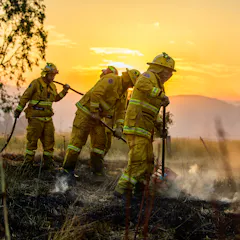
The latest State of the Climate report paints a grim picture of global warming. But by reducing our emissions and fossil fuel use, we can still slow it down.
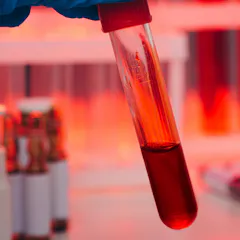
If recent trends continue, the atmosphere may become a little toxic to breathe in 50 years.
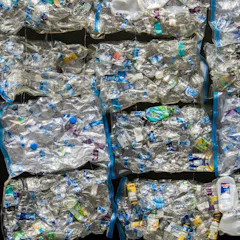
Instead of treating plastic purely as waste, new research shows that it can be transformed into something useful — acetic acid, a key component of vinegar and an important industrial chemical.
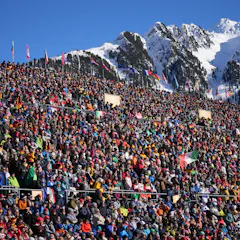
The initiatives put in place by the organizers for the Milano Cortina Winter Olympics are an encouraging first step, but they remain insufficient.

Fire obviously isn’t a liquid or a solid. In fact, it’s not matter at all – it’s a process.

Coral reefs have shaped Earth in much deeper ways than we usually appreciate.
Top contributors
-

Chief Research Scientist, CSIRO Environment; Executive Director, Global Carbon Project, CSIRO
-
Research Group Leader, CSIRO
-
Royal Society Research Professor of Climate Change Science, University of East Anglia
-
Honorary Fellow, CSIRO
-
Senior Researcher, Center for International Climate and Environment Research - Oslo
-
Senior Researcher, Center for International Climate and Environment Research - Oslo
-
Professor, Department of Earth System Science, and Chair of the Global Carbon Project, Stanford University
-
Chair, Mathematical Modelling of Climate, University of Exeter
-
Professor and Climate Scientist, Department of Geography, Planning and Environment, Concordia University
-
Professor of Chemical Engineering and Chemistry, University of Sheffield
-
Professor of Atmospheric Sciences, Climate Change Research Centre, UNSW
-
CO2Chem Network Manager, University of Sheffield
-
Senior Research Scientist, CSIRO
-
Head of Atmospheric, Oceanic and Planetary Physics, University of Oxford
-
Géochimiste, chargé de recherche CNRS au Centre de recherches pétrographiques et géochimiques de Nancy, Université de Lorraine