
Daily global temperature records keep breaking. It’s a sign we’re on a rapidly warming planet.
Articles on Global warming
Displaying 361 - 380 of 1178 articles
Climate modelling that best accounts for the processes that sustain plant life predicts plants could absorb up to 20% more CO₂ than the simplest version predicted.
The meadow spittlebug can transmit a deadly bacterium – many plants in Britain could be at risk.
Climate action should be framed not as a sacrifice but as an investment that can generate economic savings and improve human and ecosystem health today.
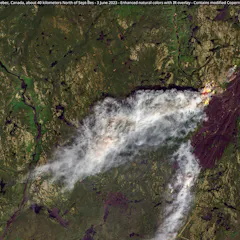
The forest fires of the summer of 2023 in Québec were devastating. It was the worst year in 50 years. But with climate change, the worst may be yet to come.

Our survey of UK workers reveals their deep concern about climate change – many want to see action being taken.

Back when there were Arctic alligators and turtles, ‘polar stratospheric clouds’ kept their world warm. Research suggests these clouds contribute to the ‘missing warming’ in climate models.
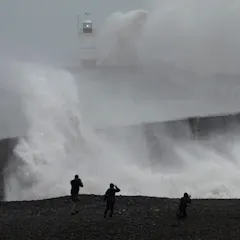
The same instruments used to measure earthquakes pick up vibrations as ocean waves put pressure on the sea floor. Four decades of data tell a story about ocean storms.

Environmental degradation and altered landscapes, both due to human action and climate change, increase the incidence of already known diseases and the risk of new zoonoses emerging
For a two-in-three chance of staying within 1.5°C, the budget shrinks to one-and-a-half years.

Environmental degradation of Nigeria’s Niger Delta region is causing poverty as well as food insecurity, increased crime and conflict.
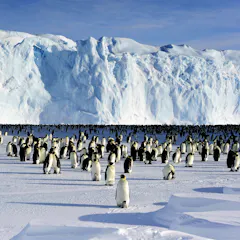
The first comprehensive assessment of trends in Southern Ocean ecosystems reveals an urgent need to address climate change. The summary for policymakers can guide decision-makers.
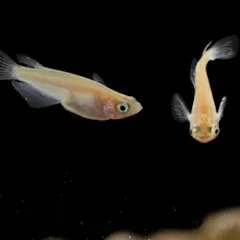
Climate change is causing higher levels of stress in fish, and the resulting hormonal imbalances are fundamentally altering entire populations.
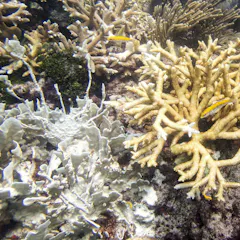
Understanding how both cloud cover and temperature work to promote coral bleaching provides valuable insight into how reefs will change over various climate scenarios.
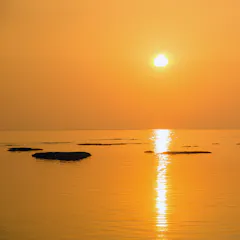
A climate overshoot that creates warmer oceans with lower oxygen levels will reduce the suitable habitat for many marine species long after CO₂ levels have peaked and declined.
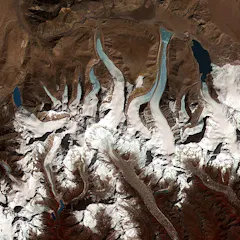
Alaska has at least 120 glacier-dammed lakes, and almost all have drained at least once since 1985, a new study shows. Small ones have been producing larger floods in recent years.
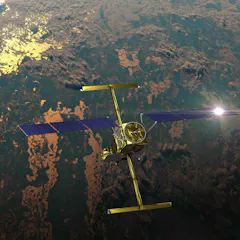
A sea voyage and a satellite mission will combine to produce a more detailed picture of the ocean’s currents than ever before.
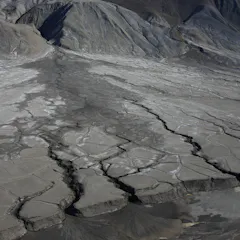
While a seemingly remote and unfamiliar landscape, the Arctic shares many surprising similarities with contemporary Canadian cityscapes.
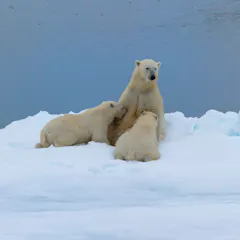
Climate change has affected food availability for polar bears, which can impact polar bear mothers’ ability to lactate.
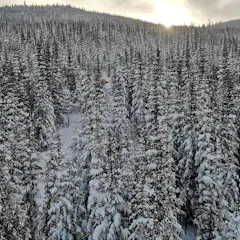
A better understanding of the interactions between the boreal forest and snow will make it possible to improve hydrological models and ensure optimal management of the resource.
Top contributors
-

ARC Future Fellow and Associate Professor in Climate Science, ARC Centre of Excellence for 21st Century Weather, The University of Melbourne
-
Research Associate, Institute for Climate Risk and Response, UNSW
-
Distinguished Scholar, National Center for Atmospheric Research; Affiliate Faculty, University of Auckland, Waipapa Taumata Rau
-
Chief Research Scientist, CSIRO Environment; Executive Director, Global Carbon Project, CSIRO
-
Chief Scientist, Australian Antarctic Division and Professor of Climate Science, Australian National University
-
Professor and Climate Scientist, Department of Geography, Planning and Environment, Concordia University
-
Deputy Director, Engagement and Impact, The ARC Centre of Excellence for the Weather of the 21st Century, Australian National University
-
Adjunct professor, UNSW
-
Professor of International Relations, The University of Queensland
-
Professor of Climate Science, University of Reading
-
Professor of Physical Climate Change; Director of the Priestley Centre for Climate Futures, University of Leeds
-
Climate Projections Scientist, CSIRO
-
Lecturer, School of Agriculture, Food and Ecosystem Sciences, The University of Melbourne
-
Director of the ARC Centre of Excellence for Our Future Oceans and Scientia Professor in Oceanography, UNSW
-
Adjunct Professor of Energy, Murdoch University