

In Canada, groundwater is generally abundant and lakes are ubiquitous. But the exchanges between groundwater and lakes are complex and often invisible.
Articles on Global warming
Displaying 221 - 240 of 1178 articles

The Jasper fire reinforces the risks that climate change and related extreme weather events pose to Canada’s world heritage sites.
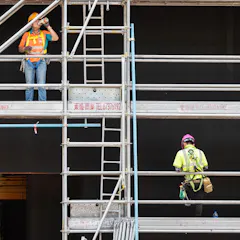
The global call to action aims to protect the most vulnerable, protect workers, boost resilience and limit further warming to stave off an era of ‘global boiling’.
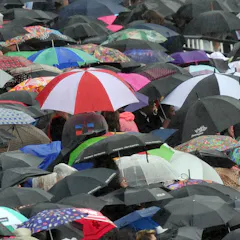
Mounting evidence shows rainfall is becoming increasingly variable, making the dry times drier and the wet much wetter. New findings confirm research into rainfall variability in Australia.

Determining the global average temperature on any given day is complex. It involves thousands of observations, high-tech equipment and sophisticated computer models.

The 2024 Summer Games are going all in on renewable energy, recycled materials and more to shrink their carbon footprint. They’re a test bed for how big events can do better for the environment.
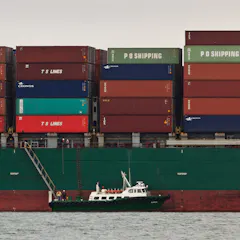
Decarbonising shipping is more urgent than ever. But is a carbon tax the best way to achieve this? Wouldn’t it increase inequalities without sufficiently reducing greenhouse gas emissions?

A green new deal is practical, politically possible, and the best chance we have to achieve a just carbon-zero transition in Canada.

Ontario’s recent flooding reminds us of the fragility of our buildings and infrastructure, and the importance of nature-based solutions in designing more resilient communities.

The Gulf Coast has seen big jumps in baby bull shark numbers. As adults, these are among the most aggressive species of sharks, but the babies aren’t cause for concern, as three scientists explain.

A landmark report has clearly attributed the June heat wave in Canada to climate change. The lessons from this report can help inform climate policy in a changing Canada.

Climate change is a difficult subject at the best of times, even more so when discussing it with older relatives. These three scenarios can help you navigate these discussions.
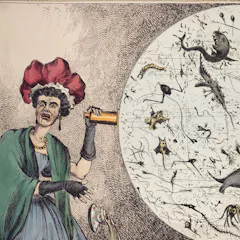
In the 19th century, many doctors might not have believed germ theory, but they switched to using protective methods anyway for a simple reason.
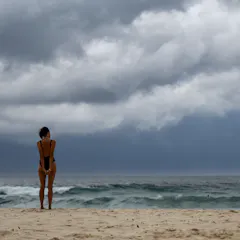
Contrary to popular belief, new research shows the abrupt, often gale force wind changes known as “southerly busters” are becoming more frequent, but less severe, as the climate changes.
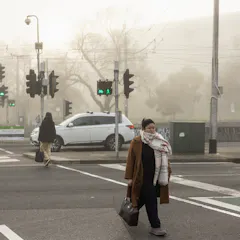
It has been particularly cold this week, with a record low temperature recorded in Tasmania. Such records are increasingly rare as average temperatures continue to rise.

In a world dominated by fast fashion, building a slower wardrobe is the key to living more sustainably, saving money and standing out among the crowd.
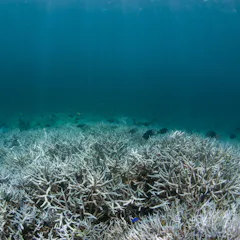
Increasing coral bleaching will be worst for the most biodiverse reefs along the equator, impacting the livelihoods and nutrition of the people who depend on them.

If Australia wants to maintain the world-heritage status of the Great Barrier Reef – indeed, if it wants to preserve the reef at all – we must act now to prevent more coral deaths.
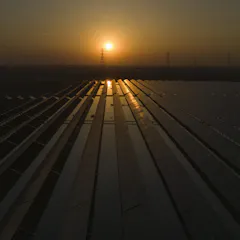
Emotions help shape opinion on energy sources. Understanding this can allow us to design better zero-carbon policies.

H5N1 is the latest evidence that climate change is altering how viruses spread and evolve. It is essential that global public health officials take these dynamics into account.
Top contributors
-

ARC Future Fellow and Associate Professor in Climate Science, ARC Centre of Excellence for 21st Century Weather, The University of Melbourne
-
Research Associate, Institute for Climate Risk and Response, UNSW
-
Distinguished Scholar, National Center for Atmospheric Research; Affiliate Faculty, University of Auckland, Waipapa Taumata Rau
-
Chief Research Scientist, CSIRO Environment; Executive Director, Global Carbon Project, CSIRO
-
Chief Scientist, Australian Antarctic Division and Professor of Climate Science, Australian National University
-
Professor and Climate Scientist, Department of Geography, Planning and Environment, Concordia University
-
Deputy Director, Engagement and Impact, The ARC Centre of Excellence for the Weather of the 21st Century, Australian National University
-
Adjunct professor, UNSW
-
Professor of International Relations, The University of Queensland
-
Professor of Climate Science, University of Reading
-
Professor of Physical Climate Change; Director of the Priestley Centre for Climate Futures, University of Leeds
-
Climate Projections Scientist, CSIRO
-
Lecturer, School of Agriculture, Food and Ecosystem Sciences, The University of Melbourne
-
Director of the ARC Centre of Excellence for Our Future Oceans and Scientia Professor in Oceanography, UNSW
-
Adjunct Professor of Energy, Murdoch University