

Canadians over-consume water at alarming rates with an antiquated water licensing system that promotes competition and misuse over sustainability.
Articles on Global warming
Displaying 161 - 180 of 1178 articles
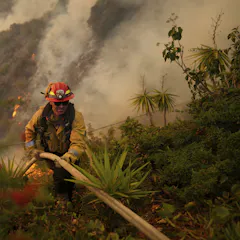
It’s vital to understand how climate drivers played out before and during the LA wildfire emergency – because many Australian cities face the same climate risks.

For many firms, ESG-related social media activity appears to be more about managing their public image than signaling genuine environmental commitment.
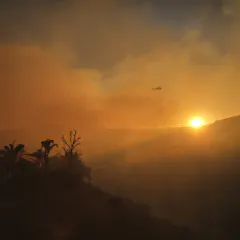
This record-breaking heat is primarily driven by humanity’s burning of fossil fuels. The warming won’t stop until we reach net-zero emissions.

The carbon tax, once seen as a policy achievement for the Liberals, may be a liability in this year’s election. Here is how the Liberals can counter the “axe the tax” narrative.
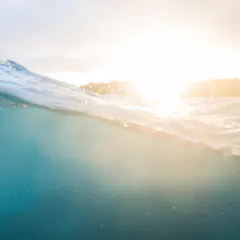
The oceans have been much warmer than average for the past two years, and the planet just set another global heat record. What’s going on?

That depends on how you define ‘normal.’ The baseline has been creeping up as the planet warms.

Canada’s current carbon tax system is unpopular and not as effective as it should be. A progressive carbon tax system would help.

Navigating green differences between friends can be a tricky endeavour. These strategies can help you be a climate leader while keeping your friendships intact.
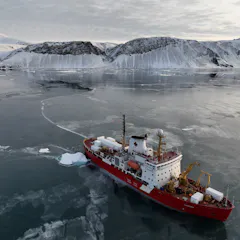
The last ice area is projected to be the last place on Earth to retain year-round sea ice by 2040. A recent Arctic expedition to the area has provided key data that could help guide conservation efforts.
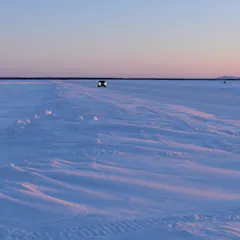
Northern communities in Canada have long relied on ice roads to bring in essential goods, however, climate change is making these routes more perillous and unpredictable by the day.

Algal blooms are typically associated with summer weather but warmer winters caused by climate change are resulting in blooms appearing more frequently, and for longer periods.
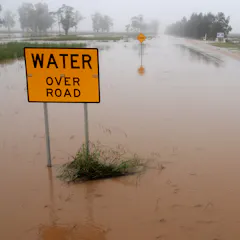
A region’s climate is defined over periods of 30 years. In a world affected by global warming, we need new tools to improve these definitions.

The 1,000-ton rule states that a person is killed every time humanity burns 1,000 tons of fossil carbon. Minimizing the deaths caused by climate change should be a global priority.

Nature-based solutions are a cost-effective means of addressing climate instability, and governments already have all the tools they need to help get these projects off the ground.
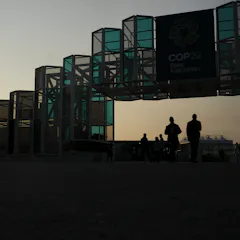
Net zero is not as simple as planting a tree. The first step is understanding that tackling climate change, and reaching true net zero, requires returning carbon to the ground.
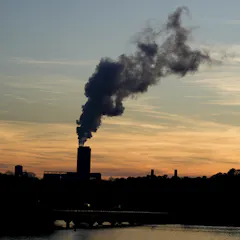
The time has come to develop Canada’s participation in international carbon markets.

The usual ‘pre-industrial’ baseline already contains some human-caused warming. Our method uses a much earlier baseline.
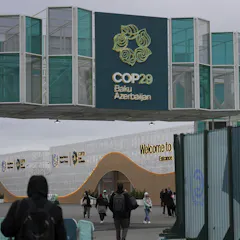
Centring climate justice in our global efforts against climate change could bring myriad benefits for us all. COP29 in Baku must make this dream a reality.

A landmark legal ruling in Ontario could pave the way for greater government climate accountability in the province while setting an important precedent for the rest of the country.
Top contributors
-

ARC Future Fellow and Associate Professor in Climate Science, ARC Centre of Excellence for 21st Century Weather, The University of Melbourne
-
Research Associate, Institute for Climate Risk and Response, UNSW
-
Distinguished Scholar, National Center for Atmospheric Research; Affiliate Faculty, University of Auckland, Waipapa Taumata Rau
-
Chief Research Scientist, CSIRO Environment; Executive Director, Global Carbon Project, CSIRO
-
Chief Scientist, Australian Antarctic Division and Professor of Climate Science, Australian National University
-
Professor and Climate Scientist, Department of Geography, Planning and Environment, Concordia University
-
Deputy Director, Engagement and Impact, The ARC Centre of Excellence for the Weather of the 21st Century, Australian National University
-
Adjunct professor, UNSW
-
Professor of International Relations, The University of Queensland
-
Professor of Climate Science, University of Reading
-
Professor of Physical Climate Change; Director of the Priestley Centre for Climate Futures, University of Leeds
-
Climate Projections Scientist, CSIRO
-
Lecturer, School of Agriculture, Food and Ecosystem Sciences, The University of Melbourne
-
Director of the ARC Centre of Excellence for Our Future Oceans and Scientia Professor in Oceanography, UNSW
-
Adjunct Professor of Energy, Murdoch University