
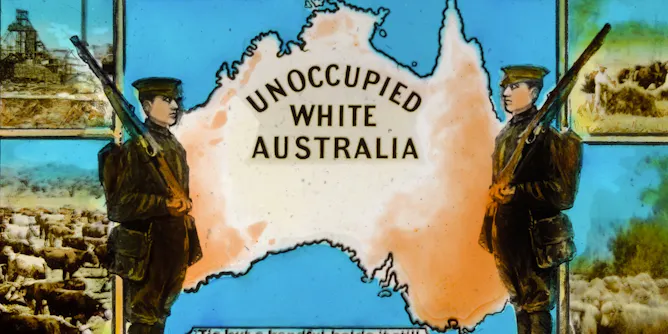
Exclusion has been central to utopian ideas of Australia since before Federation. It still lingers. To progress in this climate-challenged century, Australia’s foundational wrongs must be righted.
Articles on First Nations
Displaying 341 - 360 of 443 articles

It may be possible to expand people’s circle of moral concern and, in turn, promote reconciliation through connecting people to nature.
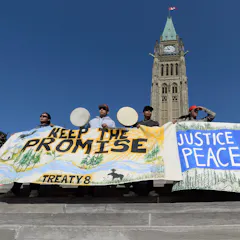
Is this decision a real ‘bombshell,’ as it has been depicted? Or does it represent an important step towards the implementation of UNDRIP within provincial and federal legal framework?

Variations on the myth of “good intentions” are invoked as a tool against the truth that the legacy of the IRS tells. Here’s why that needs to stop.

The recent discovery of the bodies of Indigenous children being found in Canada reminds us of the dark history of Australia’s treatment of young First Peoples and children here in Australia.

Secret burials are the stuff of gothic fiction, but these gothic events actually happened to Indigenous children.
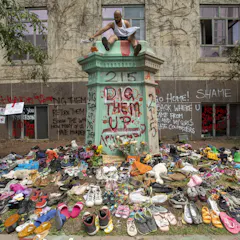
The suburban-built environment whitewashes the violence and theft on which Canada is built.
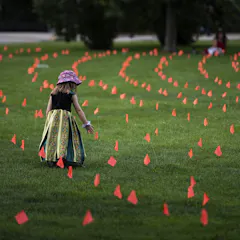
Canadians who wish to pay tribute to the children who died at Indian Residential Schools should demand the government stop fighting First Nations children in court.
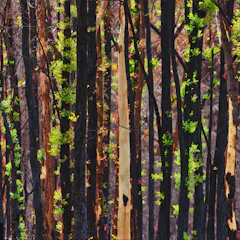
For Indigenous people, Country is more than a landscape. But climate change, and the natural disasters it produces, present a clear and present threat to Country, culture and heritage.

People often decry words and call for action after tragic events. But words are action and they’re fundamental to Canadian democracy.
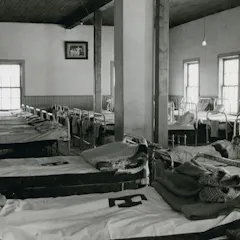
We must recognize and understand the harms that malnutrition and nutrition experiments on Indigenous people caused and the legacy they have left.
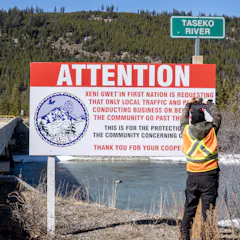
The minutiae of bureaucratic policy and procedure perpetuates colonialism and undermined a fully Tŝilhqot’in-led pandemic response.

Acts of genocide were strategically implemented by church and the Canadian government to remove Indigenous people from their land and, in turn, their culture.

The MMIWG Inquiry two years later: What’s changed and what still needs to be done?
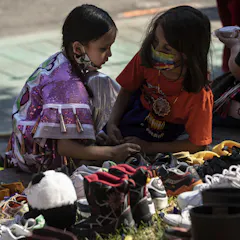
An Indigenous lawyer makes the case that what happened to Indigenous children who went to residential schools is genocide and the case should be tried by the International Criminal Court.

A commitment to eliminating racism must be reflected in accountability mechanisms that focus on the impacts of coordinated and consistent anti-racist action.

Ground-penetrating radar located the remains of 215 First Nations children in a mass unmarked grave, revealing a macabre part of Canada’s hidden history.
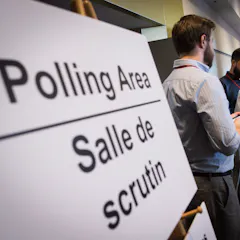
The federal government needs to amend the necessary regulations of the Indian Act and First Nations Elections Act to allow First Nations to choose their own voting methods.
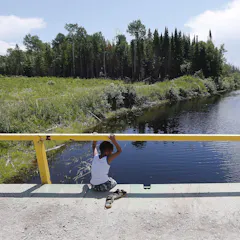
The federal government’s announcement that boil-water advisories on First Nations won’t end until 2023 at the earliest isn’t surprising. The true crisis is much greater than widely known.
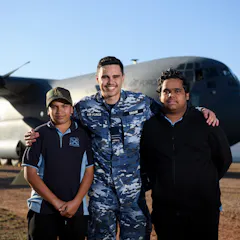
These issues matter to our strategic allies, particularly in the Pacific. Dutton’s climate change scepticism and attitudes toward First Nations people could have a damaging effect.
Top contributors
-

Professorial Fellow, University of Canberra
-
Professor, Australian and Aboriginal History, Faculty of Arts, Design and Architecture, Convenor: Indigenous Land & Justice Research Group, UNSW
-
Professor of Law, University of Technology Sydney
-
Chief Investigator for the Australian Research Council Centre of Excellence for the Elimination of Violence against Women (CEVAW), School of Philosophical, Historical & International Studies, School of Social Sciences (SOSS), Monash University
-
Adjunct Professor, Stout Research Centre, Victoria University of Wellington and Auckland University of Technology, Professor of Political Science, Charles Sturt University
-
Associate professor, Faculty of Law, L’Université d’Ottawa/University of Ottawa
-
Executive Co-Director, UNU Hub on Empowering Communities to Adapt to Environmental Change, Institute for Water, Environment and Health, United Nations University; University of Calgary
-
Professor, Faculty of Education, University of Manitoba
-
Associate Dean of Business (Indigenous Leadership & Engagement); Director, UTS Centre for Indigenous People and Work, University of Technology Sydney
-
Senior Lecturer, School of Geography, Earth and Atmospheric Sciences, The University of Melbourne
-
York Research Chair in Environmental Law & Justice in the Green Economy, York University, Canada
-
Research Fellow in Disaster Resilience, Monash University
-
Adjunct Senior Research Fellow, Department of Archaeology and History, La Trobe University
-
Associate Professor of Public Policy, Crawford School of Public Policy, Australian National University
-
Canada Research Chair in Urban Planning for Climate Change, Associate Professor of Geography and Civil Engineering, University of Victoria