
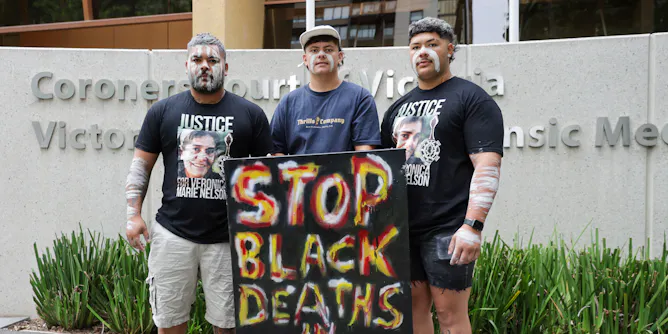
Arrested on suspicion of shoplifting and denied bail, Veronica Nelson died alone in a cell. A Victorian coroner has called for urgent reform of the state’s tough bail laws.
Articles on First Nations
Displaying 261 - 280 of 443 articles

A recurrent theme in the testimonies of Residential School survivors is how their cultural and linguistic identities were adversely affected.

This new agreement finally allows First Nations to decide for themselves how the funding will revitalize their language and culture independently of the government.

Vince Copley lived a long, impressive life, helping to make a better world for Aboriginal people. Born on a mission in 1936, he died aged 85, just after finishing his memoir, on 10 January 2022.

In order to meet its 2030 biodiversity targets, Canada is heavily relying on Indigenous Protected and Conserved Areas, which could do more harm than good for First Nations, Inuit and Métis.
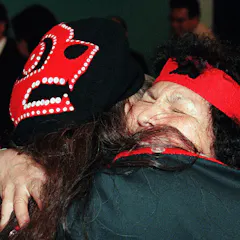
Twenty-five years after the landmark Delgamuukw case, Canada is still failing to fulfil its legal obligations to Indigenous Peoples.

Few Canadians know about the doctrine of coverture and how it stripped Indigenous women of their agency.

After participation in the Literacy for Life Foundation adult literacy campaign, serious offences by students dropped by almost 65%.
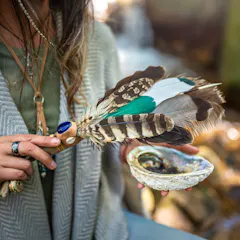
Spirituality is a vital part of Indigenous identities. Incorporating spiritual education can create space in schools where Indigenous students can learn and grow.
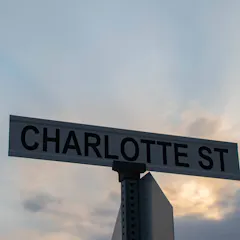
Far more streets, buildings and public spaces in Canada are named after men than women, despite women making up a majority of the population.
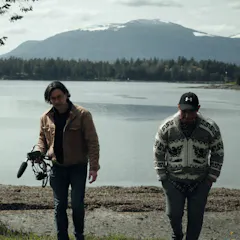
Canadian journalist institutions have failed to address their ongoing colonialism and that has meant that urgent Indigenous issues have been ignored or sensationalized.
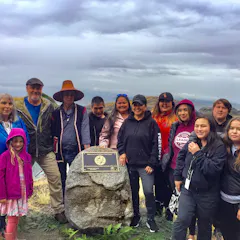
One project on a small island in B.C. is demonstrating how archaeology can bring communities together and serve as a basis for reconciliation.
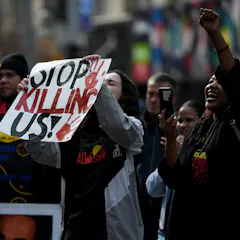
Russell Marks’ Black Lives, White Law is not about solutions; it’s about identifying the problems with Australia’s criminal legal system, and the injustice it does to First Nations people.

As a young child, Amy Thunig, a Gomeroi/Gamilaroi/Kamilaroi woman, moved with her family to be near her father, who was incarcerated in Adelaide. It was a difficult time, but he has taught her much.

A new study of Australian media has found important cultural and social factors are omitted in reports about domestic violence. More must be done to improve understanding by journalists and audiences.
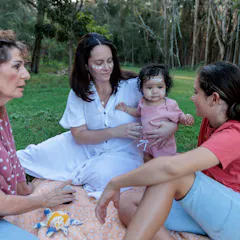
The ten-year National Plan to End Violence Against Women and Children is proposing to align with Closing the Gap to address First Nations violence. This could work, but there are limitations.
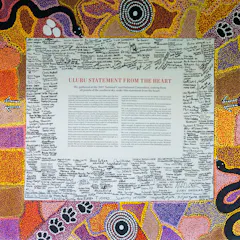
Some Australians have dismissed a Voice to Parliament as inconsequential. That argument is mistaken.
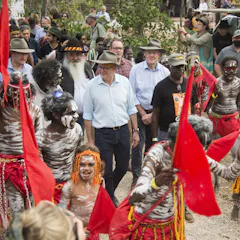
Liberal democracy has been a failure for First Nations people – a Voice to Parliament must add more weight to the scales.
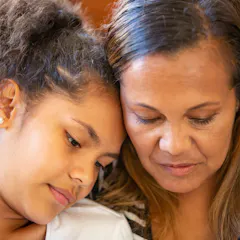
Last week, the Senate inquiry into missing and murdered Indigenous women and children found Indigenous women are eight times more likely to be murdered. What needs to happen?

The “blackout period” was a time when the Canadian government banned lawyers from representing Indigenous Peoples.
Top contributors
-

Professorial Fellow, University of Canberra
-
Professor, Australian and Aboriginal History, Faculty of Arts, Design and Architecture, Convenor: Indigenous Land & Justice Research Group, UNSW
-
Professor of Law, University of Technology Sydney
-
Chief Investigator for the Australian Research Council Centre of Excellence for the Elimination of Violence against Women (CEVAW), School of Philosophical, Historical & International Studies, School of Social Sciences (SOSS), Monash University
-
Adjunct Professor, Stout Research Centre, Victoria University of Wellington and Auckland University of Technology, Professor of Political Science, Charles Sturt University
-
Associate professor, Faculty of Law, L’Université d’Ottawa/University of Ottawa
-
Executive Co-Director, UNU Hub on Empowering Communities to Adapt to Environmental Change, Institute for Water, Environment and Health, United Nations University; University of Calgary
-
Professor, Faculty of Education, University of Manitoba
-
Associate Dean of Business (Indigenous Leadership & Engagement); Director, UTS Centre for Indigenous People and Work, University of Technology Sydney
-
Senior Lecturer, School of Geography, Earth and Atmospheric Sciences, The University of Melbourne
-
York Research Chair in Environmental Law & Justice in the Green Economy, York University, Canada
-
Research Fellow in Disaster Resilience, Monash University
-
Adjunct Senior Research Fellow, Department of Archaeology and History, La Trobe University
-
Associate Professor of Public Policy, Crawford School of Public Policy, Australian National University
-
Canada Research Chair in Urban Planning for Climate Change, Associate Professor of Geography and Civil Engineering, University of Victoria