

The DIALOG network forms a bridge between scientific and Indigenous knowledge. It renews the relationship between the university and the Indigenous world, which has for too long been one-sided.
Articles on First Nations
Displaying 301 - 320 of 443 articles

Access to safe water means more than building treatment plants: A study sheds light on water consumption and perceptions of water in Indigenous communities in the Northwest Territories and Yukon.
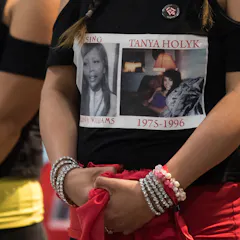
The government needs to implement its proposed action plan. The families of the missing and murdered put their trust in a federal inquiry process, but have yet to receive that justice.

What might our future look like? Together, these speculative fiction stories offer a First Nations response to this burning question.

Our analysis revealed the relative attention our news and opinion pieces gave to First Nations peoples began to grow steadily from around 2005, with a huge peak in 2007.

In today’s episode of Don’t Call Me Resilient, we take a look at what has happened since the unmarked graves of 215 Indigenous children were found in Kamloops B.C.

Incorporating lessons from Ryerson University’s renaming process could help Canadian institutions address colonization.

Priority should be given to improving municipal solid waste management in First Nation communities because they currently lack financial resources, infrastructure and solid waste diversion programs.

When a patriarchal society is combined with a history of colonialism, women in that country are at heightened risk of gender-based violence.

A Catholic theologian writes about why papal apologies can be meaningful, even when some may see them as mere words.

This National Indigenous Languages Day, let’s celebrate the community-led initiatives that focus on building capacity and sustainability for future generations.
Birthing on Country services acknowledge First Nation peoples’ continued ownership of land and unique birthing practices.
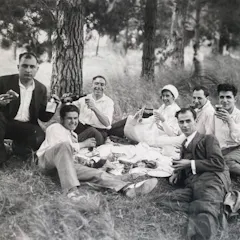
Far from just a gathering with friends, Australian picnics have long been associated with the political – from trade unions to feminist resistance.
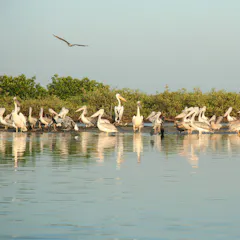
Ecosystems thrive in places where human connections with nature go back generations.
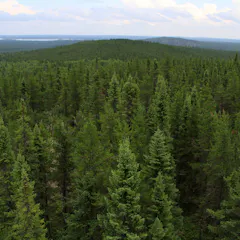
The Ring of Fire Regional Assessment is Canada’s first opportunity to apply new legislative tools to co-operating with Indigenous jurisdictions. But the government is messing up.

Indigenous Nations have always maintained their citizenship orders. They have always retained the right to determine who does and does not belong. We know who we are.

Plus, a lawyer explains the legal battle over Canada’s discriminatory First Nations child welfare system. Listen to The Conversation Weekly.

In the next year, public support will be needed more than ever to ensure that the spirit of the agreement is respected and translated into meaningful change for First Nations children.

When the media consults the CTF, it demonstrates contemporary hostility towards Indigenous nations. Viewing the CTF’s advocacy as a whole demonstrates their orientation very clearly.

First Nations women are disproportionately more likely to be targets of online abuse. More needs to be done to respond to and support women experiencing technology-facilitated abuse.
Top contributors
-

Professorial Fellow, University of Canberra
-
Professor, Australian and Aboriginal History, Faculty of Arts, Design and Architecture, Convenor: Indigenous Land & Justice Research Group, UNSW
-
Professor of Law, University of Technology Sydney
-
Chief Investigator for the Australian Research Council Centre of Excellence for the Elimination of Violence against Women (CEVAW), School of Philosophical, Historical & International Studies, School of Social Sciences (SOSS), Monash University
-
Adjunct Professor, Stout Research Centre, Victoria University of Wellington and Auckland University of Technology, Professor of Political Science, Charles Sturt University
-
Associate professor, Faculty of Law, L’Université d’Ottawa/University of Ottawa
-
Executive Co-Director, UNU Hub on Empowering Communities to Adapt to Environmental Change, Institute for Water, Environment and Health, United Nations University; University of Calgary
-
Professor, Faculty of Education, University of Manitoba
-
Associate Dean of Business (Indigenous Leadership & Engagement); Director, UTS Centre for Indigenous People and Work, University of Technology Sydney
-
Senior Lecturer, School of Geography, Earth and Atmospheric Sciences, The University of Melbourne
-
York Research Chair in Environmental Law & Justice in the Green Economy, York University, Canada
-
Research Fellow in Disaster Resilience, Monash University
-
Adjunct Senior Research Fellow, Department of Archaeology and History, La Trobe University
-
Associate Professor of Public Policy, Crawford School of Public Policy, Australian National University
-
Canada Research Chair in Urban Planning for Climate Change, Associate Professor of Geography and Civil Engineering, University of Victoria