
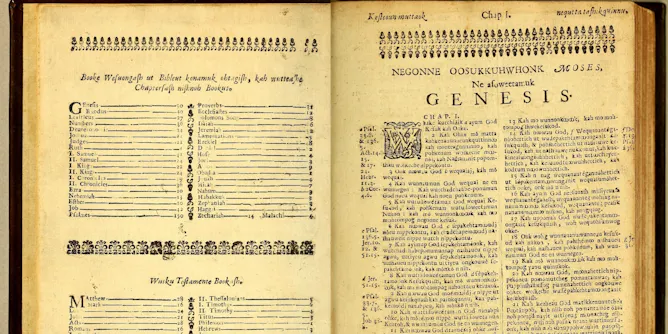
Some Puritans hoped they could convert Native Americans peacefully. As history shows, the reality was rarely so simple.
Articles on Indigenous peoples
Displaying 1 - 20 of 359 articles

Without explicit conversations and learning about race and racial inequality, children might believe stereotypes and draw other false assumptions about others.
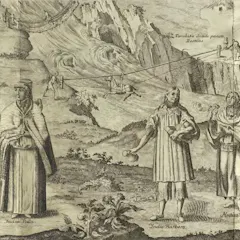
Kant called Indigenous Peoples of the Americas ‘incapable of any culture.’ The source he cited tells a different story, questioning how we read classic authors.
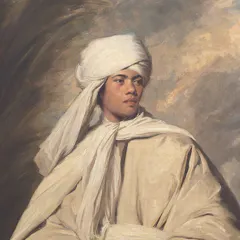
Joshua Reynolds’ 1776 ‘Portrait of Omai’ portrays a commoner from Tahiti as a nobleman, reflecting European fantasies and assumptions about Pacific cultures.
Apps and wearables are often built on invisible assumptions that might not be relevant to you. A new study shows how we can change that.
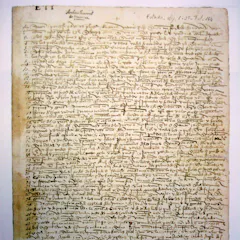
The ‘Book of Prophecies’ shows how Columbus recast brutal colonization as a divine mission.

Ottawa has left the outdated 2009 Discover Canada booklet in place, pushing the work of teaching reconciliation to newcomers onto underfunded community educators.

Native religions are tied to living landscapes, not points on a map. A scholar of Indigenous studies explains why reducing the protected area has profound religious and cultural consequences.
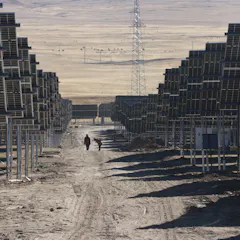
China’s national government policies on energy and economic development are changing pastoral life on the Tibetan Plateau.
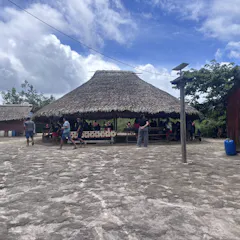
While technology can promote inclusion and access to information, it can also lead to dependency and affect the cultural identity of indigenous communities.

The best way to apologize involves making victims the primary focus, not the apologizing state. Apologies that prioritize rehumanizing victims prove more effective at rehumanizing apologizers too.
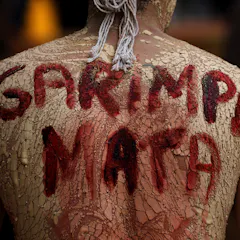
An increase of just 0.03% in illegal gold mining is associated with a 20 to 46% increase in the local incidence of malaria in Yanomami lands in the Brazilian Amazon.
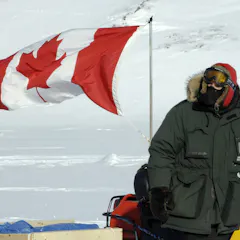
As Arctic competition grows, Canada’s security depends not just on defence, but on migration and retaining people to build resilience in the North.
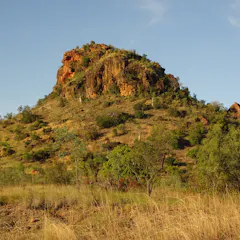
Unlike economic damages, there is no formal method for deciding on compensation for cultural loss when a court rules land has been damaged or taken away.
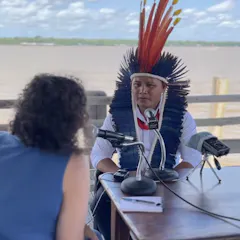
The podcast was created in partnership with UFPA to showcase what scientists in Brazil and Australia are doing to mitigate the impacts of climate change

Many claims to Cherokee identity are unsubstantiated, and this actively harms Indigenous sovereignty, distorts understandings of Indigeneity and enables appropriation of Indigenous rights and resources.
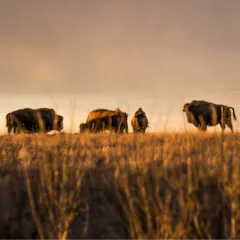
The official interpretation of Treaty 4 is historically contested. And if that interpretation is wrong, then Canada’s claim to “Crown land” and settler ownership rests on a deeply unstable foundation.

Māori, for instance, do not place the present at the centre; as some researchers put it, ‘there is no centre’.

Aerial lidar raises ethical questions because it can collect data remotely without the knowledge or consent of Indigenous and descendant populations that are on the ground.

Greenland’s inhabitants call it Kalaallit Nunaat, or land of the Kalaallit. It is an Indigenous nation whose relatively few people now mostly govern themselves.
Top contributors
-

Professor of History, University of Illinois Urbana-Champaign
-
Adjunct Professor, Stout Research Centre, Victoria University of Wellington and Auckland University of Technology, Professor of Political Science, Charles Sturt University
-
Professor of Economics and Public Policy, ANU College of Arts and Social Sciences, Australian National University
-
Professor Emeritus of Latin American Studies and Geography, University of Florida
-
Distinguished Professor and Professor of the Humanities, USC Dornsife College of Letters, Arts and Sciences
-
Professor, School of Social and Political Sciences, Director, The (so-called) Australian Centre, The University of Melbourne
-
Professor of Archaeology and Biological Anthropology, School of Social Science, The University of Queensland
-
Partner Investigator, ARC Centre of Excellence for Indigenous and Environmental Histories and Futures, James Cook University
-
Professor of Indigenous Health, Executive Director, Carumba Institute, Queensland University of Technology
-
Researcher in ethnobiology, Universitat Autònoma de Barcelona
-
Professor of Law, University of Technology Sydney
-
PhD student of law, Universidade do Estado do Rio de Janeiro (UERJ)
-
Professor, Griffith Business School, Griffith University
-
UN Expert Mechanism on the Rights of Indigenous Peoples (EMRIP) and Professor in Political Science, Global Affairs and Public Policy, University of Toronto
-
Professor of Geography, School of Law and Society, University of the Sunshine Coast