
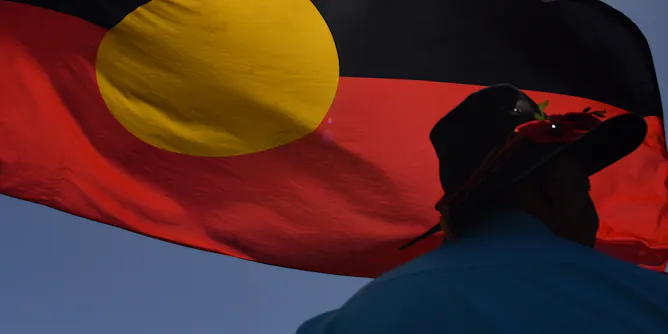
There has been a clear trend since the 1980s towards more favourable public attitudes on Indigenous issues. The reason? A better-educated citizenry.
Articles on First Nations
Displaying 321 - 340 of 443 articles
Those quick to call-out are often not clamouring for Indigenous nations’ jurisdiction over citizenship, nor are they demanding “pretendians” be held accountable to Indigenous nations.
A review of studies of Parramatta demonstrates an extensive deep-time archive of Indigenous activity extending over 14,000 years.
If senior ministers of the Crown in New Brunswick responsible for Indigenous relations cannot accept or acknowledge Indigenous sovereignty, then surely nation-to-nation must be dead.
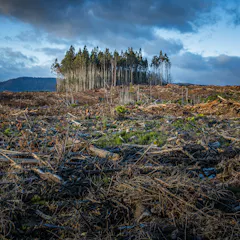
Colonialism is manifested by the way pollution impacts the lives of Indigenous peoples in Canada. Two Indigenous environmental scientists discuss how they’ve overcome obstacles in their research.

Indigenous people who vote are reminding Canada of the nation-to-nation relationships that continue to exist and to bring change from within the very structure that has been used to erase them.
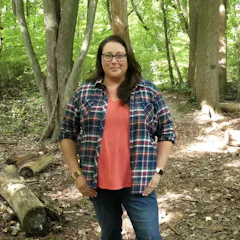
As people recognize the value in weaving together knowledge systems and move towards reconciliation, Indigenous Peoples are being increasingly approached.

A better understanding of what most genocide scholars believe can help people understand how Canada’s Indian Residential School system fits with the definition of genocide.
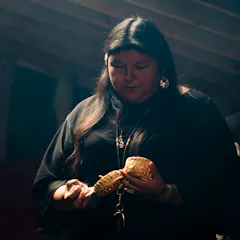
Was participating in ceremony despite pandemic restrictions an act of Indigenous resistance and resurgence and did it reflect reassertion of nationhood and self-determination?
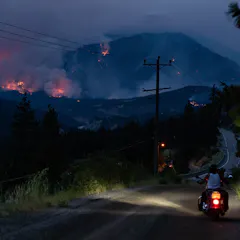
While climate migration may be on the rise in Canada, it has been disproportionately impacting Indigenous people and communities for years.
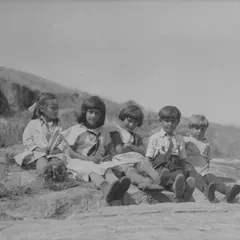
Transcript for Don’t Call Me Resilient Podcast EP 8: Stolen identities: What does it mean to be Indigenous?
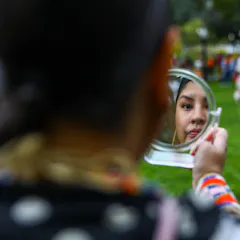
In recent years, some prominent people have been called out for falsely claiming Indigenous identity. Why would someone falsely claim an identity? And what does it mean to be Indigenous?

Movements that challenge former national icons demonstrate the importance of history-making in an age of racial reconciliation. But ‘history wars’ won’t get us anywhere.
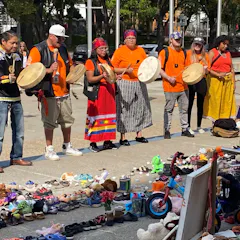
Here’s what the education system needs to do to help teachers address, repair and heal education towards and beyond reconciliation.

It seems all party leaders can agree, water advisories in First Nation communities need to end. If there is agreement, then isn’t it time to stop making it a campaign promise and make change?

This federal election, think about which parties are proposing to give power to Indigenous Peoples and their governments.
There is an urgent need to combat historically fuelled vaccine hesitancy within Indigenous communities. The best way to do this is through evidence-based knowledge and community-led work.

Indigenous people and communities are not monolithic. How they react to and deal with tragedy will be different. Acknowledging that will help us all heal.

The conversation around the U.S.-Canada land border reopening should include Indigenous people and the restrictions they’ve faced since the international border was created.
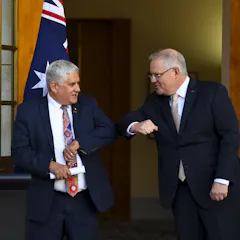
The simple truth is that a legislation-first approach to establishing a Voice without constitutional protection is bad policy. And it is not true to the Uluru Statement.
Top contributors
-

Professorial Fellow, University of Canberra
-
Professor, Australian and Aboriginal History, Faculty of Arts, Design and Architecture, Convenor: Indigenous Land & Justice Research Group, UNSW
-
Professor of Law, University of Technology Sydney
-
Chief Investigator for the Australian Research Council Centre of Excellence for the Elimination of Violence against Women (CEVAW), School of Philosophical, Historical & International Studies, School of Social Sciences (SOSS), Monash University
-
Adjunct Professor, Stout Research Centre, Victoria University of Wellington and Auckland University of Technology, Professor of Political Science, Charles Sturt University
-
Associate professor, Faculty of Law, L’Université d’Ottawa/University of Ottawa
-
Executive Co-Director, UNU Hub on Empowering Communities to Adapt to Environmental Change, Institute for Water, Environment and Health, United Nations University; University of Calgary
-
Professor, Faculty of Education, University of Manitoba
-
Associate Dean of Business (Indigenous Leadership & Engagement); Director, UTS Centre for Indigenous People and Work, University of Technology Sydney
-
Senior Lecturer, School of Geography, Earth and Atmospheric Sciences, The University of Melbourne
-
York Research Chair in Environmental Law & Justice in the Green Economy, York University, Canada
-
Research Fellow in Disaster Resilience, Monash University
-
Adjunct Senior Research Fellow, Department of Archaeology and History, La Trobe University
-
Associate Professor of Public Policy, Crawford School of Public Policy, Australian National University
-
Canada Research Chair in Urban Planning for Climate Change, Associate Professor of Geography and Civil Engineering, University of Victoria