

The worst effects are during high nighttime temperatures, something happening more often with climate change. Wildfire smoke adds to the risk.
Articles on Extreme heat
Displaying 141 - 160 of 180 articles

The tropics are projected to face almost daily dangerous heat by 2100. And “extremely dangerous” heat that’s almost unheard of today will occur more often in several regions.
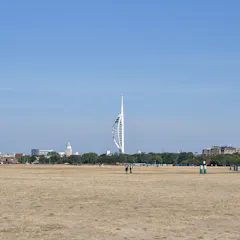
Flash flooding often follows periods of drought.

A small number of people experience a debilitating level of eco-anxiety that limits their ability to live happy and healthy lives.

Global heating may be making the weather systems behind heatwaves more common in Europe.
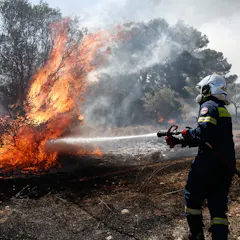
Hotter, drier summers risk making widlfires more like those of southern Europe.
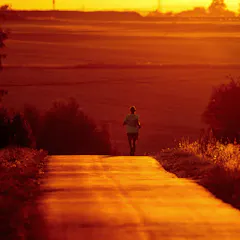
The UK recorded blistering hot temperatures as the US and Europe also experienced sweltering heat waves.
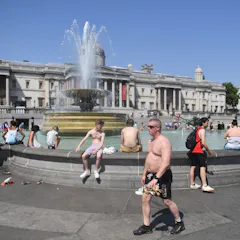
Summer heat may be far from people’s minds here in Australia. But Europe’s ordeal is yet another sign changes in Earth’s climate have already reached dangerous levels.

Summer sports camps and pre-season training often have kids running hard in high heat and humidity. The combination can be deadly.
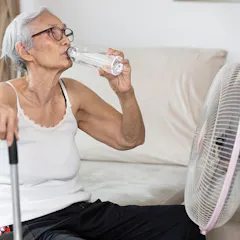
Rising temperatures — and inflation — are increasing household energy bills. Many Canadians are struggling to meet their basic energy needs.

High temperatures make baseball players and coaches more irritable, and are associated with an increase in violence.
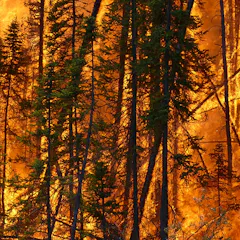
Fire weather reason – when wildfires are most likely to strike – has expanded almost everywhere.

In parts of Australia that are already very hot, we show how climate change is driving inequities even further – in housing, energy security and health.
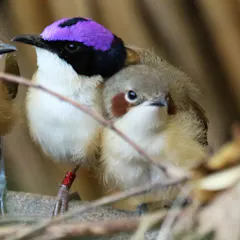
Exposure to hot and dry conditions can damage the DNA of nestling birds in their first few days of life – meaning they age earlier and produce less offspring.
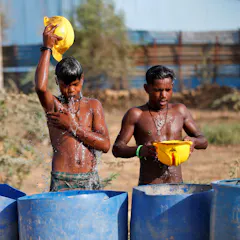
And after India banned wheat exports in May due to the high temperatures, we find out how vulnerable crops are to extreme heat. Listen to The Conversation Weekly podcast.

Beekeepers in British Columbia reported honeybee deaths during the 2021 heat dome. Other insects may also be at risk.
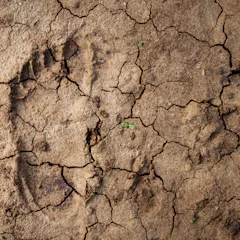
Many of the temperatures presently being recorded in Africa, and those projected in the next decade, are already close to the limits of human survival, or “liveability”.
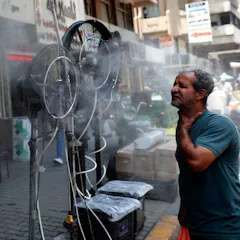
Hot, humid population centers are becoming epicenters of heat risk as climate changes worsens. It’s calling into question the conventional wisdom that urbanization uniformly reduces poverty.

Research shows climate change is already affecting the healthy psychological development of children worldwide. Children’s mental health risks will only accelerate as climate change advances.
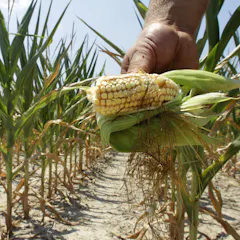
Much of the US has been experiencing heat waves in recent weeks. An economist explains how the often record-high temperatures can affect the economy.
Top contributors
-

ARC Future Fellow and Associate Professor in Climate Science, ARC Centre of Excellence for 21st Century Weather, The University of Melbourne
-
Associate Professor and Principal Fellow in Urban Risk and Resilience, The University of Melbourne
-
Research Fellow, The ARC Centre of Excellence for the Weather of the 21st Century, Australian National University
-
Postdoctoral Researcher, Climate Science, University of Oxford
-
Director - Research Institute for Sport and Exercise, University of Canberra
-
Professor of Economics, University of Arizona
-
NHMRC Research Fellow, School of Population Health and Co-founder UNSW Beach Safety Research Group, UNSW
-
Professor of Heat & Health; Director of Heat & Health Research Incubator; Director of Thermal Ergonomics Laboratory, University of Sydney
-
Honorary Associate Professor in Environmental Health, Australian National University
-
Professor of Atmospheric Science, Colorado State University
-
Professor of Geology and Environmental Geosciences, University of Dayton
-
Professor of Global Health and Environmental and Occupational Health Sciences, University of Washington
-
Associate, Institute for Climate Change & Adaptation, University of Nairobi
-
Professor, University of the Witwatersrand
-
Professor of Ecology and Associate Director, Hawkesbury Institute for the Environment, Western Sydney University