
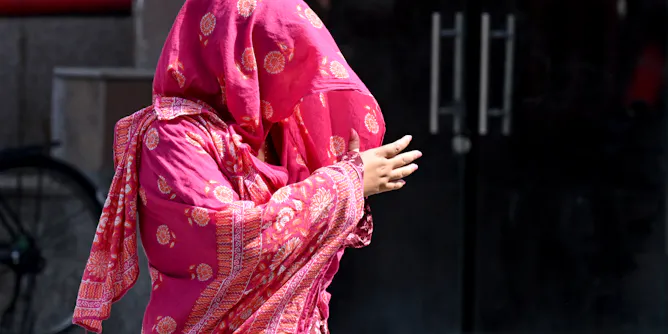
As temperatures soar past 46°C in India, an extreme heatwave is filling hospitals. But harm to women occurs in ways health statistics don’t show.
Articles on Extreme heat
Displaying 41 - 60 of 180 articles
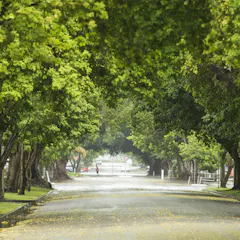
Cities around the world rely on trees to keep temperatures lower. New research shows trees are remarkably effective – but can’t do it all

Extreme heat is a huge threat to health, work and food security across southern Africa.

Extreme heat already kills millions. New research shows how today’s emissions choices will determine how many more may face dangerous heatwaves this century.

Planting grass or succulents along tram tracks can cool streets, cut pollution and make cities feel more beautiful.

Solar cycles, sea ice and rising electricity use all play a role. So does an unhealthy surprise that has been quietly hiding a large amount of global warming – until now.

On a hot or smoky day, a shopping centre or library can offer refuge. We need to design climate havens with the warming future in mind.
By the end of this century, parts of Africa could face heatwaves for 250-300 days a year, which will make it difficult for people to survive.
Australia’s northwest is well known for its heat. But this furnace-like area can deliver heatwaves to the southeast, thousands of kilometres away.

When people get hot, we can strip off clothing and we sweat to cool down. But animals such as cats and dogs aren’t so lucky.

We tend to adapt quickly to rain. But a growing body of research shows we also need to be more careful when it comes to travel and commuting during extreme heat.

We know that heatwaves often trigger bushfires. But predicting when and where large fires will break out is getting more difficult with a warming climate.

As our days get hotter and playing conditions get harsher, what can Australian sport do to become more sustainable?

People with schizophrenia made up almost 16 per cent of deaths in B.C.’s 2021 heat dome. Their experiences show why cooling must be treated as a right, not a privilege.
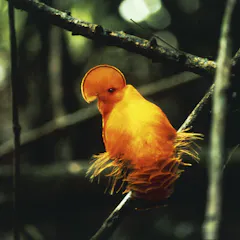
A study using more than 90,000 scientific observations shows Earth is getting too hot for many tropical birds.

June 2025 was the hottest on record for Western Europe, with around 2,300 heat-related deaths across the continent.

Italy unofficially names heatwaves, but ‘Lucifer’ was only slightly more effective than ‘Arnold’.

Converting open-air car parks and creating green cooling corridors on transport routes is an easy and affordable way to beat the city heat as the climate changes.

A public health researcher explains the signs someone is developing heat exhaustion or heat stroke, and what to do.
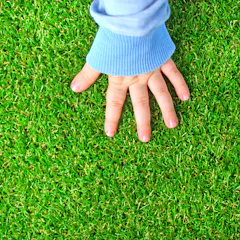
On a hot summer’s day in Melbourne, the artificial turf hit a top temperature of 72°C. This is sufficient to cause irreversible skin burns in just ten seconds.
Top contributors
-

ARC Future Fellow and Associate Professor in Climate Science, ARC Centre of Excellence for 21st Century Weather, The University of Melbourne
-
Associate Professor and Principal Fellow in Urban Risk and Resilience, The University of Melbourne
-
Research Fellow, The ARC Centre of Excellence for the Weather of the 21st Century, Australian National University
-
Postdoctoral Researcher, Climate Science, University of Oxford
-
Director - Research Institute for Sport and Exercise, University of Canberra
-
Professor of Economics, University of Arizona
-
NHMRC Research Fellow, School of Population Health and Co-founder UNSW Beach Safety Research Group, UNSW
-
Professor of Heat & Health; Director of Heat & Health Research Incubator; Director of Thermal Ergonomics Laboratory, University of Sydney
-
Honorary Associate Professor in Environmental Health, Australian National University
-
Professor of Atmospheric Science, Colorado State University
-
Professor of Geology and Environmental Geosciences, University of Dayton
-
Professor of Global Health and Environmental and Occupational Health Sciences, University of Washington
-
Associate, Institute for Climate Change & Adaptation, University of Nairobi
-
Professor, University of the Witwatersrand
-
Professor of Ecology and Associate Director, Hawkesbury Institute for the Environment, Western Sydney University