

Adults aren’t the only language teachers: six-year-olds still produce sounds differently than adults, but toddlers are extremely good at understanding the speech of children six years and older.
Articles on Early childhood education
Displaying 161 - 180 of 265 articles
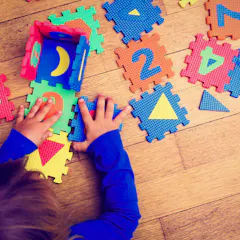
On top of teaching them how to recognize numbers and count to 10, make sure they’re playing with puzzles.

Through a play day filled with choices at the beach with supportive adults, unexpected challenges and social experiences all help children to build far more than sand castles.
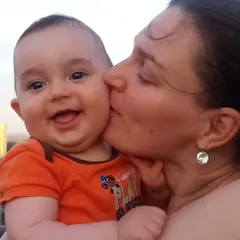
Research shows babies in bilingual environments can track the precursors to words, known as word forms, in two languages.

A book nest - or nook - is a cost-friendly way to model and enjoy literacy with your preschooler that invites their creative involvement and offers space for positive connections to grow.

The promised returns on investment in preschool won’t just happen. They depend on a complex chain of events, from preschool through to adulthood, involving the child and their family.

Language milestones matter not as the final word, but as possible signals about where children might be struggling and how they can be best supported to reach their full potential.

An economic evaluation of a program of interventions for Australia’s most vulnerable children has produced startling results.

The main problem plaguing Alberta students’ math performance isn’t the current math curriculum or teacher accountability, but inequality and ballooning class sizes.

For learners in the early stages of reading, the best way to counteract the loss of literacy skills over the summer is not by forcing study but by boosting play that develops fine motor skills.
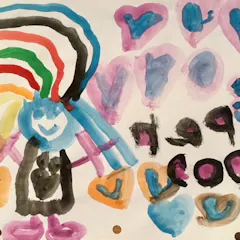
Kindergarten educators are like detectives who investigate alongside their students and who use students’ creations to gain insight into their development and interests.

Create opportunities for children to see same-sex relationships and gender diversity to prepare them to live and work in today’s society.

Our children can’t continue to grow up in a world where only women raise them, either at home or in early care and learning.
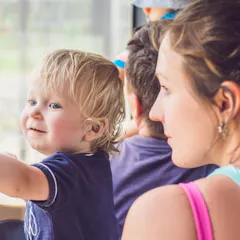
For better childhood developmental outcomes and better economics, and in the absence of other long-recommended child care policies, the child care subsidy system should be expanded, not cut.

If you’re confused about all the millions and billions thrown around for education by the two major parties, here’s the low-down on what the policies actually mean.
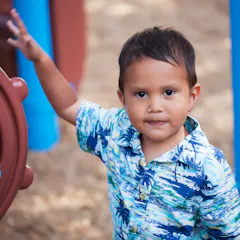
The plan to fully implement a quality early childhood program in all Nova Scotia public schools is crucial when more than one in five children live in poverty.

Investing in early childhood education and care can save more money in the long run – in areas including health care – than dealing with these issues later in life.

The Coalition has had longer than a three year cycle to make some changes to education. But since the 2016 election, what has it actually done? And what is Labor proposing?

The government has delivered a pretty disappointing budget for education, with no secure funding for early childhood education and a recycled commitment of $300 for schools.
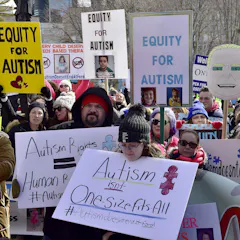
An inclusive education researcher says the government’s consolation plan to boost school funding for autism services with no investment in early childhood education flies in the face of evidence.
Top contributors
-

Fellow in Early Childhood Policy, Atkinson Centre, Ontario Institute for Studies in Education, University of Toronto
-
Professor of Applied Psychology and Human Development, University of Toronto
-
Adjunct Professor, Department of Applied Psychology and Human Development at Ontario Institute for the Study of Education (OISE) and Executive Director at the Atkinson Centre, University of Toronto
-
Associate Professor, Flinders University
-
Adjuct Faculty University of Guelph, Former Chair, Early Childhood Studies and Founder of The Love Model Inc.
-
Assistant Researcher, Perlman Lab, Ontario Institute for the Studies of Education, University of Toronto
-
Professor, Department of Pediatrics, University of British Columbia
-
Professor and Head of School, School of Early Childhood and Inclusive Education, Queensland University of Technology
-
Associate Head of Early Childhood Studies, University of Guelph-Humber
-
PhD Candidate, Doctor of Social Sciences, Royal Roads University
-
Professor, Werklund School of Education, University of Calgary
-
Professor, Canada Research Chair in Determinants of Child Development, Owerko Centre at the Alberta Children’s Hospital Research Institute, University of Calgary
-
Policy Fellow, Mitchell Institute, Victoria University
-
Professor, Queensland Brain Institute, The University of Queensland
-
Professor, Special Education, Memorial University of Newfoundland