
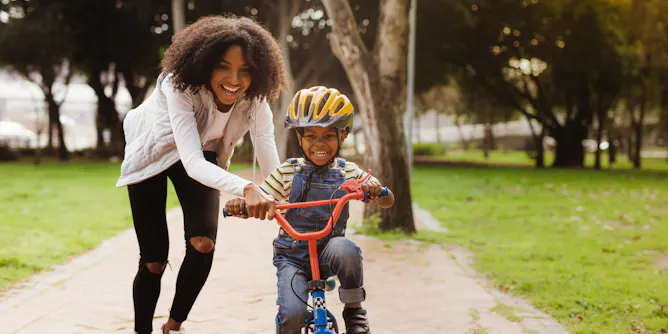
Accessing “knowledge-rich” content assumes language and literacy competencies that take time for children to develop. Childhood cannot be rushed.
Articles on Early childhood education
Displaying 101 - 120 of 265 articles
The Biden administration wants workers in child care and pre-K programs to earn at least $15 per hour.
The 2021-22 budget includes funding for 15 hours per week of free preschool education for all children in the year before school. This is great, but we need more detail.
An early childhood education expert explains what’s in the proposal and why it’s not really a partisan issue.
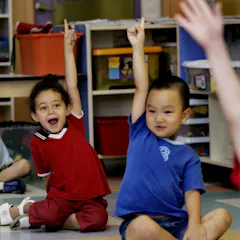
As provinces and territories beyond Québec develop early learning and care plans, they should be aware of the pitfalls of taking shortcuts in response to parent demand.
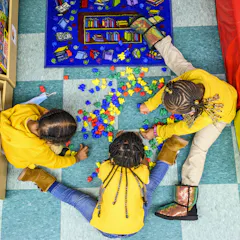
The federal government spends about US$2,500 a year on child care and early education per child under 5, about half of the European average.
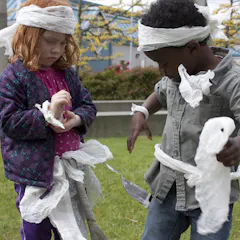
Canada has an opportunity to become a world leader in early childhood education. With monumental federal support, this is the time to build a sustainable and relevant early education system.
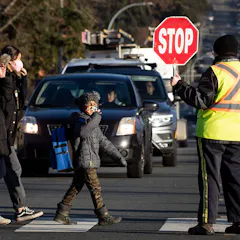
Comprehensive early childhood education, mental health support, internet connectivity and post-secondary funding are part of reducing the consequences of poverty so all students may excel.
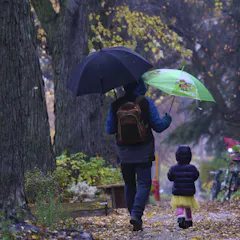
Child care in Canada needs a major overhaul to improve working conditions for educators by increasing pay and investing in training and professional development opportunities.
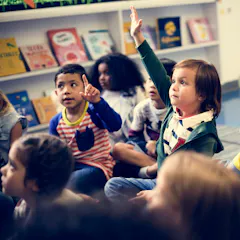
Many kindergarten classrooms draw on six principles for helping children to manage the everyday stressors of life, and parents can too.
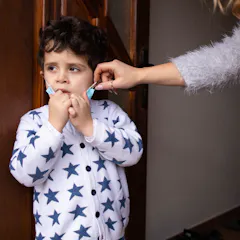
Particularly after the devastation of COVID-19, evidence is mounting for the economic argument of reinvesting in high-quality early childhood education.
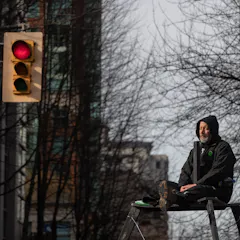
As Canada emerges from the pandemic, creating jobs and achieving full employment are top priorities. Relegated to the back burner are balanced budgets and reducing debt.

When children write out treasure hunt clues and shopping lists to play grocery store, they’re learning to read and write.
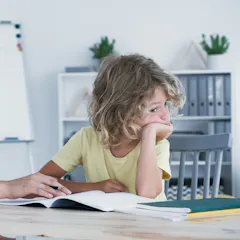
Moving between in-person and virtual schooling affects children with anxiety disorders like selective mutism. In addition, access to diagnosis and support is delayed because of pandemic restrictions.
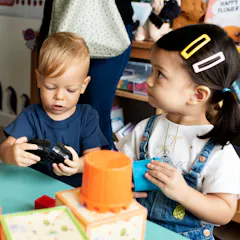
Researchers mapped the variation in preschool policies, and how they impact on what families pay, across all states and territories. Some places charge much higher fees than others.
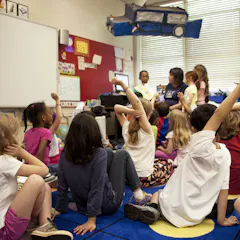
Transcript of Don’t Call Me Resilient, Episode 3.

Carl James and Kulsoom Anwer discuss the injustices and inequalities in the Canadian education system.

Art can be a way to promote and support mental health in children, and understanding children’s experiences through the pandemic as seen through children’s art may help support them into the future.

Teachers’ optimism is strained when they know much more could be done to minimize COVID-19 safety risks in schools and to help them support student needs during COVID-19.
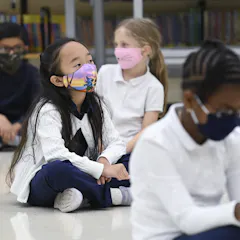
Statistics Canada could help provinces and territories design and implement interventions to improve schooling quality, and governments should better engage with the public.
Top contributors
-

Fellow in Early Childhood Policy, Atkinson Centre, Ontario Institute for Studies in Education, University of Toronto
-
Professor of Applied Psychology and Human Development, University of Toronto
-
Adjunct Professor, Department of Applied Psychology and Human Development at Ontario Institute for the Study of Education (OISE) and Executive Director at the Atkinson Centre, University of Toronto
-
Associate Professor, Flinders University
-
Adjuct Faculty University of Guelph, Former Chair, Early Childhood Studies and Founder of The Love Model Inc.
-
Assistant Researcher, Perlman Lab, Ontario Institute for the Studies of Education, University of Toronto
-
Professor, Department of Pediatrics, University of British Columbia
-
Professor and Head of School, School of Early Childhood and Inclusive Education, Queensland University of Technology
-
Associate Head of Early Childhood Studies, University of Guelph-Humber
-
PhD Candidate, Doctor of Social Sciences, Royal Roads University
-
Professor, Werklund School of Education, University of Calgary
-
Professor, Canada Research Chair in Determinants of Child Development, Owerko Centre at the Alberta Children’s Hospital Research Institute, University of Calgary
-
Policy Fellow, Mitchell Institute, Victoria University
-
Professor, Queensland Brain Institute, The University of Queensland
-
Professor, Special Education, Memorial University of Newfoundland