
Inattention is one of the most important early behavioural risk factors for a range of adverse life outcomes, including lower earnings.
Articles on Early childhood education
Displaying 181 - 200 of 265 articles
The shared knowledge brought to full-day kindergarten from teachers and early childhood educators is part of why Ontario’s program is so effective.

A brutal rape at Pamplona’s 2016 running of the bulls outraged Spain. Then came #MeToo. With ever more Spaniards taking up the feminist mantle, schools – many of which are not coed – lag behind.

An internationally recognized educator who led the development of Ontario’s full-day kindergarten observes what’s at stake in little lives in one class.
A comparative study examining more than 50 years of data in Canada, the U.S. and U.K. finds quality early child education lessens the need for later special education.

Working class families have struggled for years to afford quality child care. Could the newly proposed Child Care for Working Families Act make a difference? A child care policy scholar weighs in.

Nine years in from its start date, full-day kindergarten is doing its job laying foundational learning for the future of individual children and the province at large.

Education remains one of government’s key priority sectors yet it continues to be in a crisis.

After the #me-too inspired Gillette ad, a male therapist says this year’s Super Bowl ads were disappointingly mild. But let’s not let that stop us from challenging each other.

Awe-filled learning unfolds as a kindergarten class, accompanied by educators, investigates snow and water with tools, toboggans and more.

Providing the experience of love, trust, emotional availability and connection in the classroom is particularly important for children who don’t have secure relationships at home.

New energy to advocate for planetary health could be unleashed through career guidance that prepares future generations for climate change while inspiring them to envision a meaningful future.
Low-income, less-educated parents with non-standard work schedules rely most on home child-care providers whose rules would be relaxed under proposed legislation.
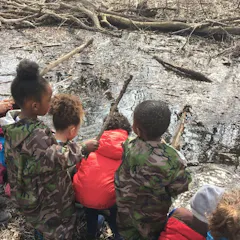
When parents walk in the forest with their children and us and see how children are drawn to spiral snails, together we see how connections with the land are critical for the Earth’s future.

A recent study has shown educators can include and teach children on the spectrum in mainstream childcare, alongside their non-autistic peers.

Higher education for seniors shows promise – for combatting social isolation, increasing well-being and delaying the onset, or slowing the progression, of dementia.
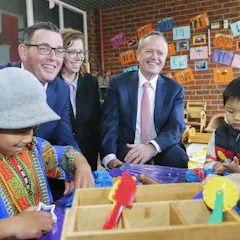
We know from research children benefit from two years of preschool, rather than one. Universal access to preschool would also return benefits to the economy, and help parents with childcare costs.
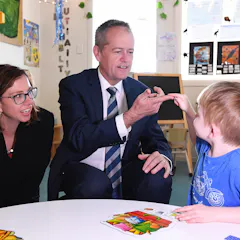
The policy would create “a quality, two year program that boosts development in the most important years of a child’s development – an investment of an additional $1.75 billion into early education.”

Valuing the skills and contributions of our educators and reversing the high rates of turnover is critical and can only be achieved through fair pay and rewards.

Providing text-message tips to parents on how to make their children stronger readers can make a difference, but only if parents don’t get too many or too few text messages, researchers find.
Top contributors
-

Fellow in Early Childhood Policy, Atkinson Centre, Ontario Institute for Studies in Education, University of Toronto
-
Professor of Applied Psychology and Human Development, University of Toronto
-
Adjunct Professor, Department of Applied Psychology and Human Development at Ontario Institute for the Study of Education (OISE) and Executive Director at the Atkinson Centre, University of Toronto
-
Associate Professor, Flinders University
-
Adjuct Faculty University of Guelph, Former Chair, Early Childhood Studies and Founder of The Love Model Inc.
-
Assistant Researcher, Perlman Lab, Ontario Institute for the Studies of Education, University of Toronto
-
Professor, Department of Pediatrics, University of British Columbia
-
Professor and Head of School, School of Early Childhood and Inclusive Education, Queensland University of Technology
-
Associate Head of Early Childhood Studies, University of Guelph-Humber
-
PhD Candidate, Doctor of Social Sciences, Royal Roads University
-
Professor, Werklund School of Education, University of Calgary
-
Professor, Canada Research Chair in Determinants of Child Development, Owerko Centre at the Alberta Children’s Hospital Research Institute, University of Calgary
-
Policy Fellow, Mitchell Institute, Victoria University
-
Professor, Queensland Brain Institute, The University of Queensland
-
Professor, Special Education, Memorial University of Newfoundland