

Research shows early childhood educators tend to prop up their low-paid jobs using their household income, or by borrowing from families.
Articles on Early childhood education
Displaying 221 - 240 of 265 articles
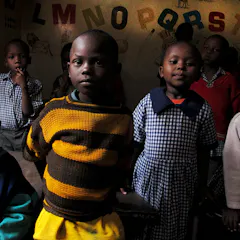
Kenyans need to be wary of early learning centres that pressure children with academic drills.

Two years of high-quality preschool is one of the most effective strategies we have to change the trajectories of children from disadvantaged backgrounds.

Ireland is the latest country to offer two years of preschool education to all children. Is it time Australia followed suit?
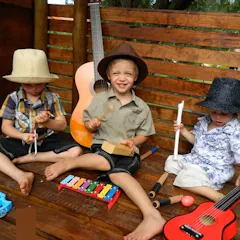
The value of music-inspired play in early childhood should never be underestimated.
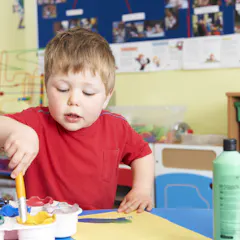
The children most likely to benefit from quality early education are the most likely to miss out. Here are five key changes the government needs to make to address this.
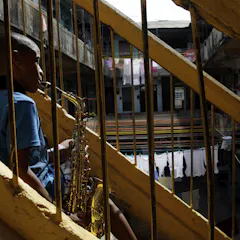
Many middle-class parents buy classical CDs because it is supposed to make their kids clever. But a jazz-loving academic has started using her favourite genre in early childhood learning.
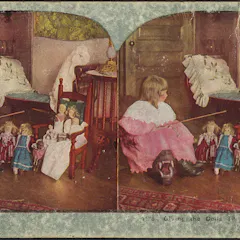
Research has found a relationship between pretend play and a child’s developing creativity, understanding of others and social competence with peers.
Labor’s shadow minister for early education, Kate Ellis, said there has been a massive increase in child care costs under the Coalition government. Is that an accurate reflection of the data?
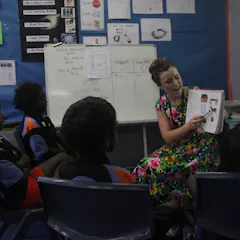
The Closing the Gap report shows a mix of successes and failures, but early childhood education holds the key to significant progress.
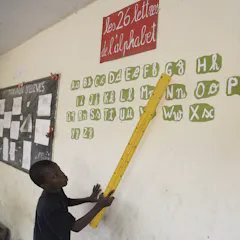
The benefits of learning through play are well documented. In rural communities in South Africa, “playing school” produces passionate lifelong readers.
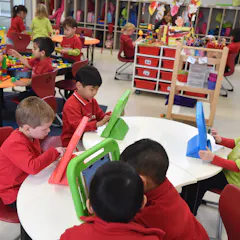
The reorganisation of federal ministerial portfolios this week moved early childhood education and care from social services to education. This is a good thing.
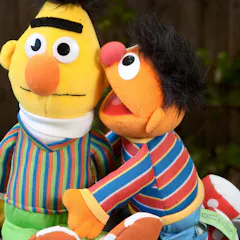
A recent study concluded that children who watched Sesame Street in the 1970s fared better in school. Why?

Most people have heard that Finland leads the world in education, but fewer have heard that Finland’s neighbour, Sweden, is the international leader in early childhood education and care.
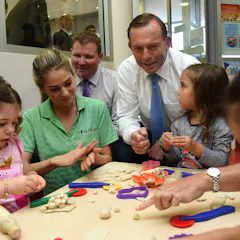
Many of the Productivity Commission’s proposals derive from assumptions that the funding of these services should ensure minimal interference, with a classic, market-based model for meeting “demand”.
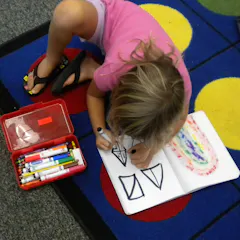
A long-term trend of declining creativity test scores has renewed interest in mechanisms to stimulate and foster the development of creativity – at home, in schools, universities and workplaces. At the…
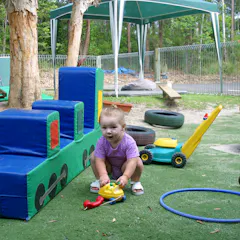
Last year in an open letter to the prime minister and the leader of the opposition, early childhood employers and peak bodies joined forces to ask for a commitment to early learning. They warned the political…

The problem with Australia’s population ageing is not that there are too many older people – it’s that there are not enough young people to support them. That presents many challenges to Australia’s continued…

The OECD’s 2009 Jobs for Youth report, released on the heels of the global financial crisis, made a number of policy recommendations to the Australian government to prevent a rise in youth unemployment…
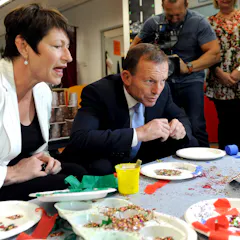
The Productivity Commission’s Draft Report on Childcare and Early Childhood Learning shows the serious limitations of market economics for analysing social policy. The report’s 900-plus pages offer a collection…
Top contributors
-

Fellow in Early Childhood Policy, Atkinson Centre, Ontario Institute for Studies in Education, University of Toronto
-
Professor of Applied Psychology and Human Development, University of Toronto
-
Adjunct Professor, Department of Applied Psychology and Human Development at Ontario Institute for the Study of Education (OISE) and Executive Director at the Atkinson Centre, University of Toronto
-
Associate Professor, Flinders University
-
Adjuct Faculty University of Guelph, Former Chair, Early Childhood Studies and Founder of The Love Model Inc.
-
Assistant Researcher, Perlman Lab, Ontario Institute for the Studies of Education, University of Toronto
-
Professor, Department of Pediatrics, University of British Columbia
-
Professor and Head of School, School of Early Childhood and Inclusive Education, Queensland University of Technology
-
Associate Head of Early Childhood Studies, University of Guelph-Humber
-
PhD Candidate, Doctor of Social Sciences, Royal Roads University
-
Professor, Werklund School of Education, University of Calgary
-
Professor, Canada Research Chair in Determinants of Child Development, Owerko Centre at the Alberta Children’s Hospital Research Institute, University of Calgary
-
Policy Fellow, Mitchell Institute, Victoria University
-
Professor, Queensland Brain Institute, The University of Queensland
-
Professor, Special Education, Memorial University of Newfoundland