
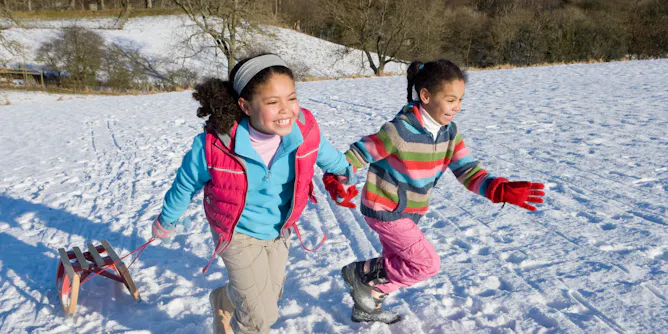
Supporting play begins with parents attending to their own wellness and seeing children as drivers of their own play.
Articles on Early childhood education
Displaying 121 - 140 of 265 articles
YouTube may have more potential to encourage children to learn than you’d think.
Developmental language disorder affects more than seven per cent of children, yet is not well known. If your child struggles in school, social interactions or reading, the underlying issue may be DLD.
All is not lost if your child has missed out on some of their usual social interaction during COVID-19. They might have actually gained something in spending more time with family.

Schools reopening during the current coronavirus pandemic need to calculate class sizes to prevent the spread of disease and minimize disruptions.
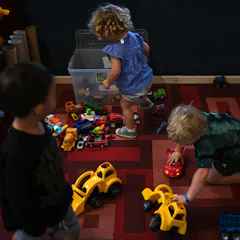
Whether families actually save anything at all depends entirely on where they live, and what provider they use.
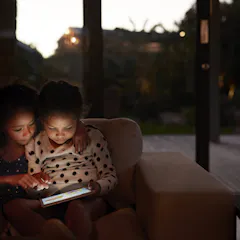
If families embrace reading as fun and routine and teachers work more closely than before with the families of their students, it’s possible that remote learning won’t be a huge obstacle to literacy.
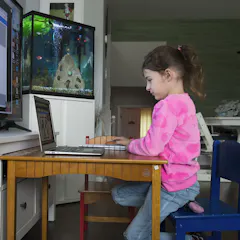
Motivating students, encouraging their self-regulation and maintaining home-school communication are ways parents have the potential to positively influence learning outcomes.

Food insecurity is income insecurity. After COVID-19, we must no longer tolerate the inequities of corporate charity and the stigma associated with relying on society’s leftovers for those in need.
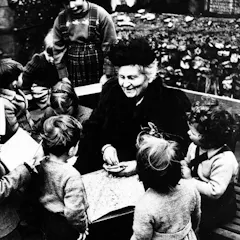
The innovative educator studied engineering and practiced medicine before devoting her life to spreading a new educational philosophy.
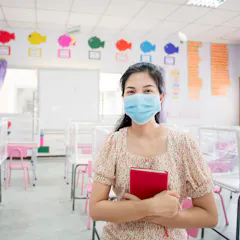
Children up to age five get a lot of cues from facial expressions. That makes teaching in a mask challenging, but teachers can learn from strategies developed by masked pediatric nurses.
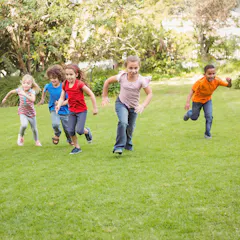
If returning to in-person instruction is truly impossible for public health reasons, policy makers must make large financial expenditures on quality and accessible distance education.
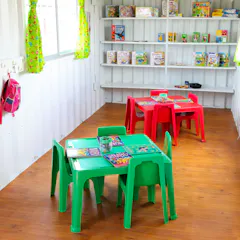
Given what is now known about the mortality rates of COVID-19, the ongoing disruptions to children’s care, education and health are no longer justified.
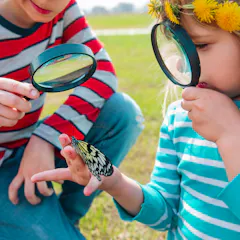
Playful activities that involve choice, active engagement and moments of delight are what children need this summer during the pandemic.
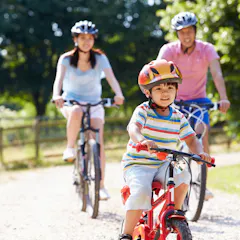
When young children are active, their brains and bodies develop the ABCs of “physical literacy,” a key developmental foundation. A new program from University of Winnipeg can help.

Now, more than ever, we need to share stories that build relationships, community connections and self-esteem, especially with our children.
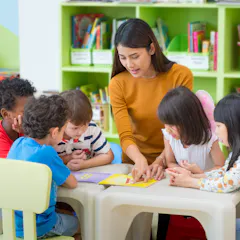
As child-care centres start to reopen after the coronavirus disruption, planning needs to include disabled children so as not to further exacerbate existing inequities.
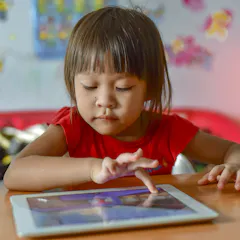
Remote contact with families in the coronavirus emergency is critical, but learning on a screen is not how young children will gain the foundational and developmental skills they need.
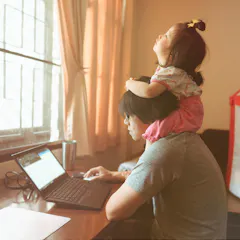
Canada could emerge from this pandemic with a better quality, expanded and more efficient child-care system nationwide while making an investment with returns in the future.
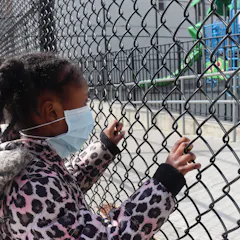
Global experts in child development say recess will be critical for children’s well-being when schools reopen, so education authorities should see planning recess as a high priority.
Top contributors
-

Fellow in Early Childhood Policy, Atkinson Centre, Ontario Institute for Studies in Education, University of Toronto
-
Professor of Applied Psychology and Human Development, University of Toronto
-
Adjunct Professor, Department of Applied Psychology and Human Development at Ontario Institute for the Study of Education (OISE) and Executive Director at the Atkinson Centre, University of Toronto
-
Associate Professor, Flinders University
-
Adjuct Faculty University of Guelph, Former Chair, Early Childhood Studies and Founder of The Love Model Inc.
-
Assistant Researcher, Perlman Lab, Ontario Institute for the Studies of Education, University of Toronto
-
Professor, Department of Pediatrics, University of British Columbia
-
Professor and Head of School, School of Early Childhood and Inclusive Education, Queensland University of Technology
-
Associate Head of Early Childhood Studies, University of Guelph-Humber
-
PhD Candidate, Doctor of Social Sciences, Royal Roads University
-
Professor, Werklund School of Education, University of Calgary
-
Professor, Canada Research Chair in Determinants of Child Development, Owerko Centre at the Alberta Children’s Hospital Research Institute, University of Calgary
-
Policy Fellow, Mitchell Institute, Victoria University
-
Professor, Queensland Brain Institute, The University of Queensland
-
Professor, Special Education, Memorial University of Newfoundland