

Scotland is undertaking a child-care initiative to double the number of fully funded child-care hours available to parents, and outdoor play is part of it.
Articles on Early childhood education
Displaying 141 - 160 of 265 articles
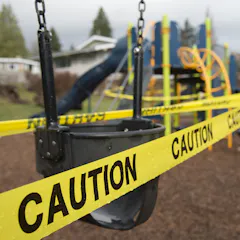
One father was fined for rollerblading with kids in a parking lot, while other families hit the cottage. Families’ backyard or property status should not determine kids’ right to outdoor play.

Grief encompasses our emotional responses to change and loss, and children’s grief might be expressed in what psychiatrist Elisabeth Kübler-Ross described as the five common stages of grief.
Improving a child’s sense of numbers, and their understanding of probability, fractions, ratios, shapes and patterns, can all be incorporated into daily life or with simple games.

In a land-based early childhood program sustained and enriched by relationships with Indigenous Knowledge Holders, children learn that ‘water is us.’

P.L.A.Y.: An acronym to remind you why letting children play is a responsible and critical way to support children’s development through the COVID-19 pandemic.
With parents trying to work from home while schools and daycare services are closed, some children may get more screen time than usual during COVID-19 social distancing.
Encouraging kids to complete their work can be tough for families managing full-time work and family obligations on a tight budget. And that’s true even when schools are operating normally.

Math is not primarily about numbers, but about thinking. It all begins with parent-child conversations about mathematical ideas.
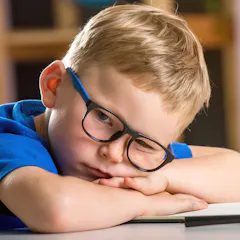
Early intervention with reading challenges has very high success rates for supporting reading development, but it is much more difficult to improve reading skills in older students.
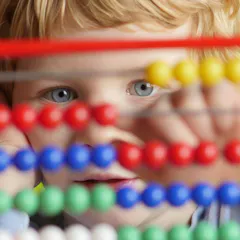
Quality preschool can deliver $2 for every $1 from government. But families are paying more for it than if they sent their child to private primary school. Some forego quality for affordability.
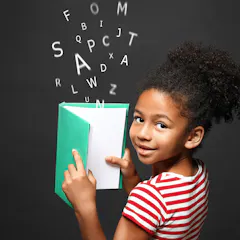
Two literacy scholars share their concerns about growing pressure on educators to emphasize phonics to teach reading. In their view, critiques of other methods often rest on a false premise.

A free, open-access repository of multilingual children’s stories is one response to the United Nations’ urgent call to promote equitable education on the International Day of Education, January 24.

Children ask a lot of questions, but they’re not always good ones.
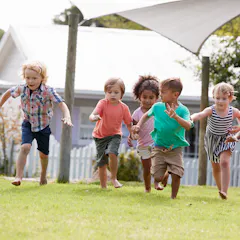
Experts in child health and physical activity offer recommendations for training of early childhood educators, and strategies to get kids moving.
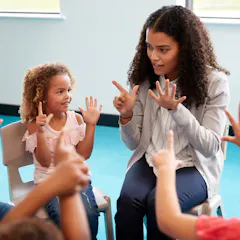
High-quality early child care and education affects children’s overall health and well-being, and is key for all the qualities children need to contribute to society and the economy.

Earth-centred children’s programs that seek to build ethical partnerships with Indigenous communities have an important role in learning about weathering climate change.

Contrary to the belief that resource strained parents invest in academically stronger children, studies show that Ethiopian parents tend to invest more in the child with lower academic capabilities.

Early experiences sharing and developing positive connections, language and communication set the stage for home reading to start children on the path to literacy.

When families need to spend more time and money taking care of their kids on weekdays, it can take a toll on careers – especially for women.
Top contributors
-

Fellow in Early Childhood Policy, Atkinson Centre, Ontario Institute for Studies in Education, University of Toronto
-
Professor of Applied Psychology and Human Development, University of Toronto
-
Adjunct Professor, Department of Applied Psychology and Human Development at Ontario Institute for the Study of Education (OISE) and Executive Director at the Atkinson Centre, University of Toronto
-
Associate Professor, Flinders University
-
Adjuct Faculty University of Guelph, Former Chair, Early Childhood Studies and Founder of The Love Model Inc.
-
Assistant Researcher, Perlman Lab, Ontario Institute for the Studies of Education, University of Toronto
-
Professor, Department of Pediatrics, University of British Columbia
-
Professor and Head of School, School of Early Childhood and Inclusive Education, Queensland University of Technology
-
Associate Head of Early Childhood Studies, University of Guelph-Humber
-
PhD Candidate, Doctor of Social Sciences, Royal Roads University
-
Professor, Werklund School of Education, University of Calgary
-
Professor, Canada Research Chair in Determinants of Child Development, Owerko Centre at the Alberta Children’s Hospital Research Institute, University of Calgary
-
Policy Fellow, Mitchell Institute, Victoria University
-
Professor, Queensland Brain Institute, The University of Queensland
-
Professor, Special Education, Memorial University of Newfoundland