

Science philosopher Sam Baron explains where energy comes from on The Conversation’s Curious Kids podcast.
Articles on Curious Kids
Displaying 161 - 180 of 833 articles
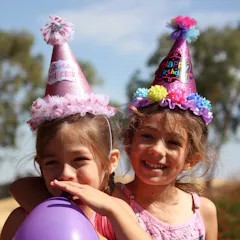
Sugar is an important substance for our body and brain to make energy. Here’s what happens when we eat a lot of it.

Your sprinting skills have a lot to do with genetics, but your brain also plays a big role.
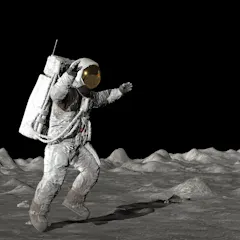
Astrophysicist Jacco van Loon joins us on The Conversation’s Curious Kids podcast.

Ever wondered where everyday things got their names? Or where words come from? Language is a powerful thing, creating new words all the time.
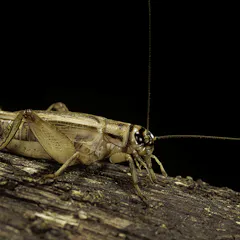
Only male crickets have wing structures that produce sound, but females are very good at following the signal.
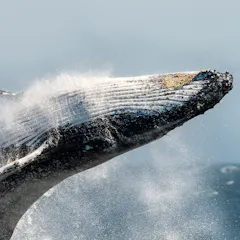
Wildlife scientist and whale snot expert Vanessa Pirotta joins us on the first episode of The Conversation’s Curious Kids podcast.

Here’s a game: Tell a friend to give you any number and you’ll return one that’s bigger. Just add ‘1’ to whatever number they come up with and you’re sure to win.

Listen to the trailer for The Conversation’s Curious Kids, a new podcast where kids get answers to their big questions from experts.
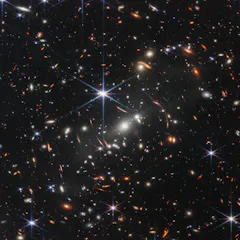
Now out in space for more than two years, the James Webb Space Telescope is a stunningly sophisticated instrument.
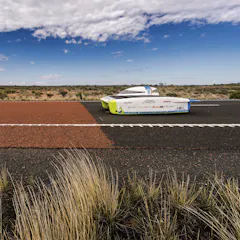
It’s common to see solar panels on rooftops and fields, but they aren’t widespread on cars − yet.

People once used tooth powders made from crushed bone or shells to whiten their teeth. Others rinsed their mouth out with pee. Yuck!
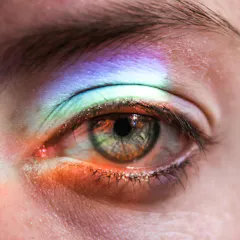
The most common eye colour is brown, then blue, and less often, green or hazel. But the human body only makes brown iris pigment.

Rock dust is only part of the story of soil. Living creatures, many of them too tiny to see, keep that soil healthy for growing everything from food to forests.

People have been flying airplanes for well over a century. Engineers know how to balance all the forces at play, but still aren’t exactly sure how some of the physics of flight actually works.

Trees – and all plants – harvest sunlight to gain the energy they need to live and grow.
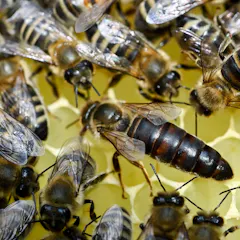
A queen’s main job in the hive is to lay eggs and pass genes on to offspring. But many bee species do just fine without queens or big colonies.

Personality is shaped by our genes and various influences in our social environments, and it plays an important role in how we interact with the world.

There are an infinite number of paths an ice crystal can take before you touch it.

Humans have synced their calendars to the sun and moon for centuries, but every so often, these systems need a little correction.
Top contributors
-

Reader in Astrophysics, Keele University
-
Associate Professor of Science & Medicine, Bond University
-
Professor (Astrophysics), University of Southern Queensland
-
Associate Dean of Innovation and Engagement, Swinburne University of Technology
-
PhD Candidate, University of Southern Queensland
-
Distinguished Professor Emeritus of Anthropology, Binghamton University, State University of New York
-
Professor, Philosophy of Science, The University of Melbourne
-
Professor, Macquarie University
-
Researcher, The University of Melbourne
-
Assistant Professor of Medicine, Bond University
-
Professor of Science Communication and Chemistry, University of Hull
-
Lecturer, University of Southern Queensland
-
Associate Professor, School of Animal and Veterinary Science, Adelaide University
-
Principal Lecturer in Wildlife Conservation, Nottingham Trent University
-
Whale Scientist and Lecturer, Faculty of Science and Engineering, Macquarie University