

Human beings don’t have a thick coat of fur like many other mammals do. Scientists think it has to do with something else that comes out of skin: sweat.
Articles on Curious Kids
Displaying 101 - 120 of 833 articles

Warm air rises, but it also expands because air pressure decreases with height. The latter effect wins out and air becomes colder in the mountains.

An allergic reaction happens when your immune system overreacts to something that should be harmless. Whether that happens can be thanks to your genes, your environment or a combination.

Technically, you’d think so. But some things are just too small to measure.

While you might not like how your trash smells, to your dog it is an appealing buffet brimming with apple cores, banana peels, meat scraps and stale bread.
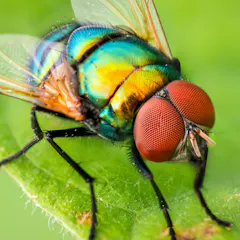
The number of insect species is mind-boggling – and they are a critical part of the environment.

Science uses careful, organized observations and tests to construct theories that are recorded, passed on to others and built on.

Fossils tell us the titanosaurs were the biggest dinosaurs – but new discoveries could reveal new giants!

A physicist explains that the short answer is both … and neither.

Puffy to wispy, barely there or dark and menacing, clouds come in many shapes and sizes. Each tells a story about what’s going on in the atmosphere.
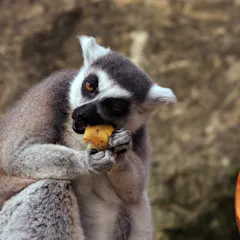
Animals can be born with genetic or developmental issues that make it hard for them to live normal lives. They also can develop mental health problems in response to conditions around them.

Blue, green orange, brown − water comes in many colors, depending on what’s in it.
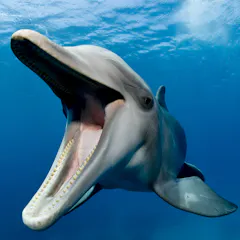
Many animals show signs of high intelligence, including strong memory, self-awareness and communication skills.

Black doesn’t appear in the visible spectrum of electromagnetic radiation. So why do we still see it?

Pain is unpleasant, but it does have a purpose.

The answer has to do with molecules.
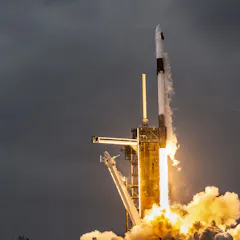
A rocket needs to overcome the force of gravity to leave Earth behind.

Wars always include killings and destruction, but there are limits. An expert in international law explains the rules of war laid out in the Geneva Conventions − and why they’re so hard to enforce.
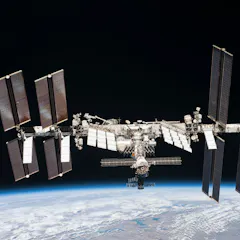
The International Space Station is an engineering feat that has led to countless scientific discoveries. Like the thousands of satellites in orbit, it manages to stay up in the atmosphere.
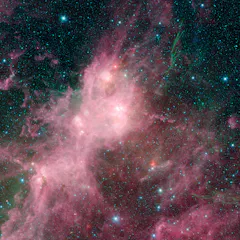
The universe is constantly expanding, but how do scientists think about what it’s expanding into?
Top contributors
-

Reader in Astrophysics, Keele University
-
Associate Professor of Science & Medicine, Bond University
-
Professor (Astrophysics), University of Southern Queensland
-
Associate Dean of Innovation and Engagement, Swinburne University of Technology
-
PhD Candidate, University of Southern Queensland
-
Distinguished Professor Emeritus of Anthropology, Binghamton University, State University of New York
-
Professor, Philosophy of Science, The University of Melbourne
-
Professor, Macquarie University
-
Researcher, The University of Melbourne
-
Assistant Professor of Medicine, Bond University
-
Professor of Science Communication and Chemistry, University of Hull
-
Lecturer, University of Southern Queensland
-
Associate Professor, School of Animal and Veterinary Science, Adelaide University
-
Principal Lecturer in Wildlife Conservation, Nottingham Trent University
-
Whale Scientist and Lecturer, Faculty of Science and Engineering, Macquarie University