
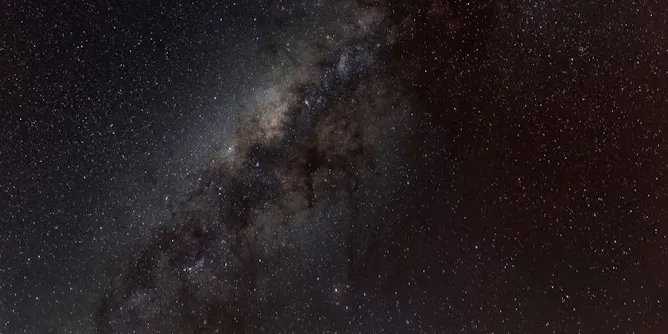
An astronomer explains why space looks so dark despite containing 200 billion trillion stars.
Articles on Curious Kids
Displaying 201 - 220 of 833 articles

Balancing well is a whole-body experience that develops over time and takes practice to master.
Measuring the ages of planets and stars is tricky. An observational astrophysicist describes the subtle clues that provide good estimates for how old different space objects are.

An aerospace engineer explains why it’s so hard to tell just how fast an airplane is really moving.
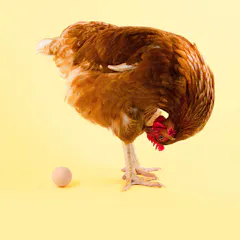
Evolutionary biology and the fossil record reveal a great deal about the origins of chickens and eggs.
A pediatric urologist explains how the bladder and the brain communicate to wake you up when you need to ‘go’ – and how that communication might break down.

Animals often give birth to litters of more than one offspring at a time. But are those babies twins?

Flies often beat out competitors for food because of their specialized sensing organs called antennae.

Tower cranes come in many different sizes, and many weigh more than 100 tonnes.
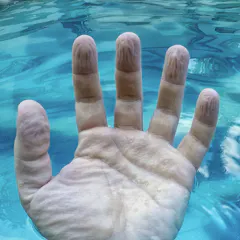
Recent research suggests blood vessels are the key to why fingers and toes turn pruny and pale after being submerged for a while.

An ophthalmologist explains how important tears are to keeping your eyes feeling good and working well – whether you’re on dry land or swimming in a body of water.

Crying triggers changes in how a newborn baby gets their oxygen. But not all new babies cry, and it’s not always a problem.
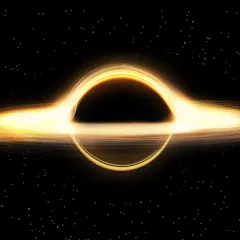
Black holes are known for pulling in all kinds of stuff – including light. Here’s how that actually works.

You’re not allowed to visit the part of Nevada known as Area 51. That’s because it’s a top-secret government facility. But the secrecy has to do with spy planes, not space aliens.

Traditional businesses operate with an established solution to a known problem. Startups focus on a product or service no one else provides.
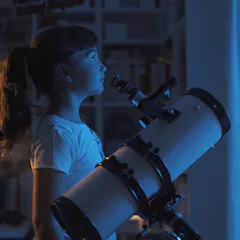
To find out what is beyond space, a good place to start would be to figure out where space – our universe – ends.

If an astronaut were to die on Mars, neither cremation nor burial would be good options.

Math is more than memorizing times tables and doing homework problems. It is woven into more aspects of your life than you might think.
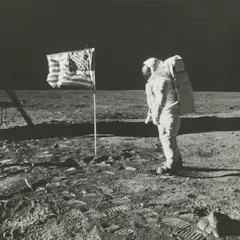
Some people incorrectly say the Moon landings didn’t happen. But the evidence – and logic – isn’t on their side.

Your brains can perceive some electromagnetic waves – but not without your body’s help.
Top contributors
-

Reader in Astrophysics, Keele University
-
Associate Professor of Science & Medicine, Bond University
-
Professor (Astrophysics), University of Southern Queensland
-
Associate Dean of Innovation and Engagement, Swinburne University of Technology
-
PhD Candidate, University of Southern Queensland
-
Distinguished Professor Emeritus of Anthropology, Binghamton University, State University of New York
-
Professor, Philosophy of Science, The University of Melbourne
-
Professor, Macquarie University
-
Researcher, The University of Melbourne
-
Assistant Professor of Medicine, Bond University
-
Professor of Science Communication and Chemistry, University of Hull
-
Lecturer, University of Southern Queensland
-
Associate Professor, School of Animal and Veterinary Science, Adelaide University
-
Principal Lecturer in Wildlife Conservation, Nottingham Trent University
-
Whale Scientist and Lecturer, Faculty of Science and Engineering, Macquarie University